
Engineering Technologies
This is not just another high school engineering program! In this class, you will apply engineering, science, math and technology to solve open-ended, real-world problems.
Are you type of student that enjoys creating new inventions? Would you like to assemble a robot and learn what the parts inside the robots actually do? How about learning how a new vehicle would be designed and then getting the opportunity to build that vehicle along with a team of fellow students? If any of these statements interest you, then you are the type of student that should consider taking the Engineering Technologies course.
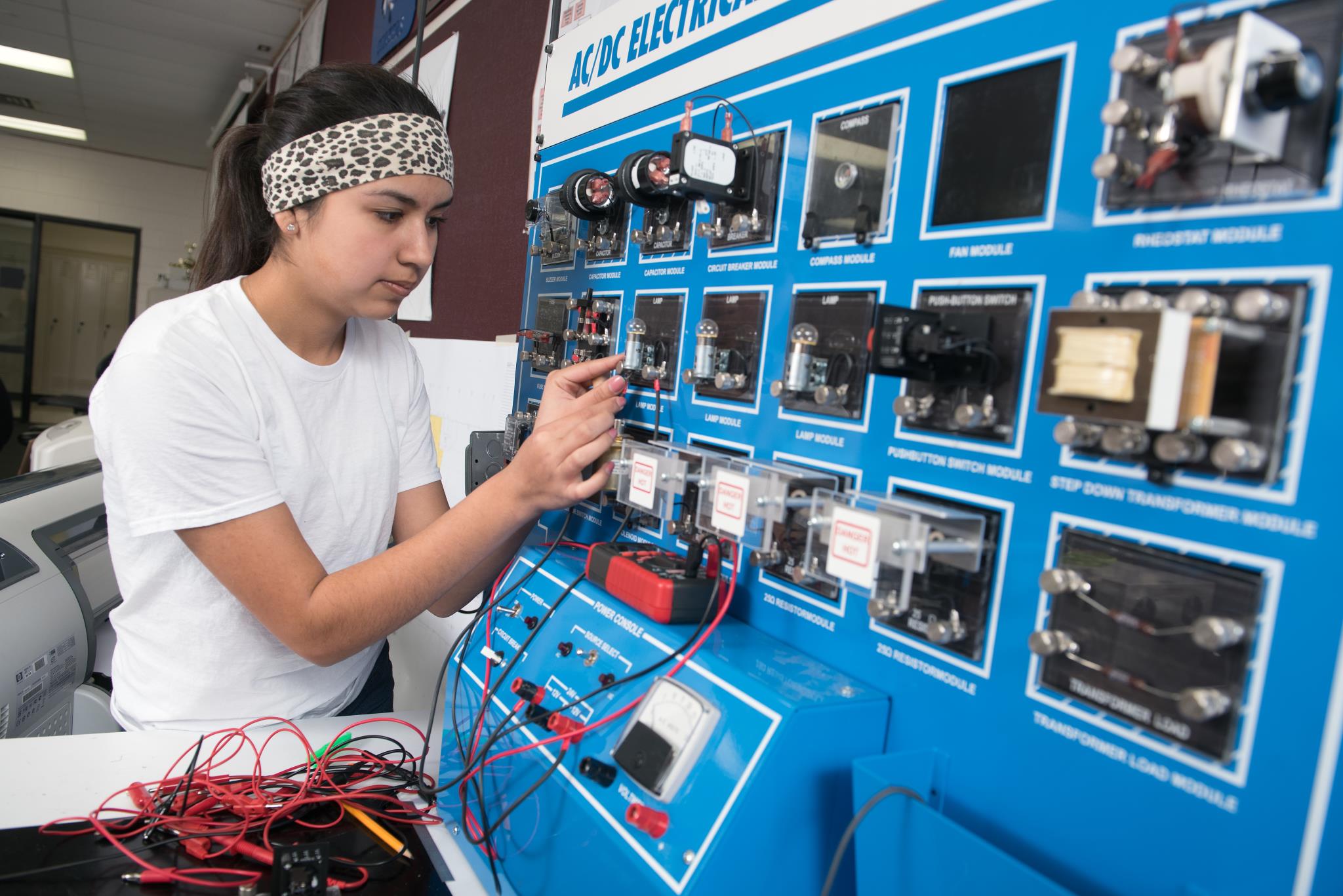
Some of the skills covered in this course include; SolidWorks 3D computer aided design software, how to use a 3D printer, how to design and troubleshoot electrical systems, using math and physics for product design as well as metal working including machining and welding.
It is important to understand that right now in the U.S., there are many career opportunities for people with the knowledge and skills taught in this class. Engineers are broadly educated and trained in multi-disciplinary engineering fields will be prepared to take advantage of exciting career opportunities. Also, if you are considering post-secondary studies in engineering, this class will certainly give you an advantage!
Program Syllabus
Our mission is to provide students with the essential knowledge, skills, and work habits to excel in their careers and future learning.
Course Title
Engineering Technologies
National Career Cluster: Science, Technology, Engineering & Mathematics
Michigan Career Pathway Engineering, Manufacturing & Industrial Technology
Instructor
Frank Luchini
517.244.1342
Types of Credit
See High School Credit Options
Note: Local districts award high school credit, not the WTC.
Articulation Agreements:
Lansing Community College
Baker College
Davenport University
Ferris State University
Certifications Offered:
Cyber Ambassador- Leadership, Teamwork, Communication, Facilitation
CSWA
OSHA 10hr
Special Requirements/Program Prerequisites
Good attendance
Good basic math skills
First year algebra (suggested)
Course Description
Engineering Technologies is a high school level course that gives students hands on experience with skills that are used by engineers and in many other technical job fields. This class is also designed to help students understand how the technology in our lives actually works. This class is appropriate for students that have no prior experience with these topics and for students that do have experience with some of this material. Listed below are examples of some of the skills and concepts covered in this class.
- All students will get hands-on experience using SolidWorks computer aided engineering software
- Modeling of 3 dimensional parts
- Using simulation to analyze part strength, mechanical motion, thermal studies
- Creating 2 dimensional mechanical drawings
- Soldering of circuits and electronic components
- Precision measurement using dial calipers, micrometers
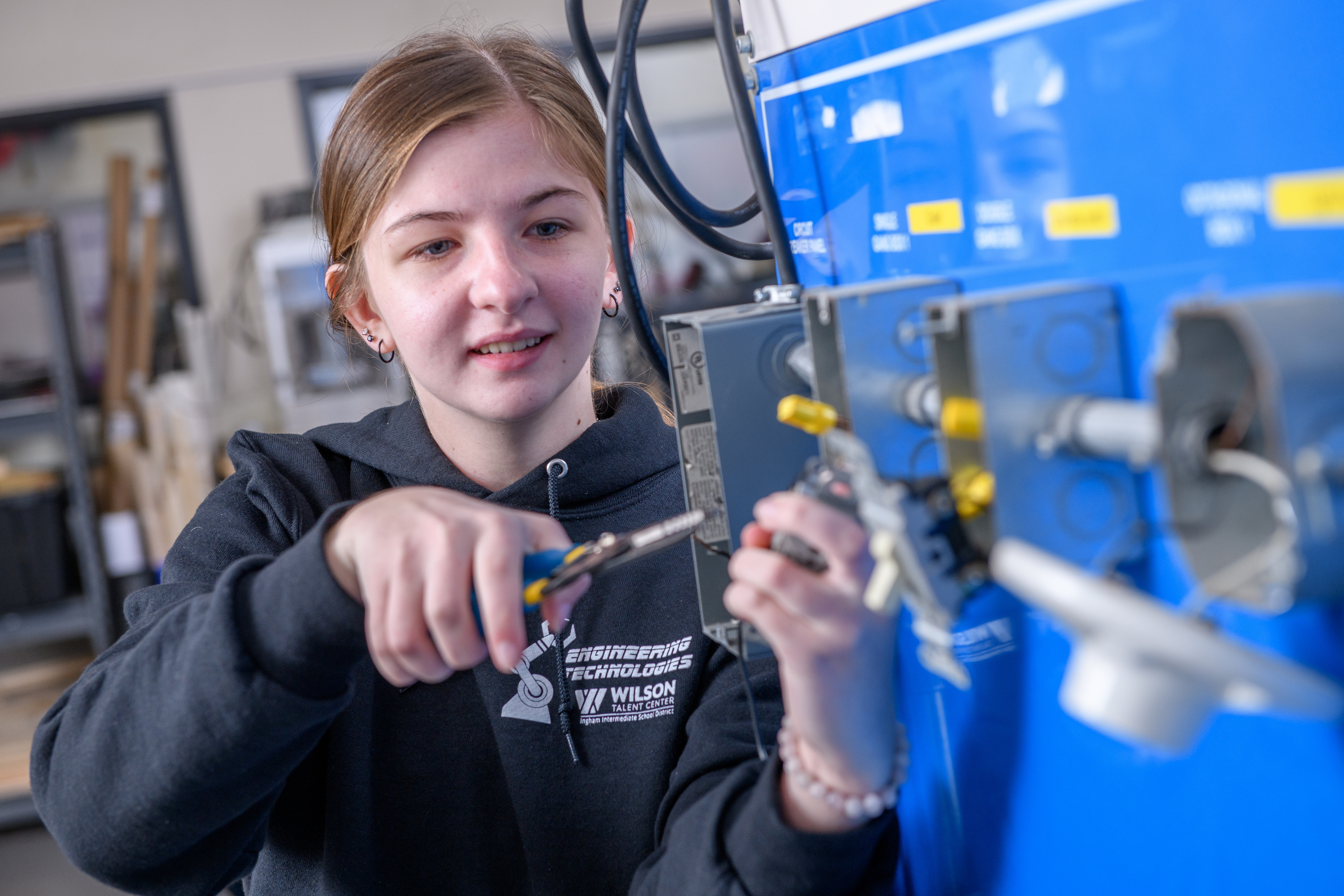
- Use a digital multi-meter and for testing and repairing electrical components
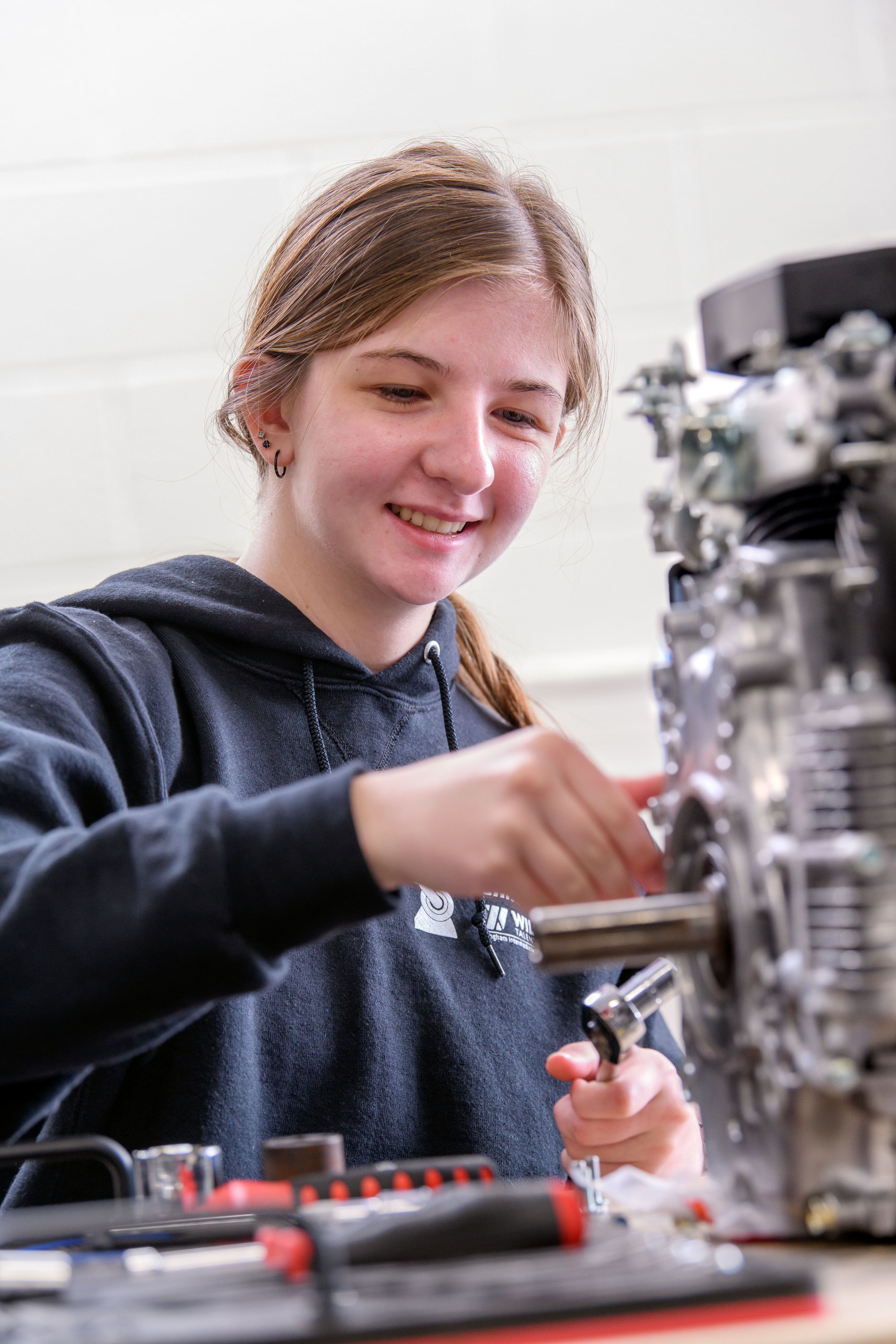
- Using hand tools to disassemble and reassemble a Honda v-twin engine
- Metalworking equipment including mill, lathe, MIG welder, sheet metal fabrication tools
- Using a Romer Coordinate Measurement Machine (CMM) with laser scanner
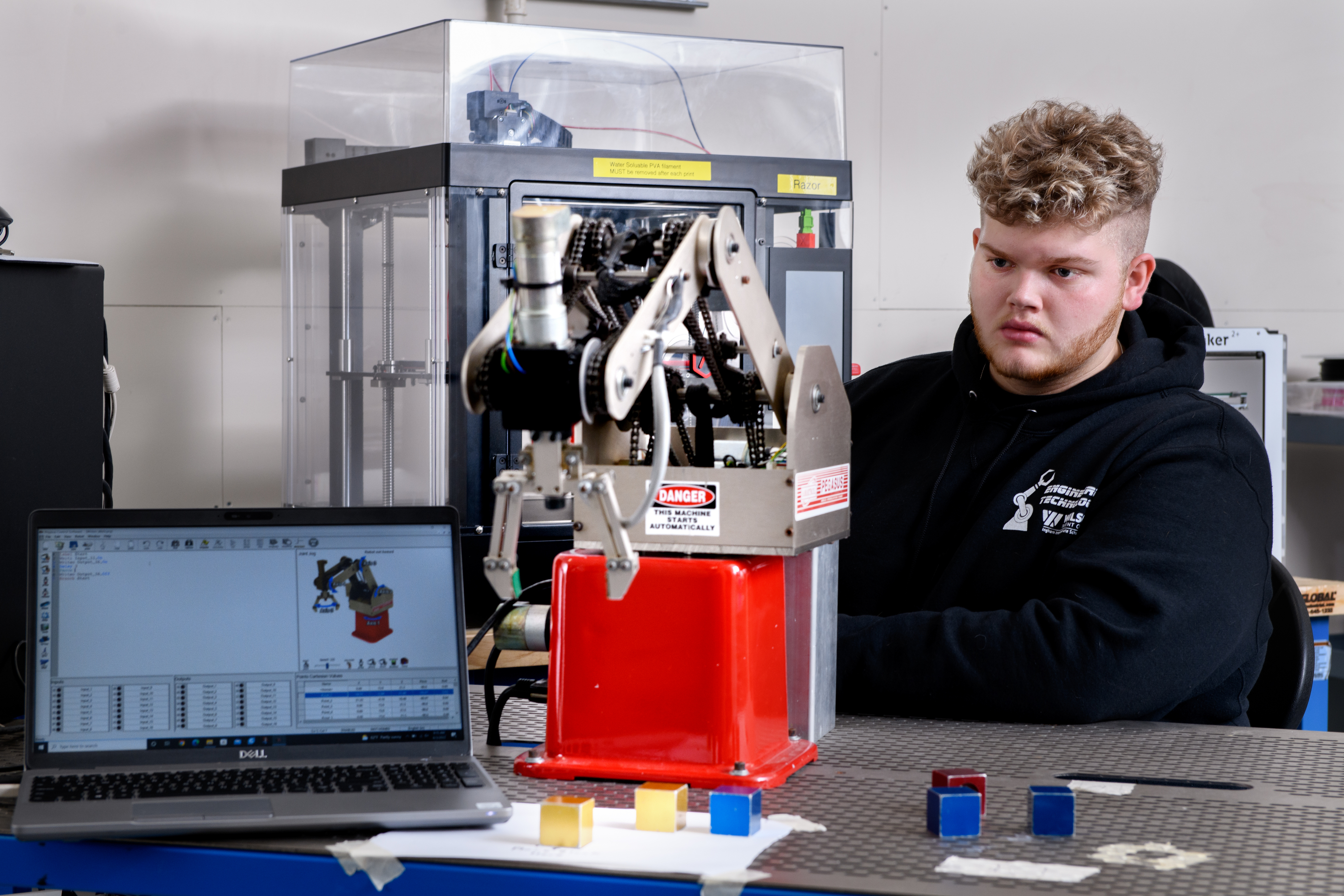
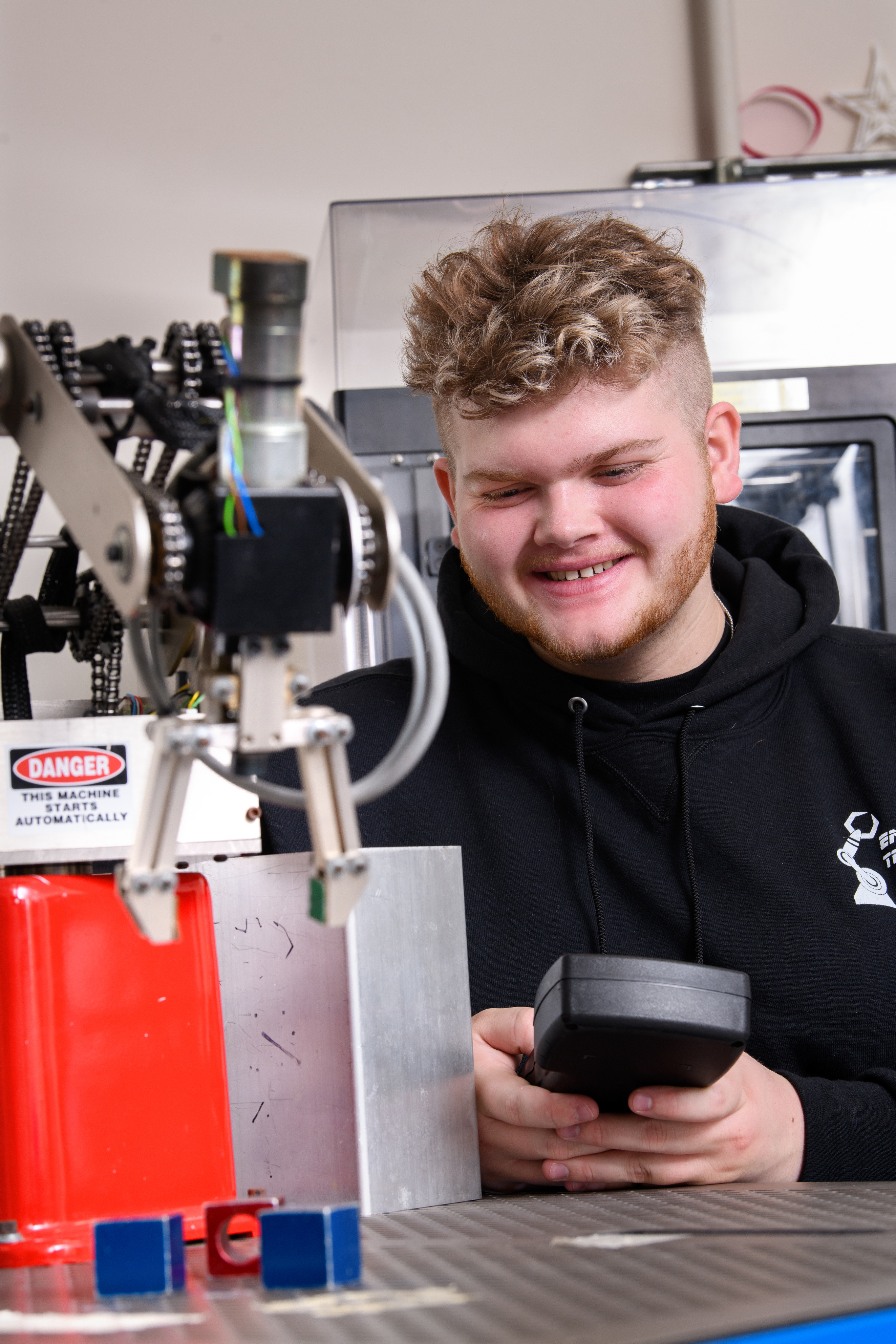
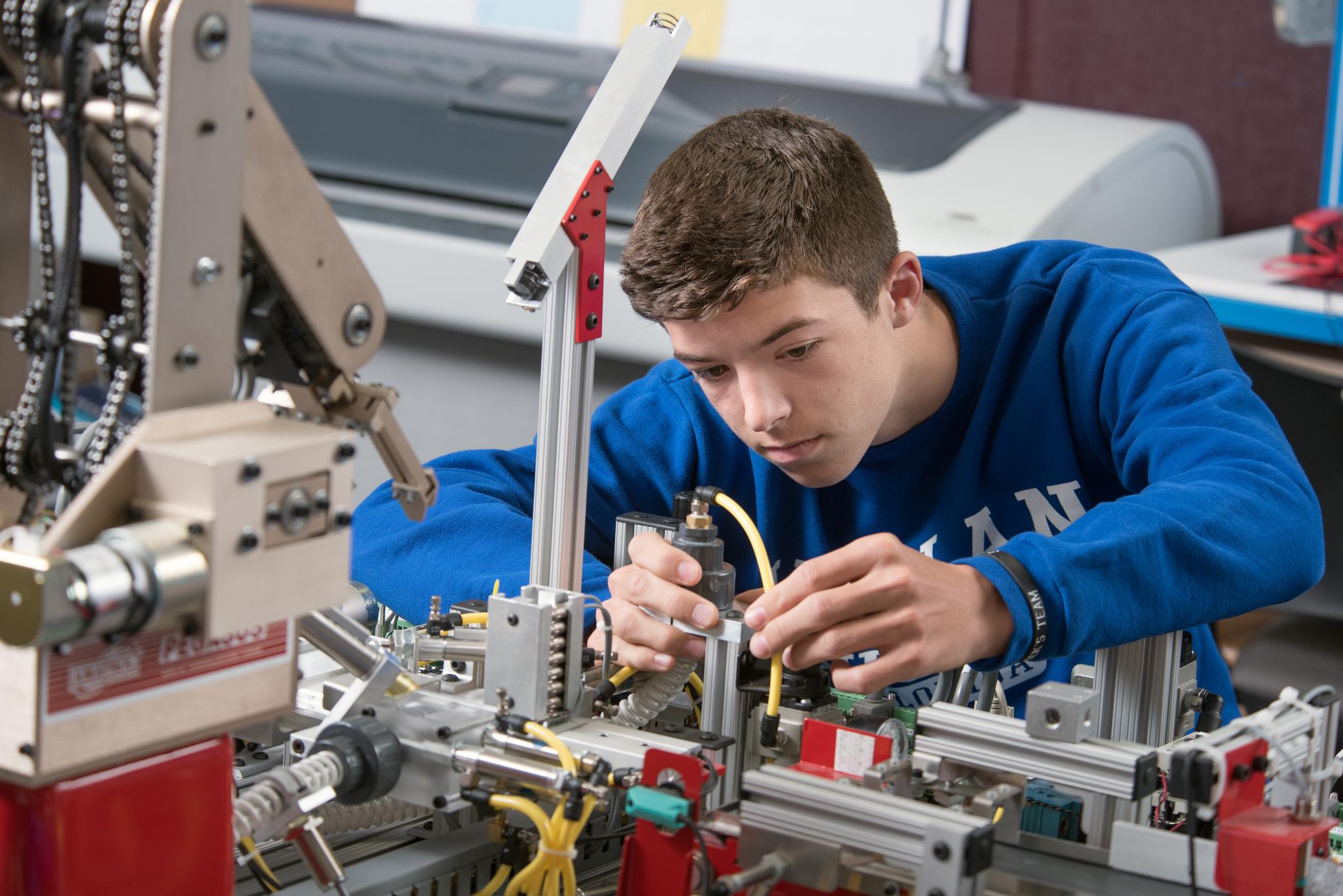
- Programming an industrial type robot
- Use of a 3D printer and software
- Introduction to engineering materials – Options and selections of metals, plastics, composites
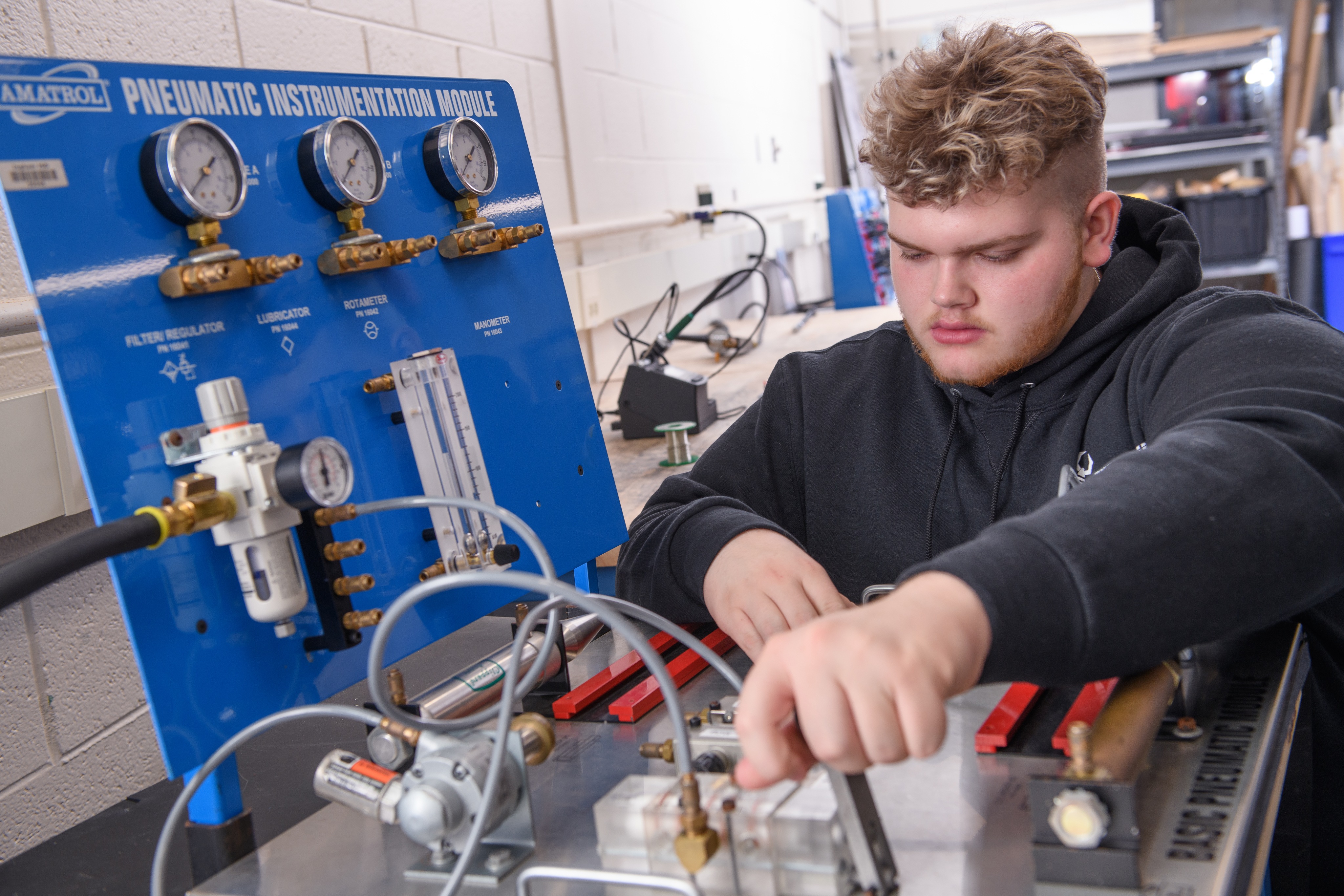
- AC and DC electric motors, pulleys, sprockets, chains, belts, bearings, speed controllers
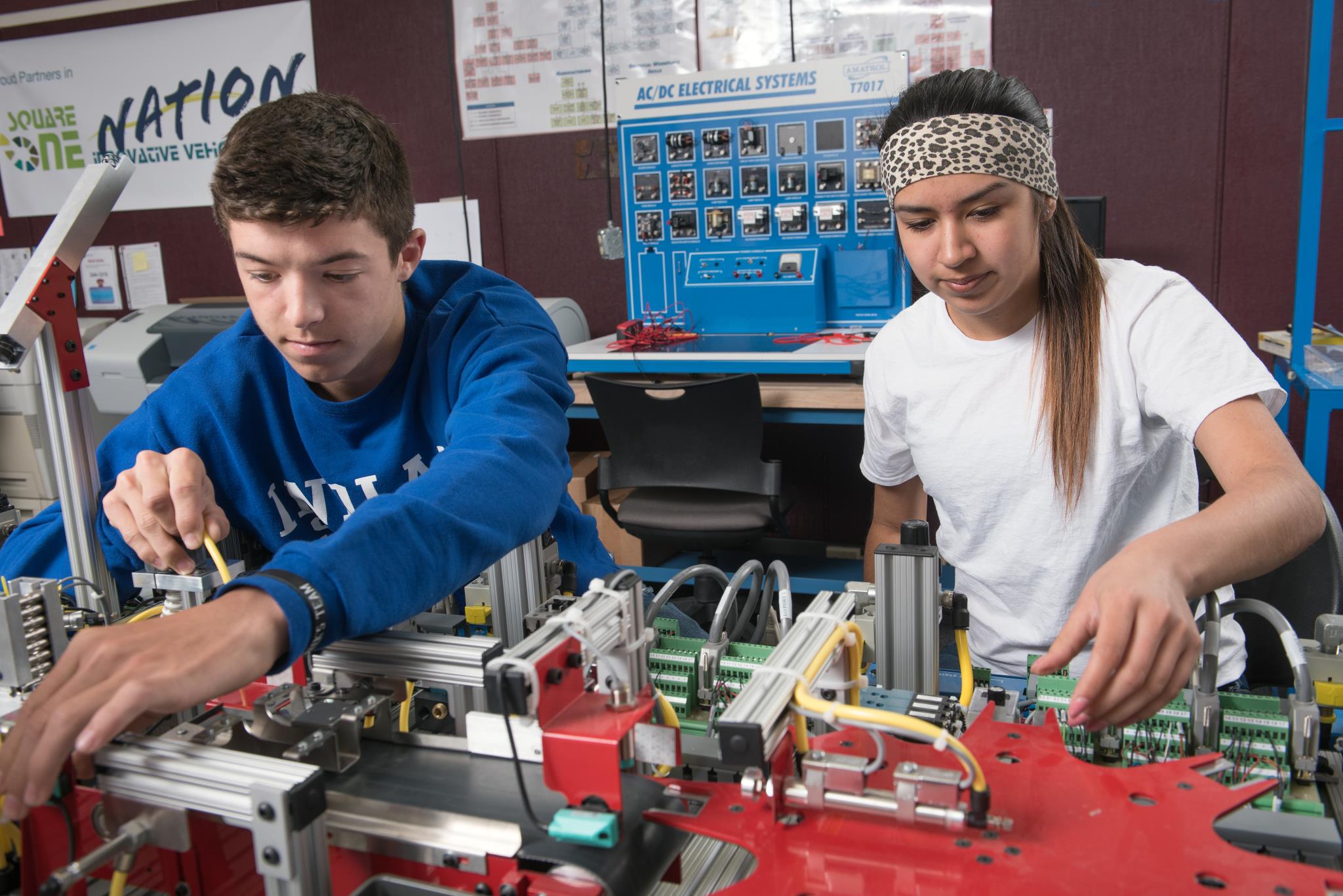
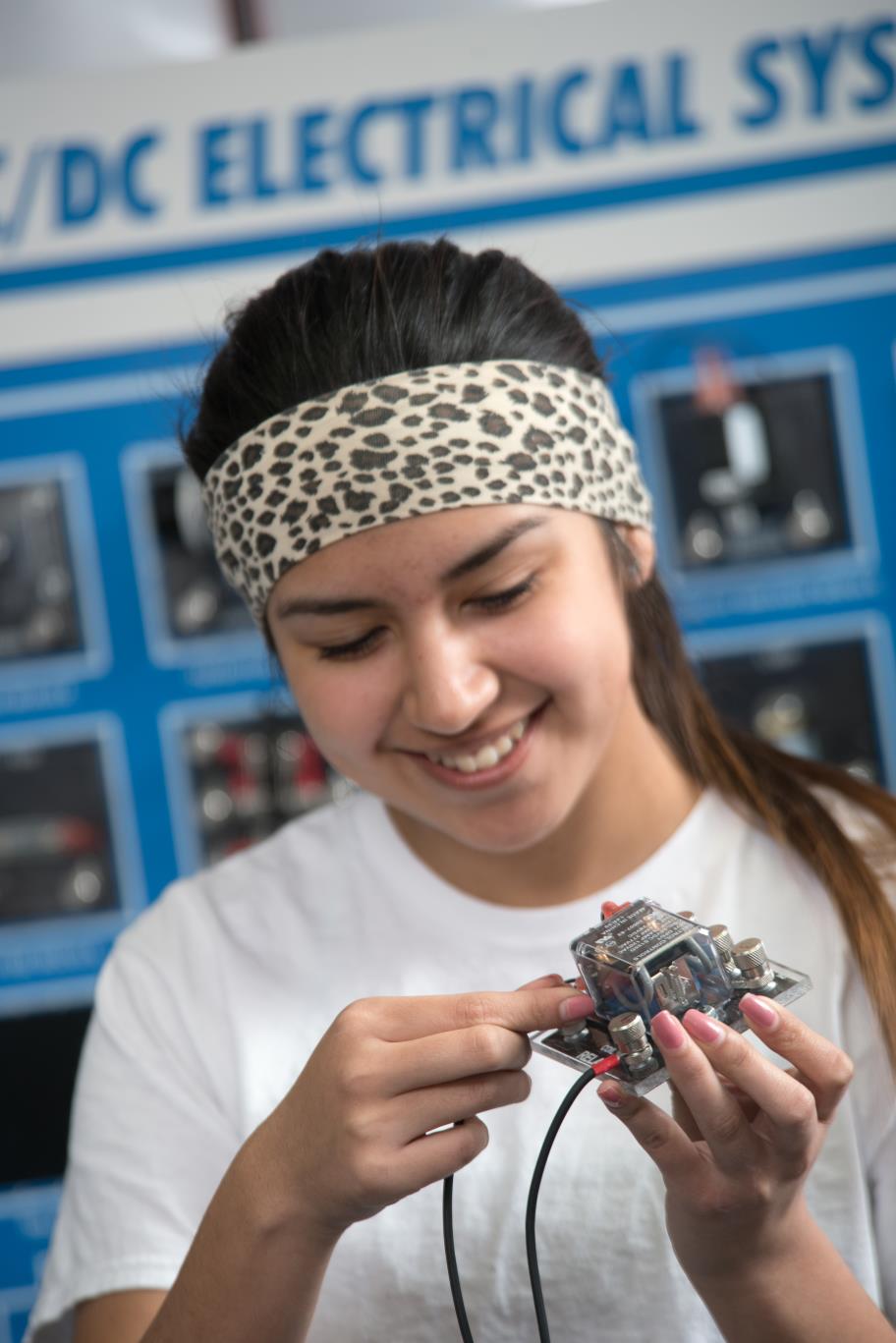
- AC and DC electrical wiring, connectors, switches, and components
- Engineering mathematics that allow students to solve real world technical problems
- Field trips to technical companies and to several engineering colleges
Goals for the Engineering Technology Course
- Student will understand what someone with a technical job, such as an engineer, actually does
- Students will learn technical skills that will be helpful to them no matter what career path they choose
- Improve the student’s ability to problem solve
- Boost the student’s self-confidence related to technical subjects
- Enhance the student’s interpersonal and teamwork skills because they will be working side-by-side with students with similar interests
- Show the students that working with technology and solving problems can be fun and rewarding
| Item | Percentage |
|---|---|
| Assignments, Stations, Projects | 40% |
| Work Habits (includes attendance) | 35% |
| Tests (5 tests) | 25% |
| Total | 100% |
| Grade | Percent |
|---|---|
| A | 93-100% |
| A- | 90-92% |
| B+ | 87-89% |
| B | 83-86% |
| B- | 80-82% |
| C+ | 77-79% |
| C | 73-76% |
| C- | 70-72% |
| D+ | 67-69% |
| D | 63-66% |
| D- | 60-62% |
| E | 59% or below |
Student Code of Conduct
Good student conduct is important for maintaining a healthy course environment. Students enrolled in the Engineering Technologies program are expected to:
- Attend all classes regularly and on time
- Treat others with courtesy and respect
- Follow all safety policies
- Use electronics, such as cell phones, at the appropriate time for an appropriate task
- Behave in a manner that does not disrupt others
- Help to create and maintain a clean and organized classroom and lab space
- Use language appropriate and a professional work environment
Dress Code
Proper work attire is expected regardless of whether we are actively working in the lab. The below standards match industry standards, meet class safety requirements, and will help our students develop the needed safety/professional skills employers are seeking. Students are required to have access to:
- Close-toed shoes
- Long pants without holes (Ideally jeans/100% cotton pants)
- Clothing that fits close to the body without loose strings/catchable fabric or unprotected bare skin
- Hair Ties (provided for students) to tie back hair when working
- Safety glasses (provided for students)
Strict NO CELL PHONE Policy
Studies have found, when an individual is interrupted, it takes up to 20 minutes to get back into the zone. Students do not have the luxury of losing 20 minutes during class time after each distraction. In Industry there are several places you cannot have a phone for security and safety; we model that in Engineering where student must lock away their phones while in the class/lab.
Cell phones (and any other technology for messaging/music/gaming /etc.) must be placed in student’s assigned cell “cubby” as they enter class. Phones/technology can be taken out of their "cubby" when students are dismissed for the day and leave the classroom. There will be 0 tolerance for inappropriate technology use during scheduled class sessions.
Offense during week 1 - Warning, student must complete Additional Assignment on impacts of phone/technology use outside of class.
Offense after week 1 - Confiscating phone/technology, student must complete Additional Assignment on impacts of phone use outside of class, and a call home to discuss appropriate use of technology. Parents/Guardians may come pick up the confiscated phone from the front office at their earliest convince.
2nd/3rd offense - Administration Involvement. Student loses trusted access to all tools/equipment in class until matter is resolved. **Demonstrating proper use of technology is vital to the progression of the class. If students fail to demonstrate ability to follow the policy, this will be taken to demonstrate they cannot be trusted to follow the policies and safety procedures for the other tools/technology used in class.
Photos from the Engineering Technologies program . . .
-
 Click to see a larger version
Skip to end of gallery
Skip to start of gallery
Click to see a larger version
Skip to end of gallery
Skip to start of gallery
-
 Click to see a larger version
Skip to end of gallery
Skip to start of gallery
Click to see a larger version
Skip to end of gallery
Skip to start of gallery
-
 Click to see a larger version
Skip to end of gallery
Skip to start of gallery
Click to see a larger version
Skip to end of gallery
Skip to start of gallery
-
 Click to see a larger version
Skip to end of gallery
Skip to start of gallery
Click to see a larger version
Skip to end of gallery
Skip to start of gallery
-
 Click to see a larger version
Skip to end of gallery
Skip to start of gallery
Click to see a larger version
Skip to end of gallery
Skip to start of gallery
-
 Click to see a larger version
Skip to end of gallery
Skip to start of gallery
Click to see a larger version
Skip to end of gallery
Skip to start of gallery
-
 Click to see a larger version
Skip to end of gallery
Skip to start of gallery
Click to see a larger version
Skip to end of gallery
Skip to start of gallery
-
 Click to see a larger version
Skip to end of gallery
Skip to start of gallery
Click to see a larger version
Skip to end of gallery
Skip to start of gallery
-
 Click to see a larger version
Skip to end of gallery
Skip to start of gallery
Click to see a larger version
Skip to end of gallery
Skip to start of gallery
Student Testimonials
 Download Transcript
The following music was used for this media project:
Music: Speed Energy by WinnieTheMoog
Free download: https://filmmusic.io/song/5879-speed-energy
License (CC BY 4.0): https://filmmusic.io/standard-license
About Engineering Technologies

1 year program
Offered AM and PM
Skills Students Leave with:
- Automation and Robotics
- 3D Printing
- Creative Problem Solving
- Electrical Systems Design & Troubleshooting
- Solid Works 3D Computer-Aided Design
- Teamwork & Collaboration