Automotive Technology
If you love cars, you can truly benefit from this program both personally and professionally. The automakers are doing well once again and are going to need highly-skilled professionals for this industry. This two-year program, which is open to juniors, provides endless career opportunities for students. Whether you want to be a robotical or mechanical engineer, work in an auto repair shop, or own your own business, this program will set you up for success!
Over the two years, you will participate in an Automotive Service Excellence (ASE) and National Automotive Education Foundation (NATEF) certified training program offering several occupational specialties as well as state certification. The State of Michigan certification tests are provided free of charge to eligible students.
Extracurricular activities include the opportunity to participate in the WTC MotorSports Team and to compete for awards and scholarships in the statewide Ford/AAA Auto Skills Contest and the Michigan Industrial Technology Education Society (MITES) competition.
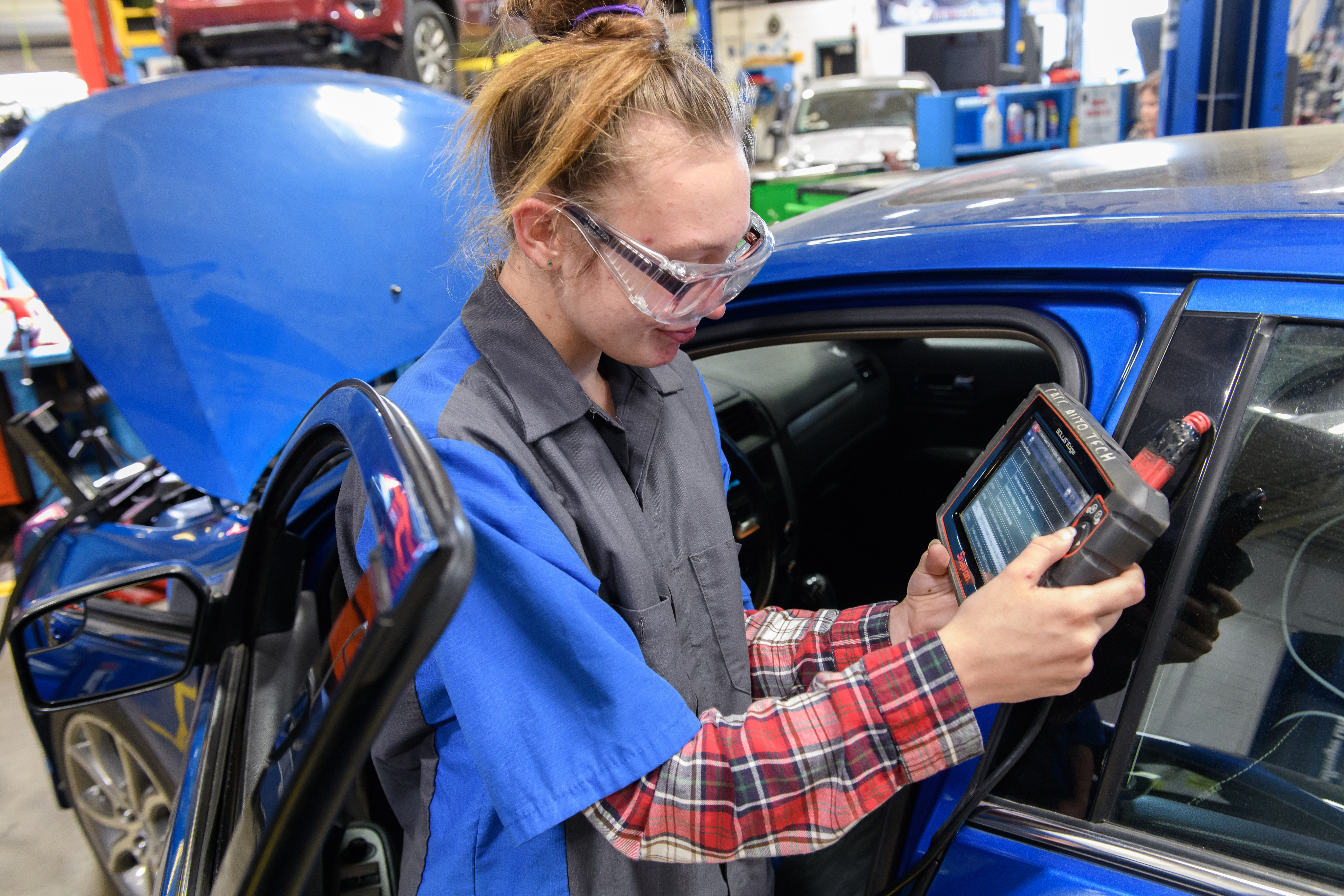
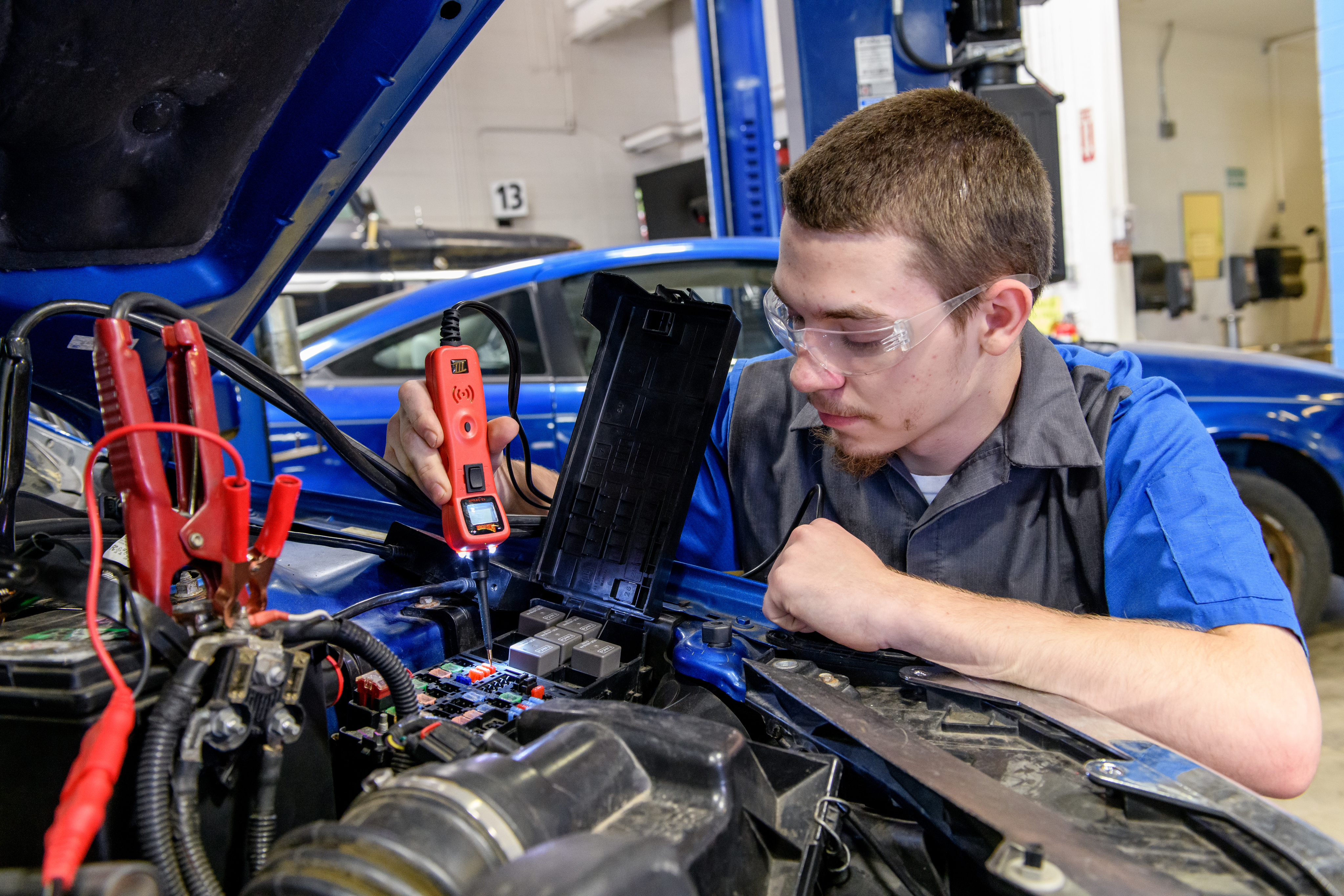
Pursuing automotive technology will give you endless opportunities for careers that include specialization in computer diagnostics, maintenance and light repair, suspension and steering, brakes, engine performance and repair, electrical systems, heating and air conditioning and parts or service advisor, just to name a few.
Program Syllabus
Our mission is to provide students with the essential knowledge, skills, and work habits to excel in their careers and future learning.
Course Title
Automotive Technology
National Career Cluster
Transportation, Distribution & Logistics
Michigan Career Pathway
Engineering, Manufacturing & Industrial Technology
Instructor(s)
Tom Pratt, 517.244.1343
Ian Klages, 517. 244.1369
Instructional Assistants
Cecil Kingsbury, Automotive Specialist
Kevin Cain, Instructional Assistant
Instructor Credentials
State of Michigan Continuing Teaching Certificate
Full Vocational Authorization
ASE Automotive Technician
Types of Credit
See High School Credit Options
Note: Local districts award high school credit, not the WTC
Articulation Agreements
Washtenaw Community College
Ferris State University
University of Northwestern Ohio
Universal Technical Institute
Lansing Community College
Baker College
Davenport University
Lincoln Tech
Delta College
Program Description
Imagine the best possible place to develop a career in Automotive Technology. It would have the latest equipment, the right Instructors, and the chance to take a look, learn an employable skill, or take a step toward a future career in automotive engineering. That place is the Wilson Talent Center. Whatever specialty area you choose, this course will give you the information, the hands-on experience and the confidence to put you on the right path.
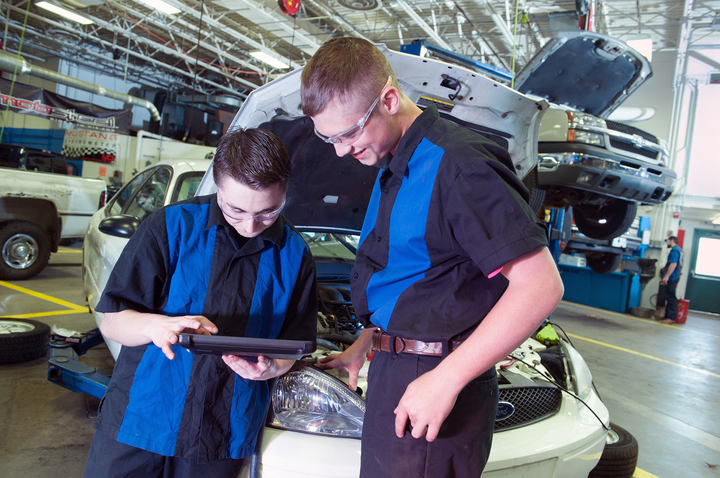
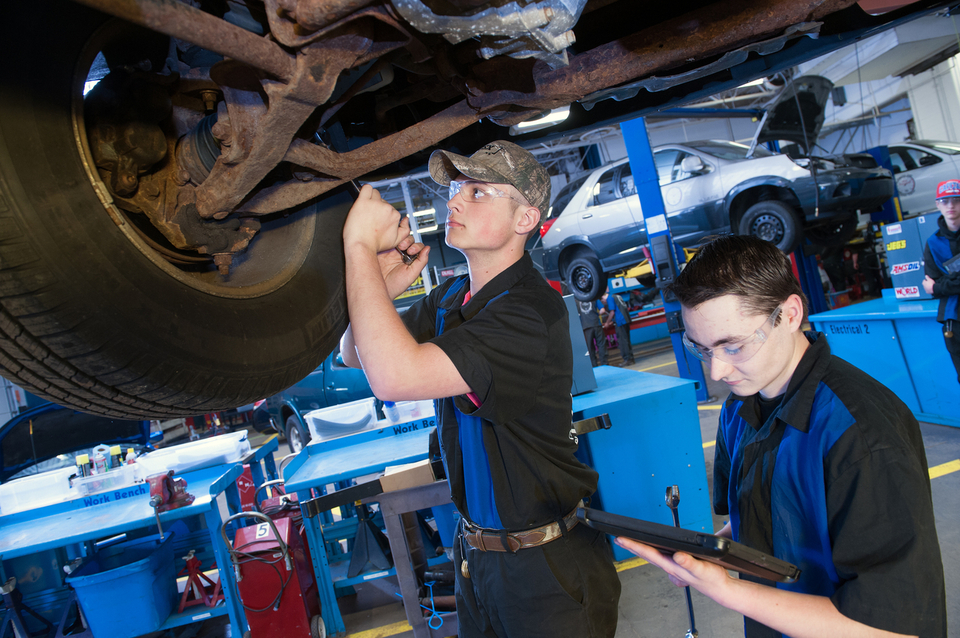
Our ASE Master Certified Automotive Technician Instructors will guide you along the way. In addition to hands-on activities, Instructors use videos, learning modules, guest speakers, demonstrations, on-line curriculum, paid and unpaid work experience and small group instruction. The total emphasis at the Talent Center is on a combination of teamwork, personal management, and academic skills to develop the total worker, and the greatest opportunity for you in the future.
Program Paths and Focus Areas:
MLR Maintenance and Light Repair
Parts and Service Advisor Technology
Recommended Prerequisite High School Classes: To get the most from your experience, we suggest you select classes in:
- Algebra and shop math
- Power mechanics
- Physical science
- Principles of Technology and applied math
- Science and computer Technology
Visit for local salary ranges for potential careers Salary (www.salary.com)
Future Opportunities:
Entry Level: Positions at auto dealerships, independent repair shops, parts suppliers, and automotive manufacturers.
Apprenticeships: Work-based learning experiences ranging from job shadows, field trips, and guest speakers. Many develop into job placement (primarily in the 2nd year).
- Advanced Education/Training: Community colleges, universities, and technical/specialty schools. Options range from owning your own business to advanced degrees in engineering.
Program Scope and Sequence:
Year 1: Automotive Foundations and MLR Pathway Built entirely upon the ASE Education Foundation Maintenance and Light Repair (MLR) standards.
Complete MLR Curriculum Coverage: Safety and Foundations (shop and personal safety skills, automotive tools/equipment, and shop policies) and Electrical Systems.
Foundational MLR Introductions: Entry-level fundamentals for General Maintenance and Inspection, Suspension and Steering, Brakes, Engine Repair, Engine Performance, Automatic Transmissions, Manual Transmissions, and Heating and Air Conditioning (HVAC).
Testing and Credentials: All students test for entry-level certifications in MLR and Electrical. Scoring 70% or higher unlocks the opportunity to take the official State of Michigan licensure exam.
Year 2: Advanced Specialization Academy (Invite-Only) A highly competitive, advanced program capped at the top 20 students from Year 1 based on a 1,000-point leaderboard. Focuses on advanced diagnostics, complex repair scaffolding, and master-level preparation. The ultimate objective is to graduate with a G1 Maintenance and Light Repair Technician Professional Level License and State of Michigan Mechanic Licenses.
Second-Year Admission Framework Weighting:
Category: Shop Production (Lab Hours Completed) | Weight: 400 Points (40%)
Category: Employability Skills (Weekly T.R.A.D.E.S. Evaluation) | Weight: 400 Points (40%)
Category: Credentials and Certifications (ASE and State of Michigan) | Weight: 200 Points (20%)
TOTAL POSSIBLE: 1,000 Points (100%)
Shop Production Performance Tier (400 Points Max): Students must target 2 hours of productive lab work per instructional day (360 hours over an academic year). Points are calculated using the formula: Points Earned = (Actual Lab Hours Completed divided by Target Lab Hours) multiplied by 400.
360+ Hours (100% or Greater): 400 Points (Maximum Cap)
342 Hours (95%): 380 Points
324 Hours (90%): 360 Points
288 Hours (80%): 320 Points (Recommended Year 2 Gate Benchmark)
Credentials and Certifications Bounty System (200 Points Max):
ASE Entry-Level Certification Pass: +25 Points per unique testing module completed.
State of Michigan Mechanic License Pass: +50 Points per legal category credential obtained.
Official Leaderboard Tie-Breaker Procedures: If a tie occurs for the final remaining Year 2 positions, the following metrics will be audited in strict order:
Total number of verified State of Michigan Mechanic Licenses earned.
Total recorded Shop Production Hours completed on live work.
Highest year-end average specifically achieved within the Safety (S) EBR category.
Grading Policy
Grades evaluate the total workplace footprint across three primary weighted learning targets:
Production Skills (45% of Total Grade) Measures the quantity of quality produced work executed on the lab floor. Simulating the commercial Flat-Rate Hourly Pay System, students must log a target of 2 production hours per day (10 hours per week) verified on a weekly checksheet.
Employability Skills (35% of Total Grade) Evaluates workplace punctuality, safety compliance, team collaboration, structural ethics, and coachability. A single fluid grade is maintained in PowerSchool that fluctuates based on daily behavior.
Theory and Vocabulary (20% of Total Grade) Measures technical comprehension of automotive systems and mechanical component functions through daily lectures, discussions, online modules (CDX, Ford ACE, Canvas), quizzes, and tests.
Important Attendance Compound Impact: While attendance is not a standalone percentage, absences inherently prevent you from earning daily Production Hours (45%) and reduce your Employability Skills attendance rating (35%). Students are responsible for coordinating makeup work.
Grading Scale and EBR Alignment:
A+ (Over 100%) | EBR 4 | Advanced / Exceeds Standards
A (93% to 100%) | EBR 3 | Proficient / Meets Standards
A- (90% to 92%) | EBR 3 | Proficient / Meets Standards
B+ (87% to 89%) | EBR 2 | Developing / Approaching Standards
B (83% to 86%) | EBR 2 | Developing / Approaching Standards
B- (80% to 82%) | EBR 2 | Developing / Approaching Standards
C+ (77% to 79%) | EBR 2 | Developing / Approaching Standards
C (73% to 76%) | EBR 2 | Developing / Approaching Standards
C- (70% to 72%) | EBR 2 | Developing / Approaching Standards
D+ (67% to 69%) | EBR 1 | Novice / Below Standards
D (63% to 66%) | EBR 1 | Novice / Below Standards
D- (60% to 62%) | EBR 1 | Novice / Below Standards
E (1% to 59%) | EBR 1 | Insufficient Evidence
F (0%) | EBR 0 | No Evidence
EMPLOYABILITY SKILLS: THE "T.R.A.D.E.S." FRAMEWORK
Proficiency Scale Definitions:
4 | Highly Effective (Exceeds Industry Standards): Demonstrates proficiency without prompting; models leadership.
3 | Effective (Meets Industry Standards): Reliably meets work expectations with minimal supervision; shop baseline.
2 | Developing (Approaching Industry Standards): Inconsistent execution; requires ongoing coaching or corrections.
1 | Ineffective (Below Industry Standards): Rarely satisfies performance criteria; structural intervention required.
Core Success Criteria:
T | Teamwork: Accept, assist, and encourage others. Actively participate on multi-technician service jobs. Gracefully use instructor and peer feedback to refine mechanical execution and workflow efficiency. Practice active listening and face forward during presentations.
R | Responsibility and Accountability: Deliver consistent, industry-grade work on all tasks and assignments. Protect flat-rate capabilities by maintaining an excellent attendance record (striving for no more than 2 excused absences per marking period). Systematically utilize service manuals, wiring diagrams, and TSBs. Perform mandatory, independent tool inventory validations daily. Accept immediate responsibility for shop mistakes.
A | Attitude and Growth Mindset: Lead by example with positive actions and words. Use professional, respectful language with a strict zero-tolerance policy for cursing, crude vocabulary, or slang. Treat peers, instructors, computers, machinery, and customer vehicles with absolute care. Adapt and pivot smoothly when structural or bay changes occur. Keep personal electronic devices put away unless actively researching vehicle service.
D | Dependability and Reliability: Arrive at your station every day completely ready to work at the start bell. Explicitly follow through with complex verbal/written engineering directions and repair orders. Execute service tasks cleanly and correctly the first time.
E | Effort and Shop Engagement: Remain actively disciplined and entirely on task for the duration of the class block. Recognize personal mechanical boundaries and proactively ask for guidance when needed. Work responsibly without requiring constant supervision; move directly to advanced technical coursework if finished early.
S | Safety and Maintenance: Arrive dressed in your official WTC uniform shirt and pants, all-leather footwear, and maintain proper personal hygiene. Comply with mandatory clear, ANSI Z87-rated safety glasses with side shields at all times on the shop floor. Secure long hair and remove jewelry. Adhere strictly to lift operation parameters and chemical storage rules. Clean assigned stalls, benches, and equipment back to strict inspector standards before dismissal. Maintain a zero-tolerance policy for horseplay or reckless driving.
Behavior Policies and Daily Frameworks:
Progressive Discipline Policy: Violations of safety, uniform, or classroom rules will trigger the following steps:
1st Offense: Verbal warning and documentation in the student’s Work Habits record.
2nd Offense: Written warning, Work Habits documentation, and direct parent/guardian contact.
3rd Offense: Formal administrative referral to the WTC Main Office.
Daily Class Sessions and Schedule:
AM Session: 8:00 AM to 10:40 AM
PM Session: 11:35 AM to 2:15 PM
Inclement Weather (Snow Days): In-person classes are canceled if WTC or the operating district closes. It is highly recommended that students utilize snow days to complete online modules at home so they can focus entirely on hands-on lab work when returning.
Daily Classroom Routines:
Arrival: Report directly to assigned seats, log into computers, and review instructions. Begin working quietly on modules while waiting for class to begin.
Instruction: Turn forward and remain completely quiet during direct instruction or guest speaker presentations.
Weekly Friday Home Check-In: Every Friday, students must take their paper Lab Checksheet home. A parent or guardian signature is strictly required every week to ensure open communication regarding technical progress and challenges.
Lab Operations, Safety, and Specialized Procedures:
Required Daily Uniform and Materials: Students must change into uniform after the daily lecture. Missing gear results in a loss of shop privileges.
The below standards were developed with input from the Automotive Technology advisory board, meets industry standards, safety requirements and will help our students develop the needed soft skills employers are seeking.
Official WTC uniform shirt and pants.
All-leather shoes or boots (no tennis shoes or mesh footwear) and socks.
Clear, ANSI Z87-rated safety glasses with side shields.
Ten (10) issued tool tags and a student ID card.
Laptop, and a pen or pencil.
Prohibited Items:
Shorts, sweatpants, jogging pants, tank tops, sandals, or nylon clothing.
Rings, watches, necklaces, and loose jewelry.
Shop Floor Safety Regulations:
Pedestal Grinders: A clear, full-face shield must be worn over safety glasses. Tool rest must be max 3/32 inch from the wheel. Never grind non-ferrous metals (like aluminum) as the wheel can explode.
Hearing Protection: Required when operating air hammers, grinders, cut-off wheels, and power saws.
Hot Work (Welding/Cutting): Ensure the area is clear of flammables, locate the fire extinguisher, and secure prior instructor approval before activating equipment.
Chemical Spills: Any oil, fluid, or chemical spills must be cleaned up immediately by the individual who caused it.
Accidents: Report all injuries, no matter how minor, to an instructor immediately.
Vehicle Service Policies:
Vehicle Protection: WTC-provided fender covers, seat covers, and floor mats must be used on all vehicles.
Wheel Torquing: Any wheel removed during service must be torqued to specification and verified by an instructor/assistant before the vehicle is lowered.
Emissions Law: Modification of emission control systems (e.g., removing catalytic converters) is strictly prohibited.
Driving Operations: Only students with a valid Michigan driver's license may drive vehicles into the bays (no passengers allowed). All on-road test drives are performed exclusively by instructors.
Daily Shop Cleanup Procedures: A bell will signal cleanup daily at 10:25 AM (AM session) and 2:00 PM (PM session). Cleanup is the collective responsibility of all students. Tasks include sweeping/scrubbing floors, restocking bench boxes, wiping down tools, and emptying trash. Early-release students must clean their area 10 minutes prior to departure.
Customer and Personal Vehicle Workflow:
Pre-Approval: All personal vehicle work must be pre-approved and scheduled by an instructor.
Inspection and Repair Order (RO): A walk-around inspection must be completed, and a formal RO must be initiated before work begins.
Service Writer Role: The designated service writer student handles the walk-around inspection, process tracking, parts lookup, and creating the estimate.
Michigan Law Note: The final bill must be within $10.00 or 10% of the quoted estimate provided to the customer.
Payment and Release: Repairs must be paid for in full at completion. The Parts Department will process payment and stamp all copies "PAID" before vehicle release. -- Student Discount: Students purchase parts for their own personal vehicle at cost. Friends and relatives pay full customer retail cost.
Universal Accommodations and Classroom Supports:
Universal Accommodations provide equitable access to learning and internal testing environments without altering course standards or changing what is being measured. Because these are built into the design of the course for everyone, they do not require an official IEP or 504 plan.
Internal Testing and Assessment Supports:
Flexible Settings: Alternate or small group settings, preferential seating, or testing near the instructor.
Movement Allowance: Students may stand, pace, or move during assessments if it does not distract others.
Time Management and Pacing: Periodic tracking updates of remaining time and visual/auditory/physical focus cues.
Clarification: Requesting key words to be highlighted or directions restated in plain text.
Testing Tools: Approved use of highlighters, page flags, reading guides, rulers, or open-notes (when specified for the entire class).
Everyday Digital and Learning Supports:
Text-to-speech reader software integration and closed captioning for instructional videos.
Interactive digital study tools (e.g., Kahoot) and structured unit guides.
Full access to instructor notes and digital presentation files.
Important National Accreditation Notice: The universal classroom accommodations listed above apply only to internal, course-level assignments and tests. No classroom accommodations are permitted on national ASE Entry-Level Certification Exams or State of Michigan Mechanic Certification Exams. Any testing accommodations for those state/national credentials must be independently requested, documented, and approved directly by those governing boards prior to scheduling.
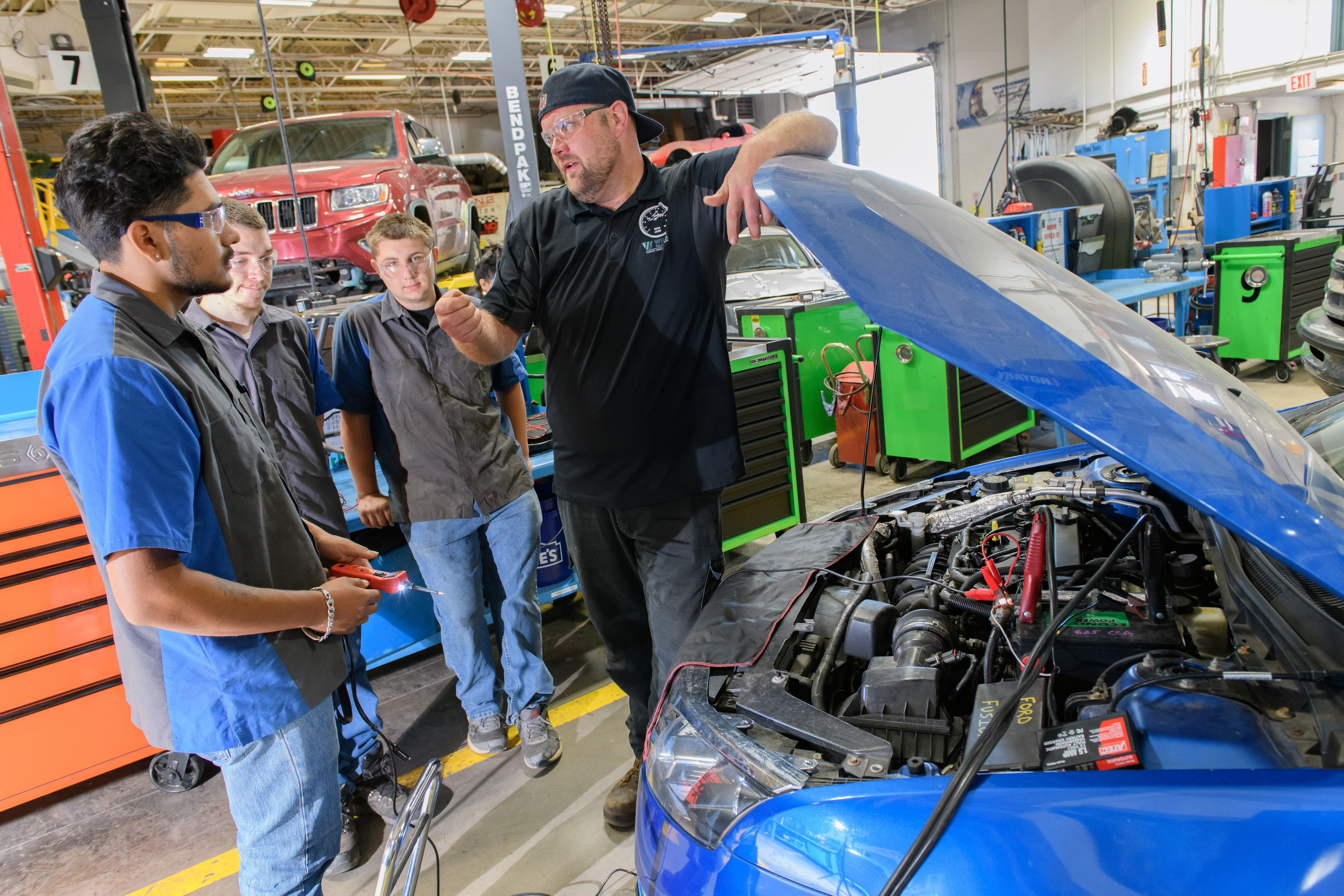
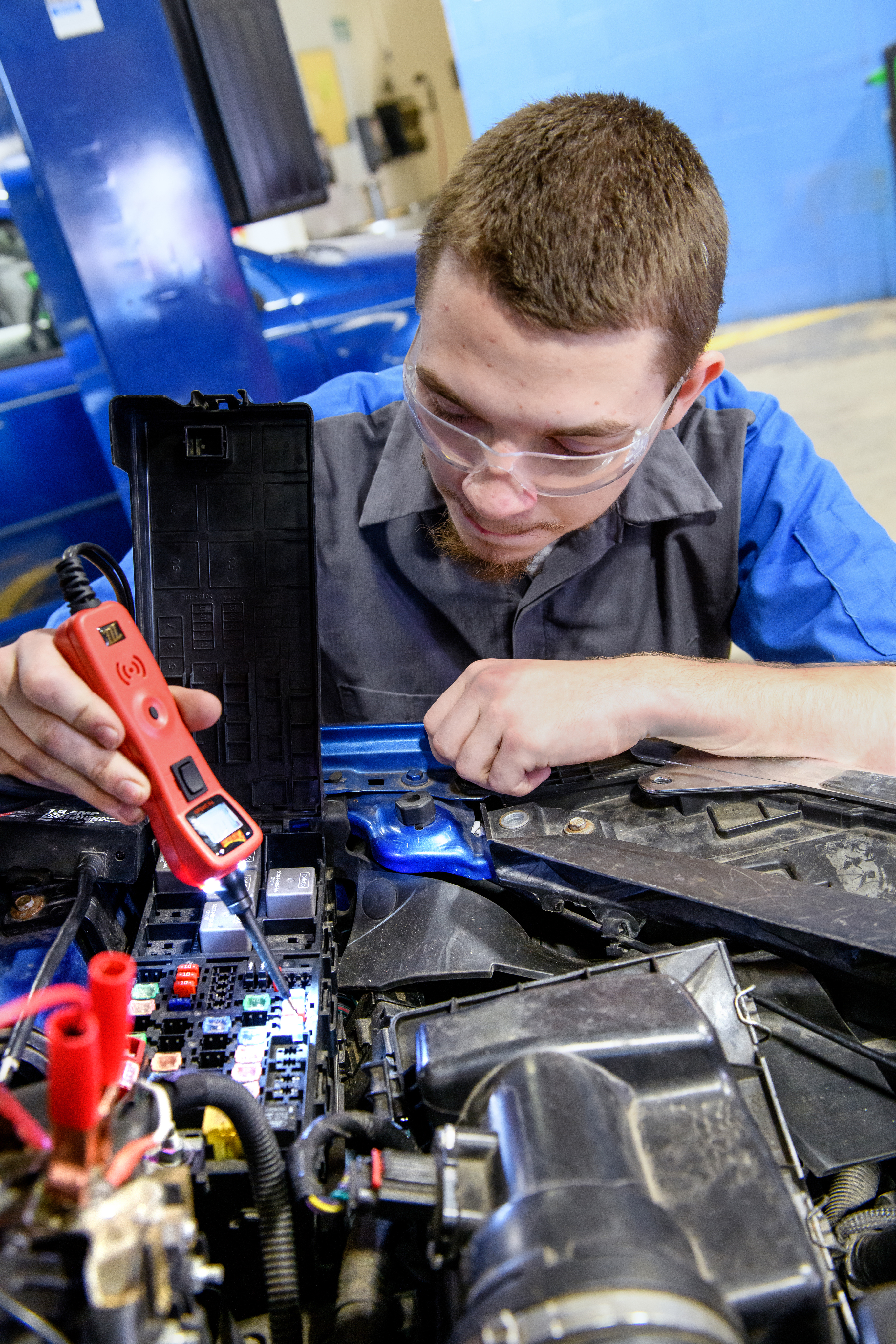
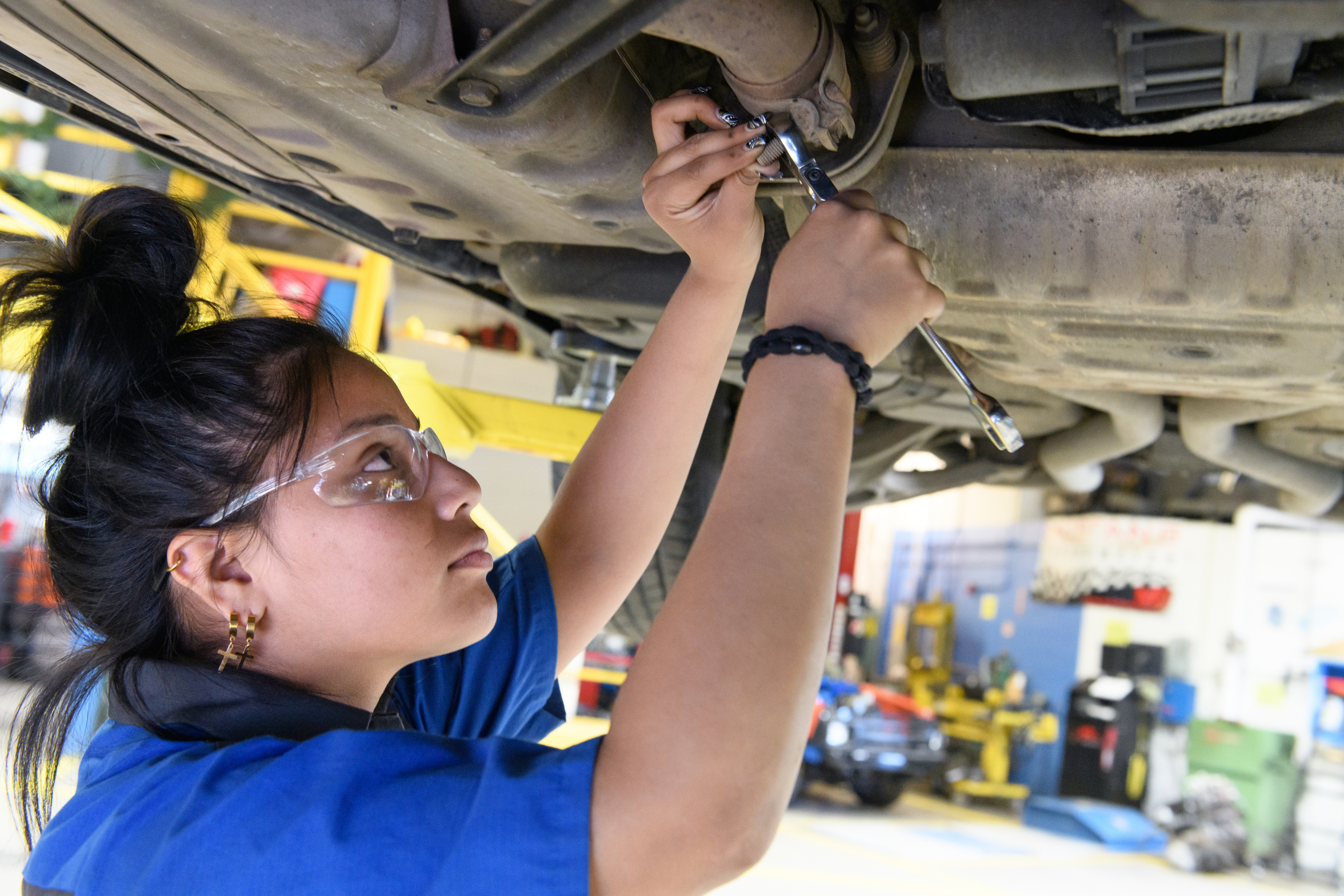
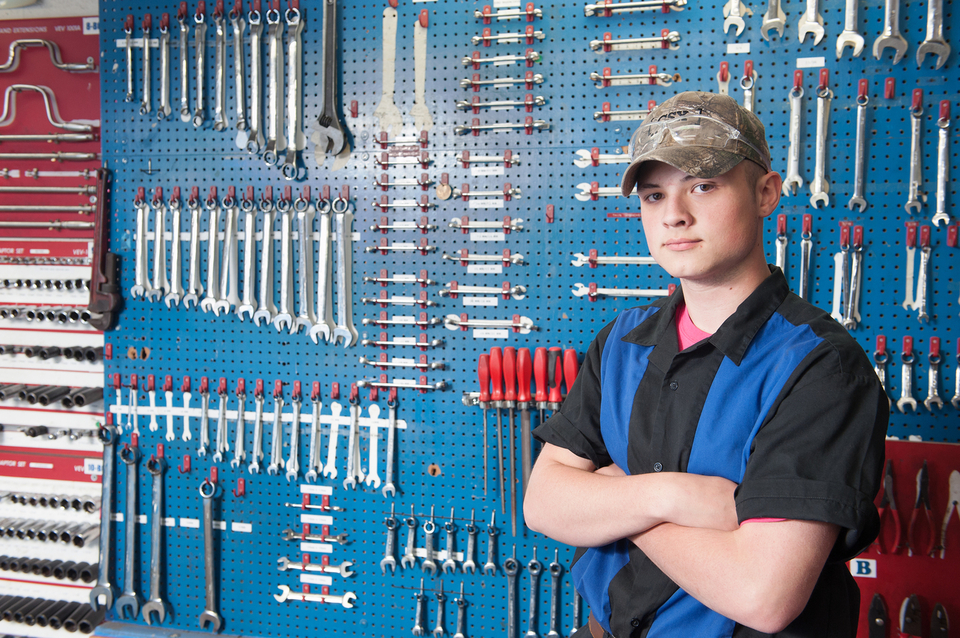
Photos from the Automotive Technology Program . . .
-
 Click to see a larger version
Skip to end of gallery
Skip to start of gallery
Click to see a larger version
Skip to end of gallery
Skip to start of gallery
-
 Click to see a larger version
Skip to end of gallery
Skip to start of gallery
Click to see a larger version
Skip to end of gallery
Skip to start of gallery
-
 Click to see a larger version
Skip to end of gallery
Skip to start of gallery
Click to see a larger version
Skip to end of gallery
Skip to start of gallery
-
 Click to see a larger version
Skip to end of gallery
Skip to start of gallery
Click to see a larger version
Skip to end of gallery
Skip to start of gallery
-
 Click to see a larger version
Skip to end of gallery
Skip to start of gallery
Click to see a larger version
Skip to end of gallery
Skip to start of gallery
-
 Click to see a larger version
Skip to end of gallery
Skip to start of gallery
Click to see a larger version
Skip to end of gallery
Skip to start of gallery
-
 Click to see a larger version
Skip to end of gallery
Skip to start of gallery
Click to see a larger version
Skip to end of gallery
Skip to start of gallery
-
 Click to see a larger version
Skip to end of gallery
Skip to start of gallery
Click to see a larger version
Skip to end of gallery
Skip to start of gallery
Student Testimonials
 Download Transcript
Music:
"Summon the Rawk" Kevin MacLeod (incompetech.com)
Licensed under Creative Commons: By Attribution 4.0 License
creativecommons.org/licenses/by/4.0/
About Automotive Technology
2 year program
Offered AM and PM
Skills Students Leave with:
- Suspension & Steering
- Braking Systems
- Electrical Systems
- Engine Performance & Repair
- Automotive Welding
- Maintenance and Light Repair