
Culinary Arts & Hospitality
If you love to cook or have a strong desire to work in the food industry, join the ranks of chefs from around the world to create meals that are unforgettable. Our nationally ranked Culinary Arts & Hospitality program will get you started, help you find a college culinary program and set you up for future success.
In this program, you will learn traditional French culinary terminology and participate in creative projects throughout the year. You will also have the opportunity to create and present your own recipes to selective judges and participate in many culinary competitions such as SkillsUSA, ProStart and Family, Career and Community Leaders of America (FCCLA).
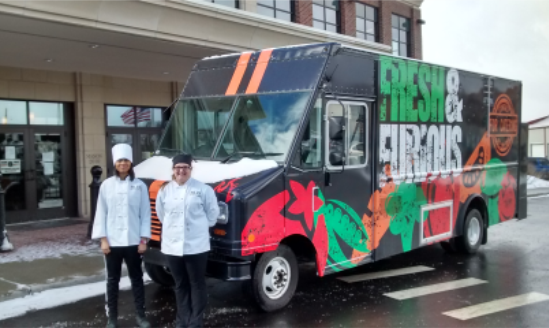
As the only Michigan high school program to operate a food truck, The Fresh & Furious, you also get an entrepreneurial experience. You will learn how to order supplies, manage money, set up for an event, serve clients and manage restaurant and catering operations.
As you might expect in a customer service industry such as this, professionalism is a must. Learning how to work together as a team, create delicious, beautiful meals, problem solve and be business professionals are all part of this dynamic program.
Program Syllabus
Our mission is to provide students with the essential knowledge, skills, and work habits to excel in their careers and future learning.
Culinary Arts
National Career Cluster: Hospitality & Tourism
Michigan Career Pathway: Human Services
Instructor(s)
Chef Baylee Anderson (Year 2)
Associate of Business, Concentration in Entrepreneurship, Baker College
Baking & Pastry Arts, Culinary Institute of Michigan
Bachelor of Business Administration, Baker College
Master of Business Administration, Concentration in Business Intelligence, Baker College Center for Graduate Studies
Standard Teaching Certificate, Endorsement in Cooking & Related Culinary Arts - Ferris State University
Chef Meegan Smith (Year 1)
Instructional Assistant: Zach Rhynard
Contact Information: 517-244-1340
Chef Baylee: baylee.anderson@inghamisd.org
Chef Megan: mmsmith@inghamisd.org
Chef Zach: zach.rhynard@inghamisd.org
Types of Credit
See High School Credit Options
Note: Local districts award high school credit, not the WTC.
Articulation Agreements
Lansing Community College
Baker College
Davenport University
Henry Ford Community College
Washtenaw Community College
Jackson College
Grand Rapids Community College
Ferris State University (direct and articulated credit available)
Sullivan University
Special Requirements
Students are required to wear a chef jacket, chef pants, chef hat, apron and closed toed non-skid shoes during the entire kitchen lab experience & classroom instruction. Students will be provided with two chef pants, two chef coats, and a hat. Students must provide their own black, closed toe non-skid shoes.
Each student will be supplied with a three ring binder, loose leaf paper, sharpie, and pen for class. Calculators are also provided as needed. All textbooks are provided as well.
If students are to lose an article of their uniform, they will need to replace it at cost.
Dress Code
The below standards were developed with input from the Culinary Arts advisory board, meets industry standards, safety requirements and will help our students develop the needed soft skills employers are seeking.
Students must wear a clean uniform to class every day unless advised otherwise. Uniform is expected to be worn for the duration of the entire class period. Complete uniform consists of a clean chef coat, clean chef pants, chef hat, and black non-skid shoes. Hair that falls below ear level requires restraint for safety & sanitation purposes. No jewelry on hands and wrists, including watches, will be permitted.
WTC Dress Code will be strictly enforced.
Program Description
The Culinary Arts Program is designed as an exploratory opportunity within the Business, Marketing, Management, and Technology Career Pathway allowing students to broaden their understanding of the Hospitality Industry. The course encompasses the management, marketing and operations of restaurants and other food services, lodging, recreation events and travel related services. The program is two years in length and offers possible independent study in the second year with permission and requirements being met for the program.
Requirements for Year 2
Students must pass 3 certifications in their first year (ServSafe Food Protection Manager, ServSafe Allergen, & Foundations Level 1). Students must have an average grade of 70% or higher upon completion of MP4. Attendance issues and inappropriate behaviors can result in ineligibility for year 2.
Course Objectives
Students will:
- Demonstrate through practical application, knowledge of cooking terms and techniques for a variety of foods and ethnicity.
- Demonstrate through practical application, knowledge of equipment safety, sanitation and safe food handling practices.
- Plan, prepare and serve a gourmet meal for a large party, including, but not limited to an appetizer, salad, soup, main entree and dessert.
- Demonstrate through practical application, knowledge of plate and table presentation.
- Participate in field excursions to different types of lodging and culinary facilities to witness management styles and techniques beyond the teaching text.
- Produce written and mathematical documents to support text work.
- Prepare detailed plans and execute production for a variety of events including meeting, celebratory events, weddings, etc.
- Utilize skills and techniques in at least two community service events throughout the school year.
- Will take part in at least two of the field trips that are scheduled during the school year.
Grading Scale
A/PR or EX | 93-100% |
A-/PR | 90-92% |
B+/PR or AP | 87-89% |
B/AP | 83-86% |
B-/AP or DV | 80-82% |
C+/DV | 77-79% |
C/DV | 73-76% |
C-/DV or NE | 70-72% |
D+/NE | 67-69% |
Class Policies and Procedures
Dress:
1. Every day when the bells rings you need to be in uniform:
- Non skid black closed toed shoes
- Chef pants
- Chef coat
- Chef hat
2. Hair below ears needs to be tied back neatly & professionally
3. Students not in full uniform will not be allowed to participate in the lab & will have an alternative assignment. This will be reflected in Employability Skills.
Professional Conduct:
Students will maintain professional distances and contact with their peers.
Students will use appropriate and professional language.
Cell Phones:
Students will have an assigned phone slot in the phone holder. Phones are to be placed in their assigned spot before the bell rings and must be turned off or silenced. At no time during the class period will phones be permitted unless advised otherwise. If parent/guardian contact needs to be made, students are able to use the classroom landline.
Breaks:
Lab days: No break
Classroom days: 10 minute break in the classroom at 9:00 AM or 1:00 PM. Students may not leave the culinary wing without permission.
Bathroom Breaks:
There is one pass for the female bathroom and one for the male bathroom in each lab and the classroom. Students must have a pass. Only one person in the bathroom at a time.
Food & Drink:
Lab: drink must have a lid with a straw. Must be placed under the workstation. Eating will happen at the end of lab with time permitting after all dishes and work areas are cleaned.
Classroom: Food & drinks are permitted. If eating becomes a distraction or hindrance from accomplishing work or disrupts the class, eating will be allowed on break time.
If students do not pick up garbage from food & drink, this privilege may be revoked.
Assignments: (Consequences below do not apply)
For absences, please consult with teachers for work prior to a planned leave. Work is due on day of return. If absence is not anticipated, students have 2 days to complete/turn in work for full credit.
Late work will impact Employability Skills. No late work will be accepted the last week of the marking period.
Clean up:
In the lab, by the end of the class period:
stations must be washed and sanitized
additional equipment removed, cleaned and put away
dish pit needs to be cleared and scrubbed
Dishes need to be on the drying rack and put away, time permitting.
In the classroom, by the end of the class period:
Tables need to be cleared
Chairs are pushed in
Books put back to appropriate place
Any trash is discarded
Chromebooks:
Students MUST sign out of their chromebooks at the end of their session
Students MUST put their chromebook in the appropriate slot and plug it into the charger.
If students are found to not have followed these rules, employability skills will be impacted.
Policy/Procedure infraction consequences Each infraction will be handled in the following ways:
First time is a verbal and written warning; logged in PowerSchool.
Second time will be documented in PowerSchool, reflected in Employability Skills and student will email parents, instructor and AP. Email will be logged in PowerSchool.
Third time (and subsequent times) student will lose lab privileges for the next lab day, it will be documented in PowerSchool, Employability Skills and student will email parents, instructor and AP. Email will be logged in PowerSchool.
Fourth offense will follow step 3 will be followed along with an office referral. All communications and disciplinary action will be logged in PowerSchool.
Safety Procedures
Students are expected to conduct themselves in a safe manner in the classroom and laboratory; no horseplay or running. Safety and sanitation procedures will be strictly enforced. Any student who threatens or endangers others will be referred to the office immediately.
Attendance
Refer to information in your Wilson Talent Center student/parent handbook for attendance policies & procedures.
Make-up & Late Work
The student is given adequate class time to complete most assignments.
A student whose IEP requires additional time for work will be fully accommodated.
Students who have an unplanned absence will be given their assignments upon return to school and assigned a due date based on the number of days absent and the amount of the work to be completed.
Student Organizational Opportunities
ProStart (Culinary Arts, Restaurant Management, Pasta, Tabletop Design, Knife Skills, Knowledge Bowl)
Cook Around the World, Capitol/Washington D.C. Culinary Tour
YEAR ONE:
Textbooks and Certifications:
Foundations of Restaurant Management & Culinary Arts, Third Edition: Level One, National Restaurant Association Educational Foundation
ServSafe Food Protection Manager Certification
ServSafe Allergen
Curriculum Outline for the Year
MP1, September-October: ServSafe Food Protections Manager, Ch 1. Welcome/History to Industry
MP2, October-November: Ch 14. Kitchen Basics, Ch 15. Culinary Math, Ch 13. Knives & Smallwares and Knife Cuts, Ch 12. Equipment, Ch 2. Career Opportunities
MP3, December-January: Ch 20. Intro to Baking, Ch 18. Cooking Methods, Ch 8. Communication Skills, Ch 18. Stocks, Soups, & Sauces, Culinary Math
MP4, January-February: Ch 5. Front of the House, Ch 4. Back of the House, Ch 6. Career Preparation, Ch 17. Sandwiches & Pizza, Culinary Math
MP5, March-April: Ch 7. Professional Expectations, Ch 16. Salads, Dressings, & Dips, Ch 9. Workplace Safety, Culinary Math
MP6, April-June: Ch 10. Principals of Great Service, ServSafe Allergens, Culinary Math, Review and Exam for Foundations Level 1
YEAR 2:
Textbooks & Certifications:
Foundations of Restaurant Management & Culinary Arts, Third Edition: Level Two, National Restaurant Association Educational Foundation
ServSafe Alcohol Certification
Culinary Math Principles & Applications, 3rd ed.
Enterprise Management & Entrepreneurship: Catering & the Fresh & Furious Food Truck
Curriculum Outline for the Year
MP1, September-October: Intro to Culinary 2 - ServSafe Review - Ch. 6 Eggs & Dairy - Ch. 7 Breakfast Cookery - Ch. 1 Defining Your Concept Market - Ch. 2 Menu Development & Management - Ch. 3 Intro to Cost Control - FOOD TRUCK PRODUCTION
MP2, October-November: Ch. 9 Veggies - Ch. 10 Potatoes, Grains, and Pasta - Ch. 8 Fruits - Ch. 18 Cakes & Pies - Ch. 5 Purchasing, Receiving, & Managing Inventory - Ch. 4 Food, Beverage, & Labor Costing - FOOD TRUCK PRODUCTION (Vegetarian, Potato, & Pasta Focus) - CHILI COOKOFF
MP3, December-January: Ch. 19 Desserts - Ch. 17 Yest Breads - Ch. 20 Modern Plating - Ch. 11 Intro to Management - Ch. 12 Risk Management 10TH GRADE VISITS - THANKSGIVING & CHRISTMAS BREAKS
MP4, January-February: Ch. 14 Meat - Ch. 15 Poultry - Ch. 16 Seafood - MOCK INTERVIEWS - CAPSTONE
MP5, March-April: Ch. 13 Healthy Menus - Ch. 11 Intro to Management - Ch. 12 Risk Management - PROSTART STATE COMPETITION - FIREKEEPERS FIELD TRIP - HORROCK'S FIELD TRIP - FOOD TRUCK RETURNS"
MP6, April-June: D.C. TRIP - SERVSAFE ALCOHOL - SHOWCASE - EMPLOYEE RECOGNITION DINNER - CAPSTONE DINNER
Grading
Culinary Year 2 will be using Evidence-Based Reporting (EBR) this school year. EBR is used to ensure that a student’s grade reflects their learning based on our course’s learning expectations. EBR is also known as standards-based grading which emphasizes mastery of skills rather than completion of tasks.
You may notice some differences in PowerSchool. There may be times when it seems like fewer grades are entered into the system or you may see projected grades. This is because EBR focuses on mastery of skills and collecting a variety of evidence rather than completion of tasks. It is intended to provide clear expectations regarding what they need to know/provide evidence for and gives them the ability to improve their outcome if they choose to do so. EBR allows students to have multiple opportunities to show what they have learned and earn an appropriate grade. Although the process of earning grades is different, all students will continue to earn letter grades that are reported back to their home district.
Below you will see what grades detail in EBR:
Developing (DV) | Approaching Proficiency (AP) | Proficient (PR) | Exceptional (EX) |
I can meet product quality expectations with instructional support and prompting | I can meet product quality expectations independently, with minimal prompting. | I can meet product quality expectations consistently and independently. | I can meet product quality expectations consistently and independently while providing guidance to fellow students. |
Culinary Year 2 Goal Calendar - there are three essential competency areas students will be graded on: Employability Skills, Production, and Product Quality throughout the school year.
Culinary Arts & Hospitality- Year 2 Evidence Based Goal Calendar 2026-2027 | ||||||
Essential Competency Area (ECA) | October- MP1 | November- MP2 | January- MP3 | February- MP4 | April- MP5 | June- MP6 |
Employability | PR | PR | PR | PR | PR | PR |
Production | AP | AP | PR | PR | PR | PR |
Product Quality | AP | AP | AP | PR | PR | PR |
How grading will work based on the goal calendar:
How do I calculate my student’s grade?
A students grade is:
A- meeting and/or exceeding the goal for all ECAs.
B- not meeting goal calendar in 1 ECA.
C- not meeting goal calendar in 2 ECAs.
D- on scale in all ECAs but not meeting goals.
F- not on scale in any ECA.
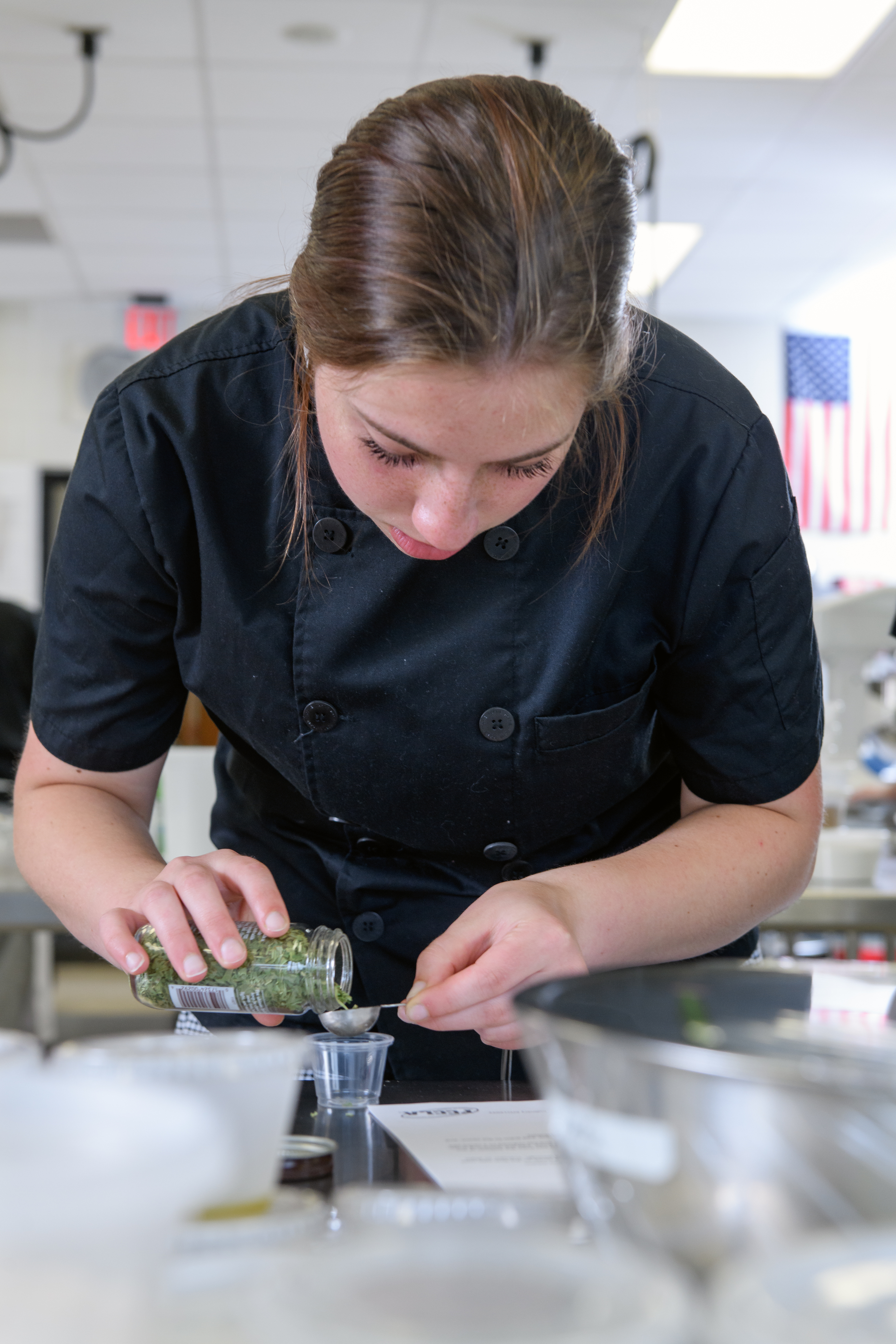
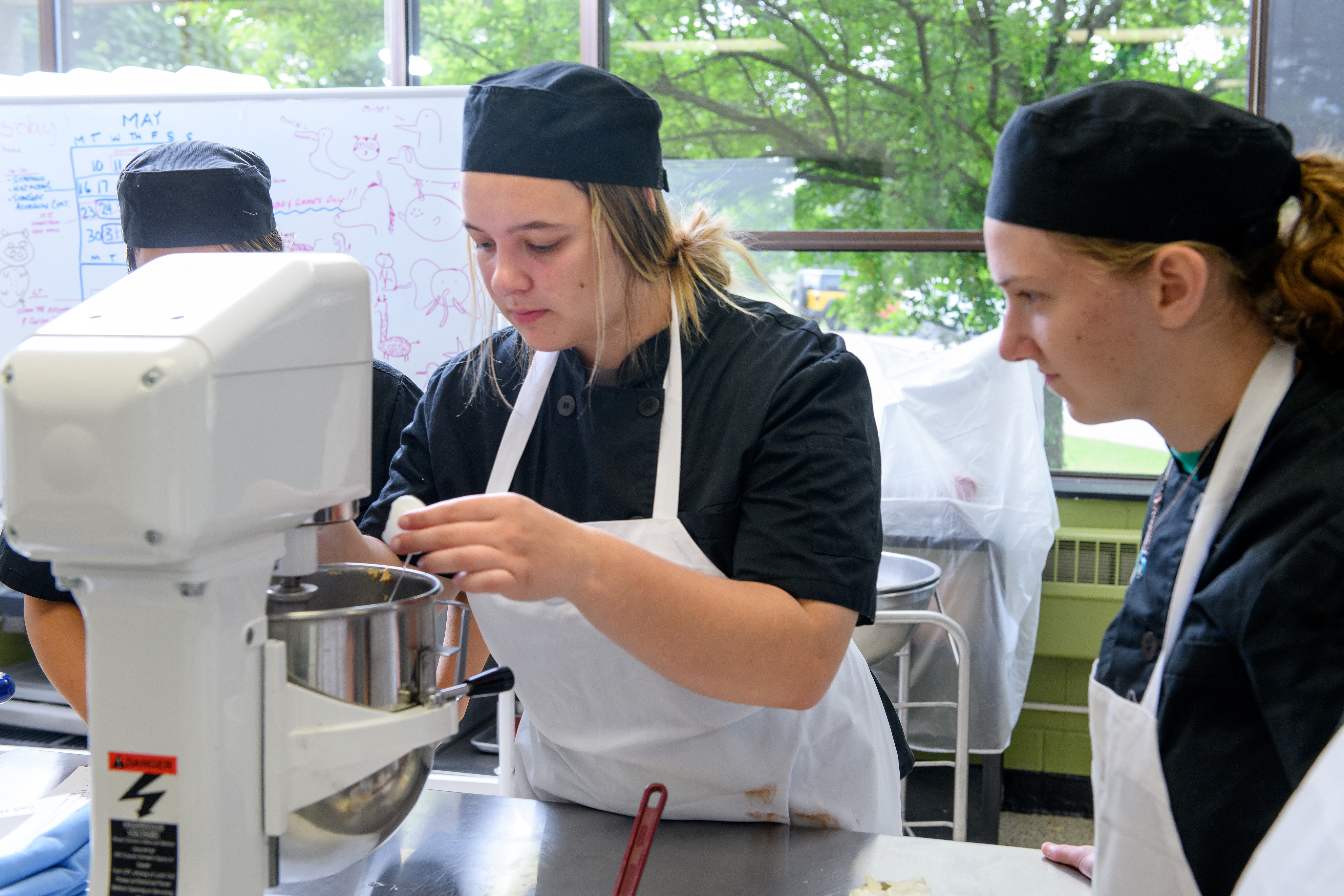
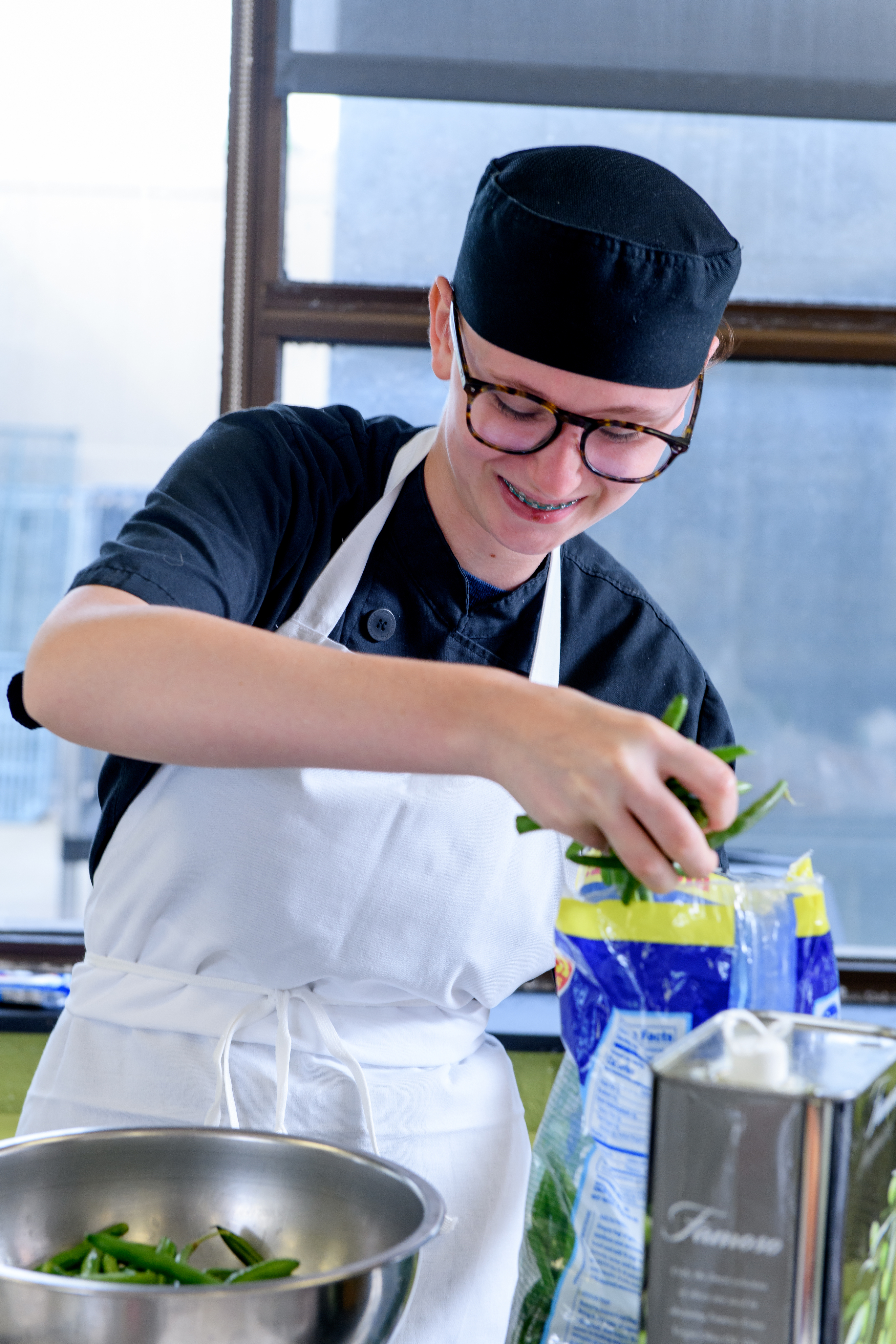
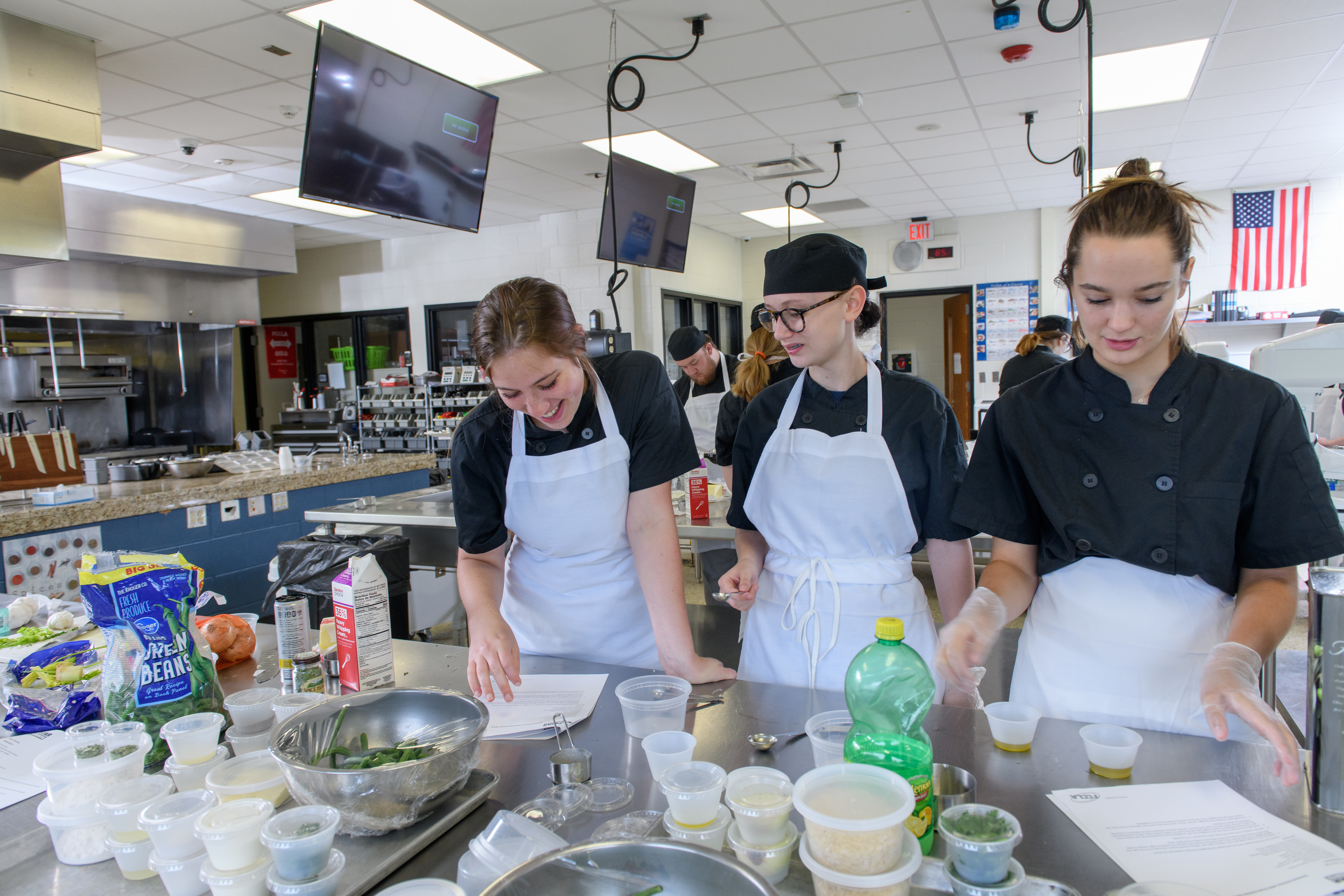
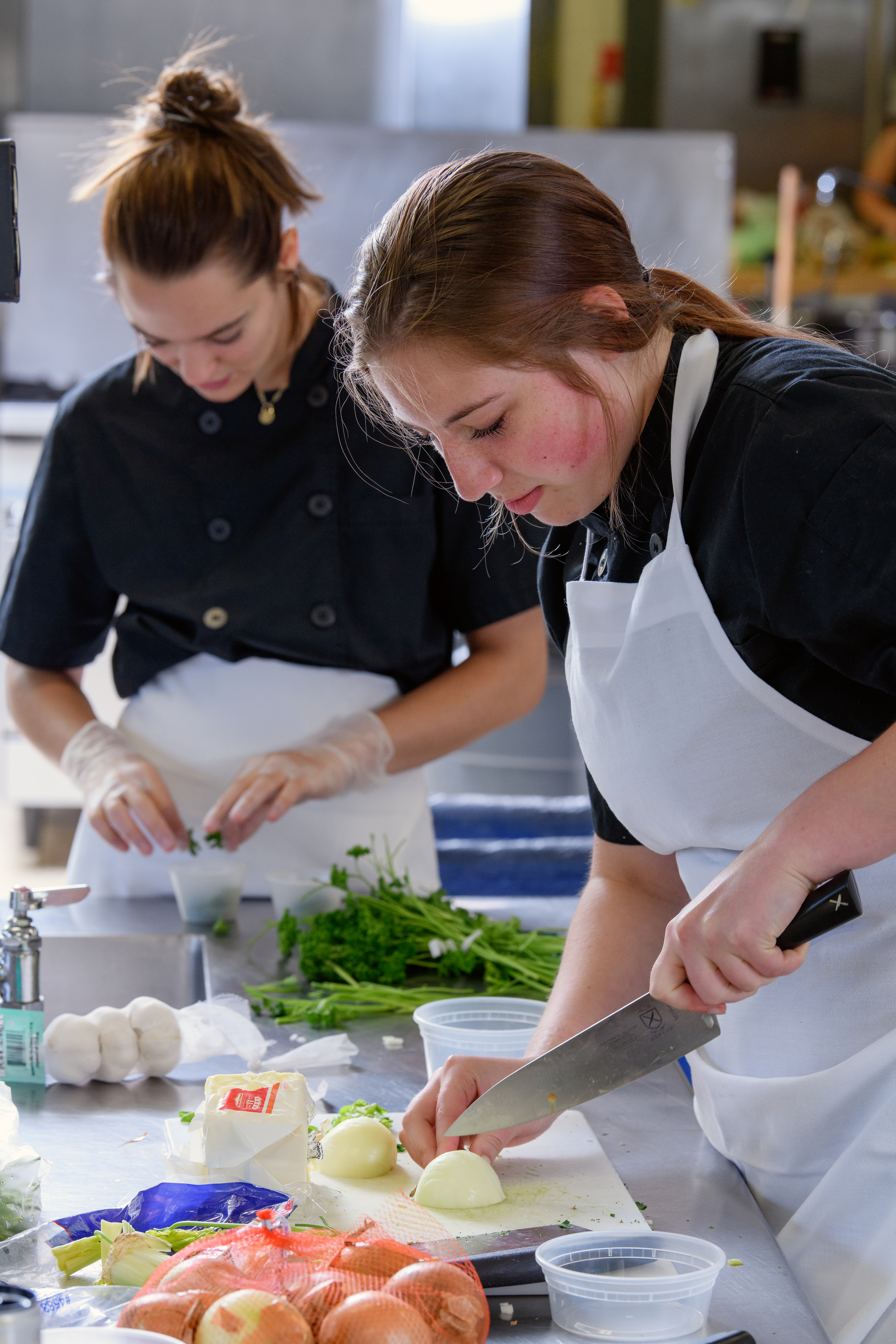
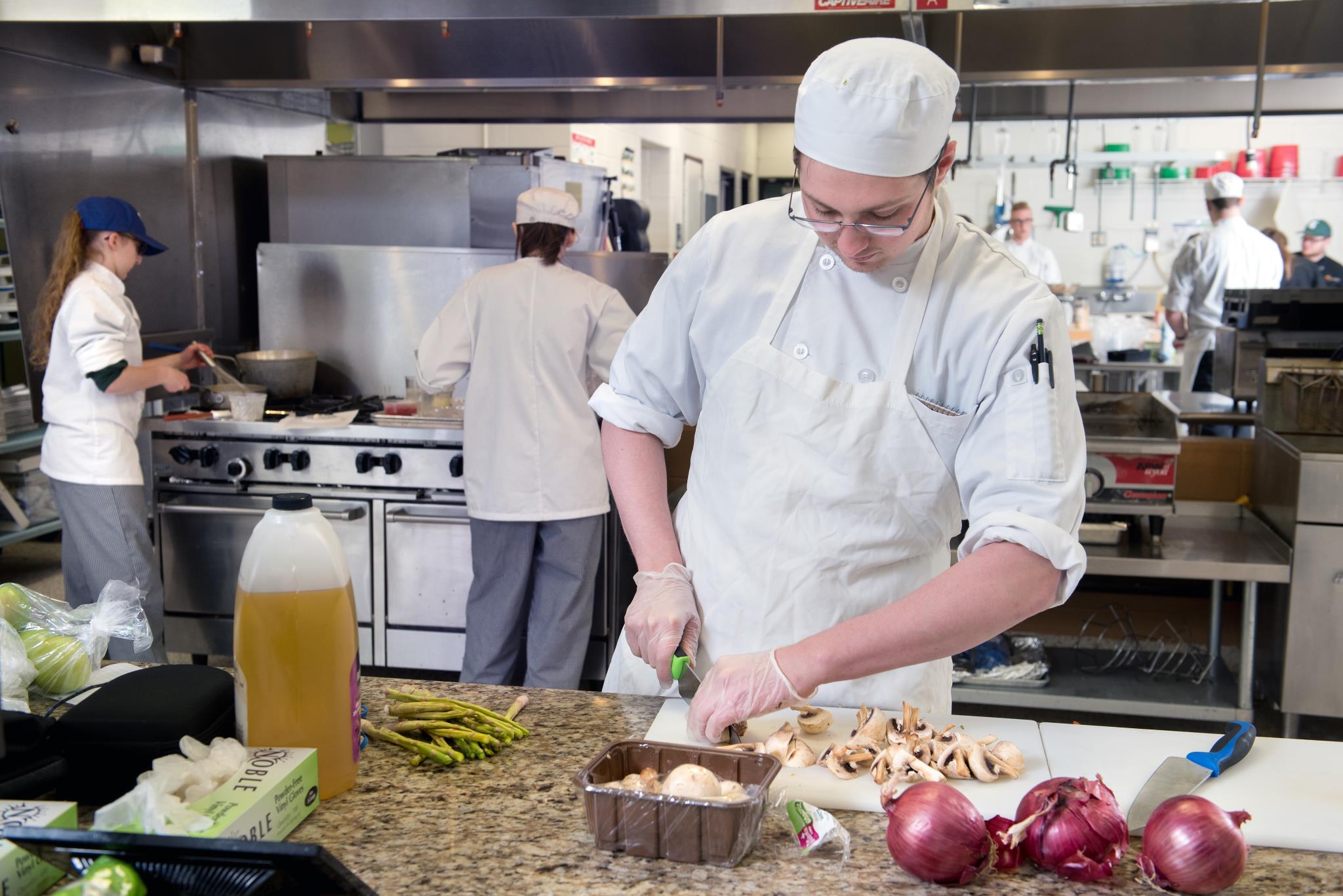
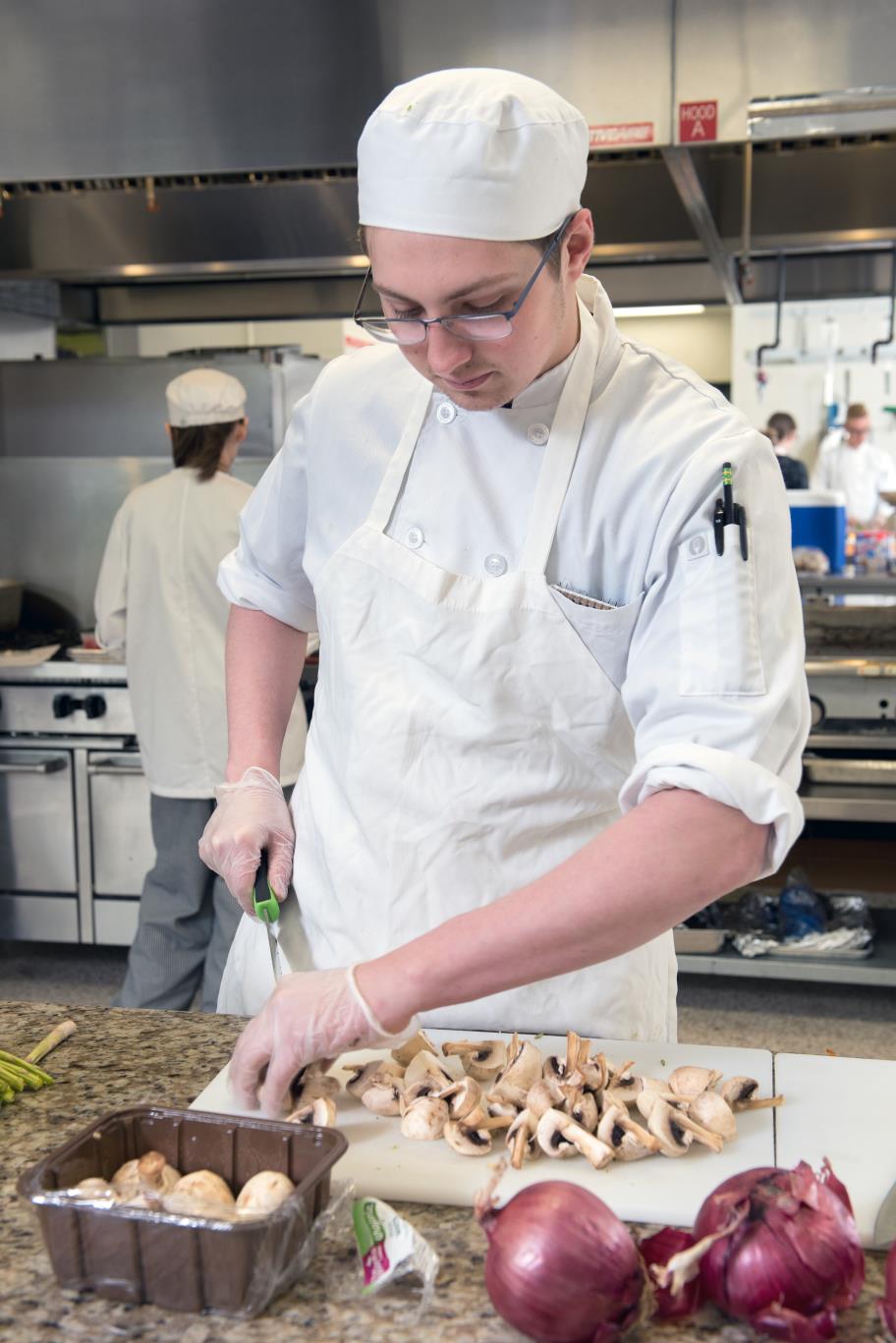
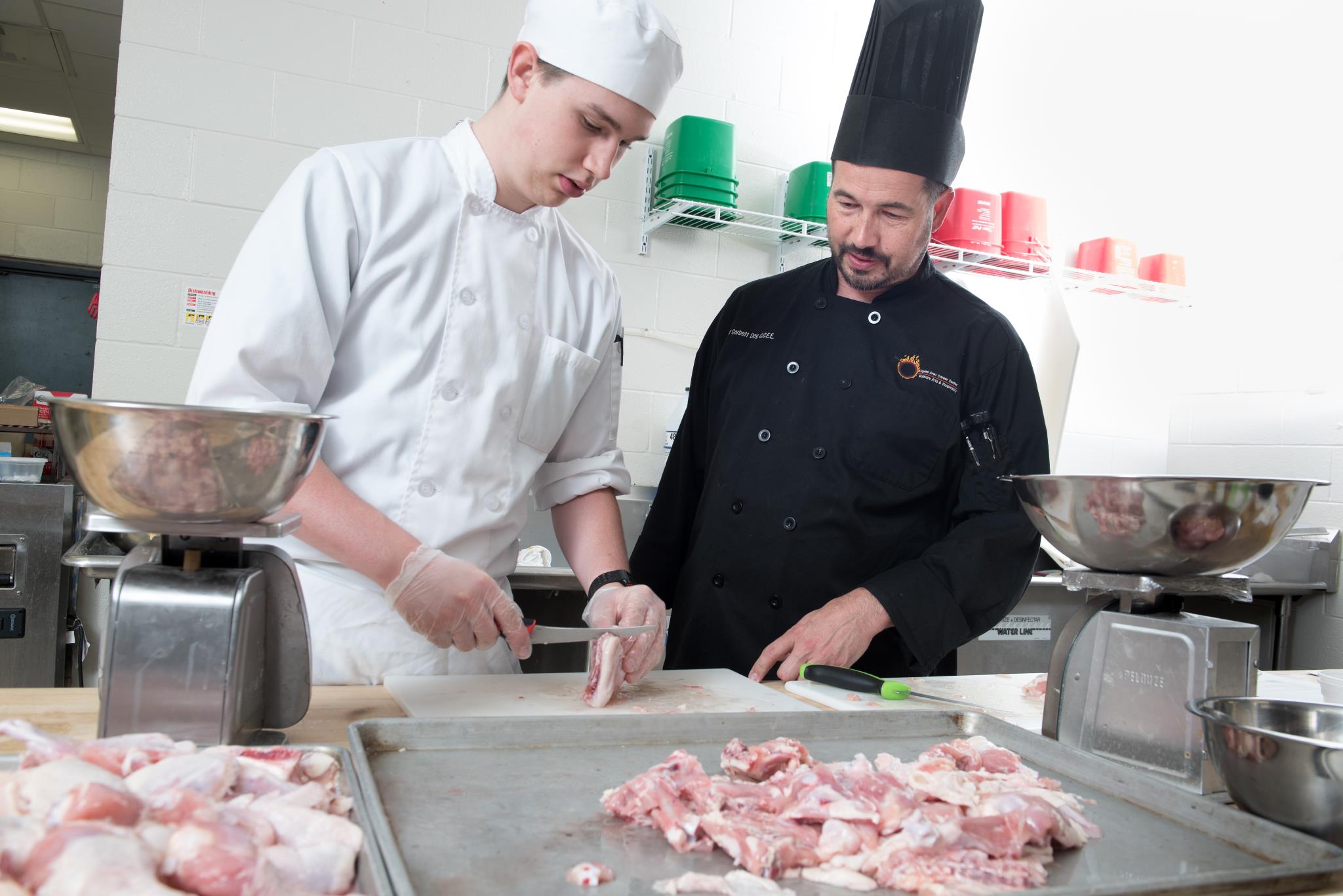
Photos from our Culinary Arts & Hospitality program . . .
-
 Click to see a larger version
Skip to end of gallery
Skip to start of gallery
Click to see a larger version
Skip to end of gallery
Skip to start of gallery
-
 Click to see a larger version
Skip to end of gallery
Skip to start of gallery
Click to see a larger version
Skip to end of gallery
Skip to start of gallery
-
 Click to see a larger version
Skip to end of gallery
Skip to start of gallery
Click to see a larger version
Skip to end of gallery
Skip to start of gallery
-
 Click to see a larger version
Skip to end of gallery
Skip to start of gallery
Click to see a larger version
Skip to end of gallery
Skip to start of gallery
-
 Click to see a larger version
Skip to end of gallery
Skip to start of gallery
Click to see a larger version
Skip to end of gallery
Skip to start of gallery
-
 Click to see a larger version
Skip to end of gallery
Skip to start of gallery
Click to see a larger version
Skip to end of gallery
Skip to start of gallery
-
 Click to see a larger version
Skip to end of gallery
Skip to start of gallery
Click to see a larger version
Skip to end of gallery
Skip to start of gallery
-
 Click to see a larger version
Skip to end of gallery
Skip to start of gallery
Click to see a larger version
Skip to end of gallery
Skip to start of gallery
-
 Click to see a larger version
Skip to end of gallery
Skip to start of gallery
Click to see a larger version
Skip to end of gallery
Skip to start of gallery
Student Testimonials
About Culinary Arts & Hospitality

1-2 year program
Offered AM and PM
Skills Students Leave with:
- Customer Service
- Restaurant Etiquette
- Catering Services
- Supply Ordering
- Money Managment