
Healthcare (Various Options)
Health Foundations
Interested in Healthcare, but not sure about your career options? Well the options are endless, and the Wilson Talent Center can help prepare you for whatever area you choose.
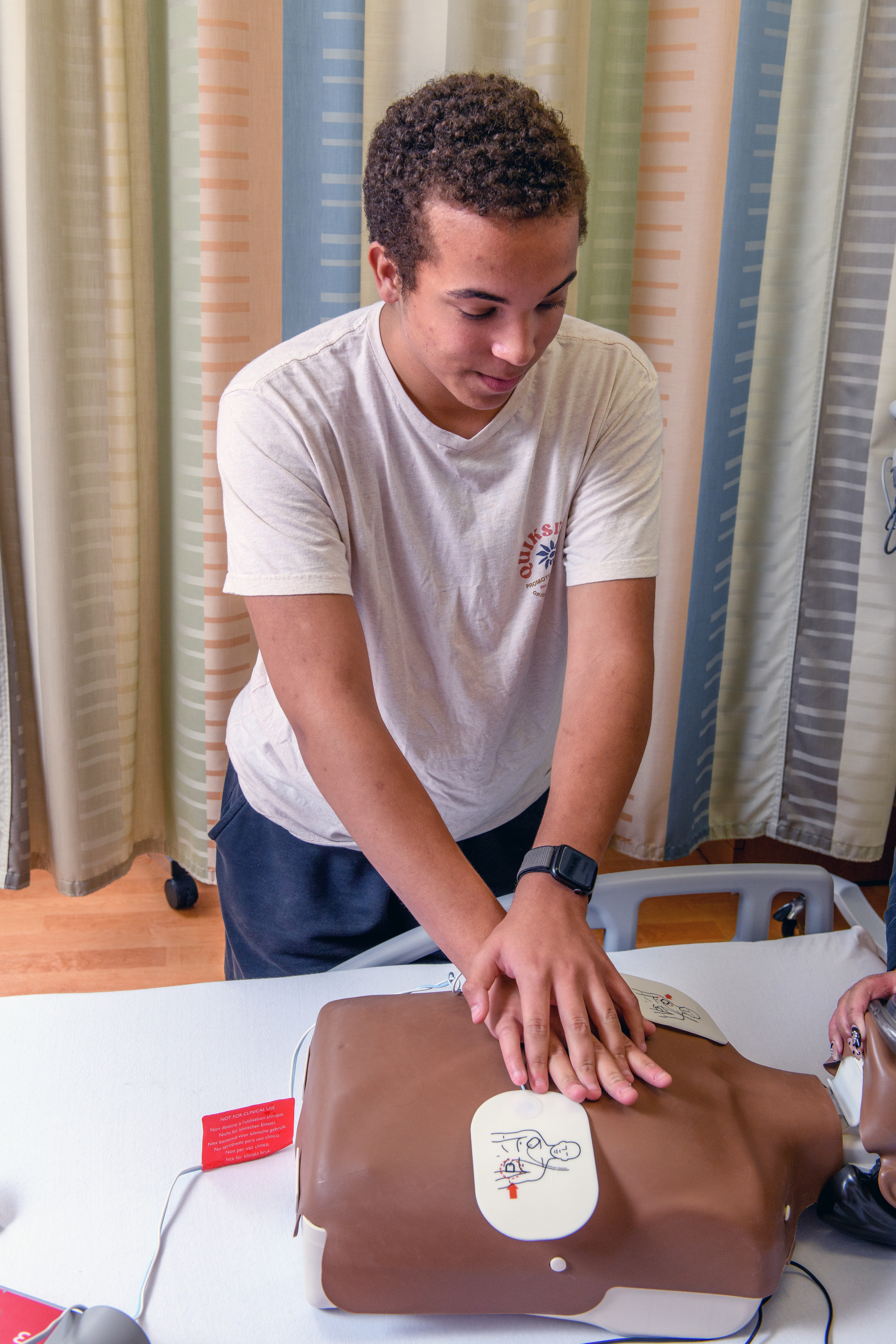
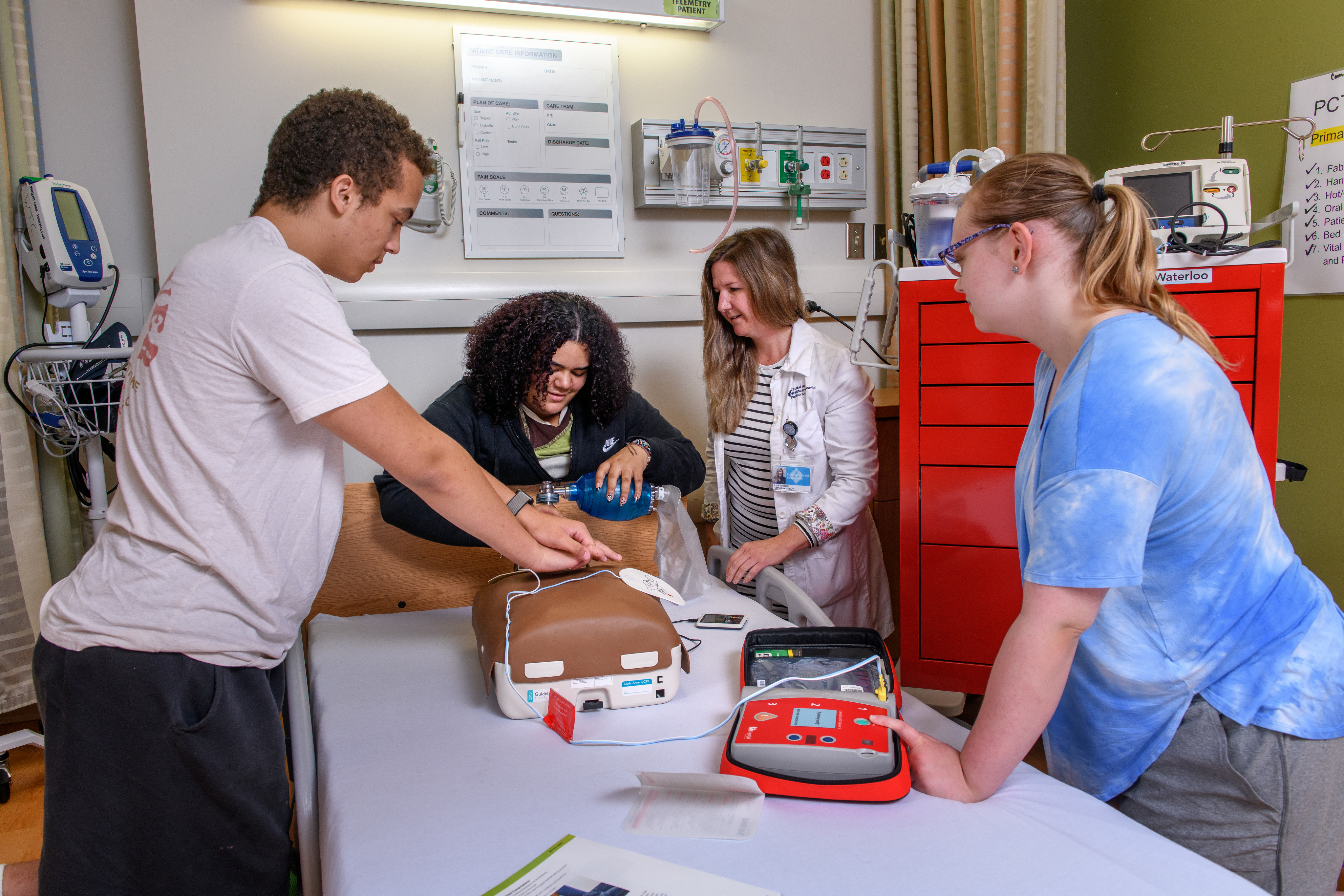
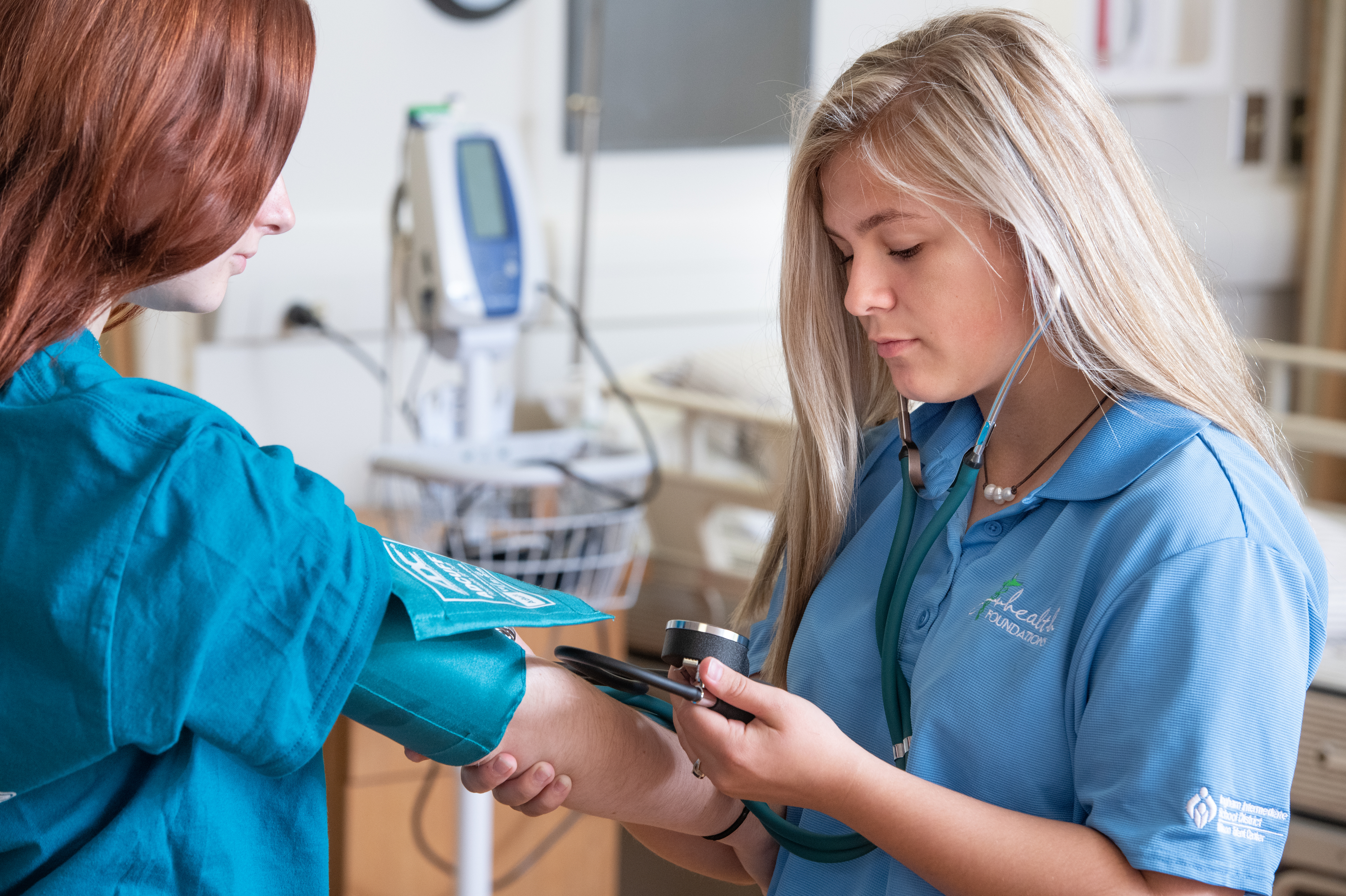
As a first year student, you will take the Health Foundations course. In this one-year core program, you will learn the basics of healthcare such as medical terminology, vital signs and CPR/First Aid, just to name a few. Students will cover 12 content segments including workplace safety, legal and ethical practices and health maintenance. Students who qualify will also have the opportunity to participate in limited work based learning experiences which could include job shadows, guest speakers or facility tours.
Students who pass the Health Foundations course with a 70% or higher for each semester/trimester and earn their CPR/First Aid and OSHA 10-hour General Industry Safety and Health certifications as a junior, are then eligible for an advanced healthcare course (Medical Assisting or Patient Care Technician) during their senior year. Students who are unsure of their second-year interest will have the opportunity to learn about the second-year programs before having to make that determination.
Healthcare Foundations Program Syllabus
Our mission is to provide students with the essential knowledge, skills, and work habits to excel in their careers and future learning.
Course Title
Health Foundations
National Career Cluster: Health Sciences Pathway
Michigan Career Pathway: Health Sciences
Instructors
Adrianne Wilkerson
517.244.1355
adrianne.wilkerson@inghamisd.org
Ronda Manninen, MSEd
517.244.1481
ronda.manninen@inghamisd.org
Credentials
Jamie George, Certified Athletic Trainer, National Athletic Trainers Association, Certified BLS & First Aid Instructor, American Heart Association; State of Michigan Professional Teaching Certificate, State of Michigan Occupational Education Certificate; State of Michigan School Administrator Certificate
Ronda Manninen, Bachelor of Science in Medical Technology, Michigan Technological University; Master's of Science Education, Northern Michigan University; CTE Therapeutic Services and Diagnostic Services endorsements; State of Michigan Professional Teaching Certificate, American Heart Association CLS Instructor
Types of Credit
See High School Credit Options
Note: Local districts award high school credit, not the WTC.
Articulation Agreements
Students must complete all assignments and receive a grade of 80% or higher overall in order to receive articulation.
- Jackson College
- Baker College
- Davenport University
- Washtenaw Community College
- Northern Michigan University
- Keweenaw Bay Ojibwa Community College
- Lake Superior State University
- Mid Michigan College
- Mott Community College
Program Description
The goal of the Health Foundations is to provide students an introduction to a variety of healthcare occupations and the understanding of the coursework/career path necessary to enter one of those professions. In class, students will learn medical terminology, basic anatomy and physiology, legal and ethical aspects of medical practice, infection control, CPR,
vital signs, communication and teamwork and may have the opportunity to job shadow with
healthcare professionals.
Special Requirements/Program Prerequisites
- 9th Grade (minimum) reading and math levels
- Ability to read, understand, and apply technical information
- Basic keyboarding and word processing skills (Windows environment)
- Good attendance and attitude
- Good communication skills
- Ability to work well in teams and individually
- Attention to detail
- Ability to work in a noisy environment
- Problem solving skills
- Ability to lift and move
- Visit www.salary.com for local salary ranges for potential careers
- Up-to-date immunizations, including Hepatitis B and TB test, Influenza and COVID-19 vaccinations**Required
- Adhere to dress (scrubs) and grooming requirements
Course Topics
- Academic Foundation/Anatomy and Physiology
- Communications/Medical Terminology
- Systems
- Employability Skills
- Legal Responsibilities
- Ethics
- Workplace Safety Practices
- Teamwork in Healthcare
- Health Maintenance Practices
- Technical Skills
- Information Technology in Healthcare
Students in this program will have the opportunity to participate in HOSA Future Health
Professionals. HOSA is a global student-led organization recognized by the U.S. Department of
Education and the Department of Health and Human Services and several federal and state
agencies. HOSA’s mission is to empower HOSA-Future Health Professionals to become leaders in the global health community, through education, collaboration, and experience. HOSA provides a unique program of leadership development, motivation, and recognition exclusively for secondary, postsecondary, middle school, adult, and collegiate students enrolled in health science education and biomedical science programs or have interests in pursuing careers in health professions. HOSA is 100% health care!
Exit Outcomes:
- Employability skills to seek, obtain, and keep employment in the health care industry.
- Individualized career exploration, through classroom and Work-Based Learning opportunities.
- Identification of and support for achieving an individualized Career Path Plan, to include post high school college or vocational training.
- College articulation
- National certification in CPR/First Aid at the healthcare level.
- CareerSafe OSHA Training
- Teamwork and leadership skills
Work-Based Learning Opportunities:
- Industry Advisory Board
- Industry field trips/tours
- Occupational speakers
| Grade | Percent |
|---|---|
| A | 93-100% |
| A- | 90-92% |
| B+ | 87-89% |
| B | 83-86% |
| B- | 80-82% |
| C+ | 77-79% |
| C | 73-76% |
| C- | 70-72% |
| D+ | 67-69% |
| D | 63-66% |
| D- | 60-62% |
| E | 59% or below |
| W | Withdrawal |
There are 6 marking periods, each 6 weeks long. Grades for each marking period are weighed as follows:
Learning Activities 30% (Classwork)
Unit Assessment 35% (Assessments)
Work Habits 35%
Advanced Healthcare options include:
Capital Area Patient Care Technician (PCT)
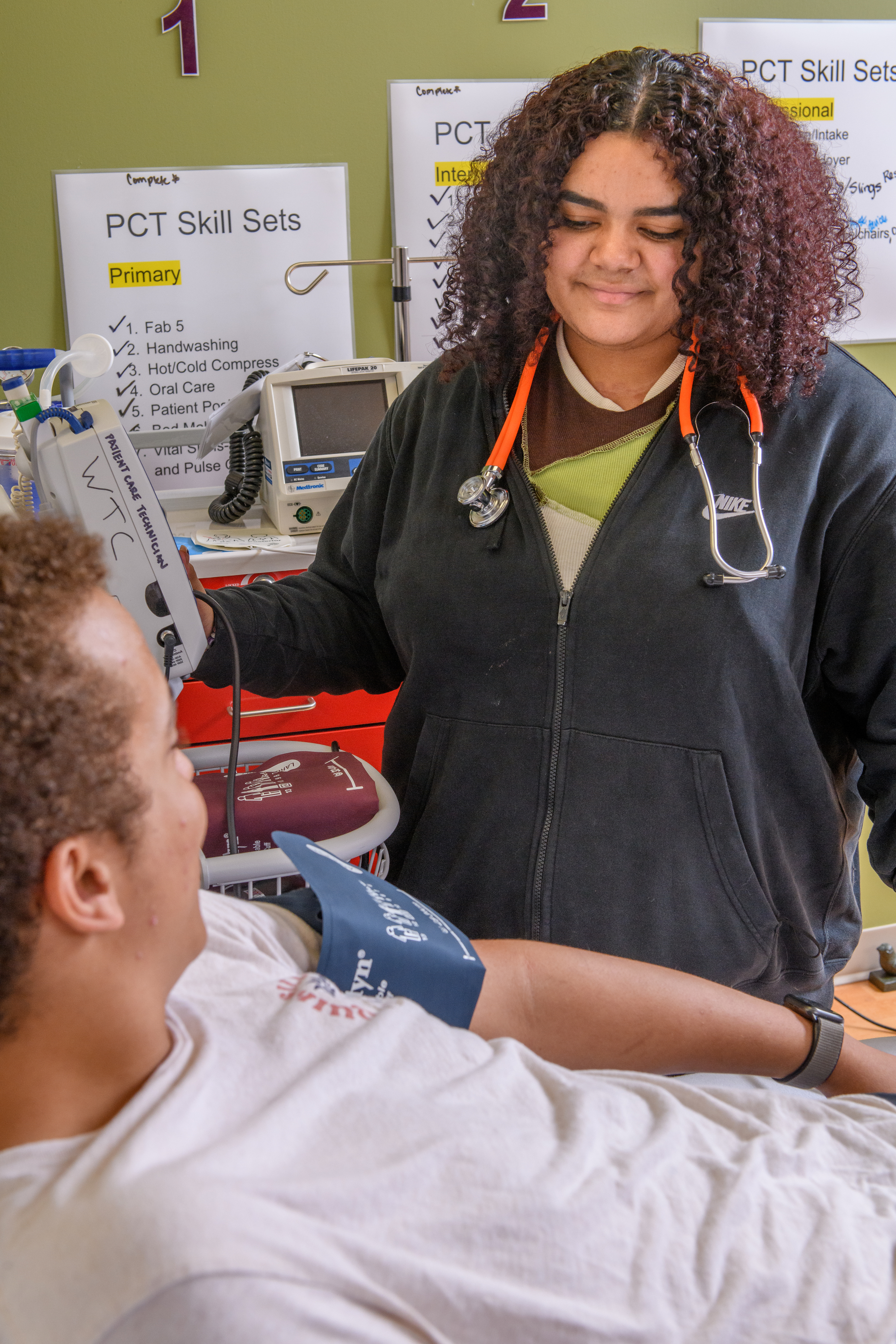
The Capital Area Patient Care Technician program provides the opportunity for students to explore a variety of careers within an in-patient hospital setting by rotating through partner sites doing job shadows. Students will also be trained both in the classroom and through clinical experiences, to become a Patient Care Technician, Phlebotomy Technician and EKG Technician.
A Patient Care Technician is an important job in the medical profession. They will provide help to patients in hospitals, doctor’s offices and nursing homes. PCT's work directly with physicians, nurses and other members of the health team to help patients recover and prepare for discharge. Some of the duties of a PCT might include: taking vital signs, specimen collections & phlebotomy, self-care assistance, EKG testing and interpretation and patient teaching.
PCT’s are in demand and this can be a great entry-level opportunity as students navigate their future career plans in a healthcare setting. PCT’s average about $16-20 per hour here in Michigan. Phlebotomists can earn an average of $18-20 per hour.
Note: To be eligible for this course, students must complete Health Foundations as a junior with a 70% or better for each semester/trimester and pass both the CPR/First Aid and OSHA 10-Hour General Industry Safety and Health certifications.
Capital Area Patient Care Technician (CAPCT) Program Syllabus
Our mission is to provide students with the essential knowledge, skills, and work habits to excel in their careers and future learning.
Course Title
Capital Area Patient Care Technician (CAPCT)
National Career Cluster: Health Sciences
Michigan Career Pathway: Health Sciences
Instructor
Adria Lee, MSN/Ed., RN
517.364.3068
adria.lee@inghamisd.org
Credentials
Registered Nurse
Masters of Nursing Education
Nursing Education Specialist
Types of credit
See High School Credit Options
Note: Local districts award high school credit, not the WTC.
Program Description
This program will build on the knowledge from Health Foundations and provide students with knowledge and skills to be applied as a Patient Care Technician, Phlebotomy Technician and EKG Technician. This is provided through lecture, lab and work-based learning components.
Course Topics
Throughout the school year, assignments and curriculum covered includes:
- Ferris State University Freshman Composition (college credit can be obtained based on classroom performance)
- Lecture Topics surrounding Phlebotomy, EKG testing & interpretation, Electronic Medical Records, Healthcare Safety and Compliance Training and Patient Care
- Advanced body systems and advanced medical terminology
- Clinical patient care skills
- Career and employment readiness/professionalism
- Mock Interviews/Job Fairs
- Job Shadow/clinicals/externships
- Tours, college visits and special guest/activities
- Leadership & Volunteering Opportunities including Blood Drive hosting, Holiday Adopt-a-Family, Health Foundations student collaboration/mentoring, HOSA
Student Leadership/CSTO Opportunity
HOSA (Health Occupations Students of America) is an international career and technical student organization that prepares students for careers in the healthcare industry. Students may compete at the regional and state level competitions. Wilson Talent Center does not support competition at the National level as this requires extended travel. This is available to students who are interested in pursuing these activities outside of class
Classroom Information
Class schedule:
- AM starts at 8:00 and ends at 10:40am, Hospital Days (M/Th, 7:30-10:10am)
- PM starts at 11:35am and ends at 2:15pm
- Breaks will be given at approximately: AM 9:00, PM 1:00; should time allow
Our schedule requires that we be flexible with this. To limit disruptions during class, if possible please take restroom breaks before and/or after class and/or during break time.
- There will be NO cell phone use during class time. Phones will be placed in classroom cell phone wall pockets during class. This is to minimize distractions from classroom content. Failure to comply can result in grade reflection on work habits, suspension of work-based learning and removal from the program should the use violate our partner's privacy policy.
- Badges should be worn at all times with uniform.
- To be excused early from class, students will need to have documentation from the home school or a parent and it will count as (LE) tardy and be deducted from the student's Bank35 accordingly.
- Drinks and food are allowed in class (not lab area) as long as it does not cause a distraction. Drinks must be covered or have lid, food should not have offensive odor, as we are in a contained area. Spills should be cleaned up immediately, and tables wiped after eating.
Grading
- There are 6 marking periods, each approximately 6 weeks long, not counting holiday breaks. Grade percentages for each marking period are based up four Essential Competency Areas (ECA’s): 25% Employability and Professionalism, 25% Skill Attainment, 25% Career Exploration and Preparation, 25% Recognition of Abnormals
- Any/All exams are given in a quiet setting where no talking or distractions are permitted. All students are allowed extra time to complete exams or private test-taking areas upon request.
Attendance
Absences: If you find that you MUST miss class;
- Notify me as you would notify an employer for a call-in (call, message, email, Remind App).
- Have a parent/guardian excuse your absence by calling the WTC @ 517-244-1306. Failing to do this will result in a NCNS (no call, no show). I DO NOT have authority in the system to excuse absences.
- If you no-call/no-show, it will result in a drop to your grade.
Students are allotted 35 hours of sick time/absences per school year to maintain eligibility for national certification training hours. Each absence subtracts 2.5 hours from the allotted Bank35. Excellent attendance is required.
You will lose participation points for the day
Depending on the activity missed, you may/may not be able to make up assignments. i.e. hands on activities or labs, guest speakers, field trips, etc.
Your employability and professionalism grade will be affected with each absence
Parents will be notified of Bank35 balance at each marking period or in 10 hour increments.
Students who exhaust their entire Bank35 will be ineligible for the national Patient Care Technician exam.
Tardies (arriving late/leaving early-unless excused by your home school)
- Notify me as you would your employer/job in advance
- Tardies cannot be excused, so there is no need to have a parent/guardian call the WTC for a tardy.
- You will lose hours from Bank35 in 15 minute increments.
Please, enter/exit quietly with little interruption, just as if you were tardy to a business meeting/event.
You will lose a portion of your participation points, depending on what you missed
Depending on how late/early you leave, you may/may not be able to make up assignments. i.e. you miss the entire instruction set for our activity.
Your employability and professionalism grade will be affected by each tardy.
Requirements/Program Prerequisites
- Complete Health Foundations Program
- Good attendance and attitude
- Ability to work well in teams and individually
- Ability to learn on-line
- Up-to-date immunizations
- Adhere to dress (scrubs) and grooming requirements
- Have transportation to and from the clinical site for work-based learning
NOTE: In the event that there are an outstanding number of applicants for the program the following will occur in creating a waitlist:
Behavior/discipline, grades, and attendance will be taken into account with each student receiving points in each area. Those students with the highest points based on that criteria will be awarded seats in the program with the remaining being placed on a waitlist in the respective order from highest points to lowest.
Necessary Supplies
Personal Laptop if preferred
Binders or folders of your choice to organize classwork
Dress Code
CLASSROOM: Class scrubs, black athletic/non-skid shoes, name badge, clean/well-groomed appearance, appropriate for a professional healthcare setting.
JOB SHADOWS/MENTOR VISITS/TOURS/CLINICALS: Class scrubs, black athletic/non-skid shoes, name badge, minimal jewelry (i.e., small earrings, no bracelets, no facial piercings), long hair pulled back or off shoulders, clean and trimmed nails, clean/well-groomed appearance.
*Students wishing to change before/after class will need to do so in the restrooms and on their own personal time.
Medical Assistant
The Medical Assistant Program allows students to focus on a career path while gaining valuable clinical and laboratory experience with real patients. This track would be ideal for a student interested in working in a doctors office, laboratory or pharmacy.
Emphasis is placed on three major areas of focus: academics and clinical skills building, certification opportunities and work placement. Some of the skills you will be exposed to include but are not limited to; EKG, Phlebotomy, Injections and Wound Care. Students also have the option to select up to three certification tracks: Clinical Medical Assistant, Phlebotomist or a Pharmacy Technician.
Because clinical experience in a variety of healthcare facilities is a key component of your education, you will the take your new skills and knowledge and apply them at professional healthcare sites.
Note: To be eligible for this course, students must complete Health Foundations as a junior with a 70% or better for each semester/trimester and pass both the CPR/First Aid and OSHA 10-Hour General Industry Safety and Health certifications.
Medical Assistant Program Syllabus
Our mission is to provide students with the essential knowledge, skills, and work habits to excel in their careers and future learning.
Course Title
Medical Assistant
National Career Cluster: Health Sciences
Michigan Career Pathway: Health Sciences
Instructor
Sarah Morgan, RN, BSN
517.244.1347
smorgan@inghamisd.org
Credentials
Registered Nurse
Certified American Heart Association BLS Instructor
First Aide Instructor
Instructional Assistant
Chelsea Lawson LPN
517.244.1341
Credentials
Licensed Practical Nurse
Certified American Heart Association BLS
Types of Credit
See High School Credit Options
Note: Local districts award high school credit, not the WTC/
Articulation Agreements
Students must complete all assignments and receive a grade of 80% or higher overall in order to receive articulation.
- Davenport University
Program Description
This program will build on the knowledge from Health Foundations and provide students with knowledge and skills to be applied in the outpatient work setting as a medical assistant, phlebotomist, or pharmacy technician through a work–based learning component. Certification opportunities include Clinical Medical Assistant, Phlebotomy Technician and Pharmacy Technician.
Course Topics/Hands on Learning Labs:
- Patient Care
- Vital Signs, Suture Removal, Wound Care, Assisting in minor surgeries
- Laboratory Testing
- Phlebotomy
- Pharmacology
- HIPAA/Universal precautions and safety
- Infection control
- Medical terminology
- Use of medical equipment; EKG, PFT, Holter monitor
- Telephone/Reception Skills
- Appointment Scheduling
- Maintenance of Health Records
Exit Outcomes
- Employability skills to seek, obtain, and keep employment in the health care industry.
- Identification of and support for achieving an individualized Career Path Plan, to include post high school college or vocational training.
- College articulation at Lansing Community College
- Teamwork and leadership skills and externships
- Skills necessary to take the National Healthcareer Association Certifications
- Certified Clinical Medical Assistant (CCMA)
- Certified Phlebtomy Technician (CPT)
- Certified Pharmacy Technician (ExCPT)
Special Requirements/Program Prerequisites
- Complete Health Foundations Program
- Good attendance and attitude
- Good communication skills
- Ability to work well in teams and individually
- Ability to learn on-line
- Up-to-date immunizations, obtain blood tests (Hepatitis B titer and QuantiFERON-TB Gold) and well-child exam summary or Sports Physical (worksites may require flu or covid vaccinations)
- Have transportation to and from the clinical site for work-based learning
Dress Code
Professional health attire is expected every day. The below standards were developed with input from the Medical Assisting advisory board, meet industry standards, safety requirements and will help our students develop the needed soft skills employers are seeking. Students are required to have:
- Close-toed shoes (student provided)
- Scrubs daily (2 sets and jacket provided)
- Long hair pulled back
- School ID
- Natural nails only, intact polish allowed
- Professional grooming standards
Grading Policy
Grade | Percent |
A | 93-100% |
A- | 90-92% |
B+ | 87-89% |
B | 83-86% |
B- | 80-82% |
C+ | 77-79% |
C | 73-76% |
C- | 70-72% |
D+ | 67-69% |
D | 63-66% |
D- | 60-62% |
E | 59% or below |
W | Withdrawal |
There are 6 marking periods, each 6-7 weeks long. Grades for each marking period are weighed as follows:
Learning Activities 35% (Classwork)
Unit Assessment 30% (Assessments)
Work Habits 35%
Attendance Requirements
Students are allotted 35 hours of sick time/absences per school year to maintain eligibility for national certifications. Each absence subtracts 2.5 hours from the allotted Bank35. Each tardy subtracts minimum of 15 minutes.
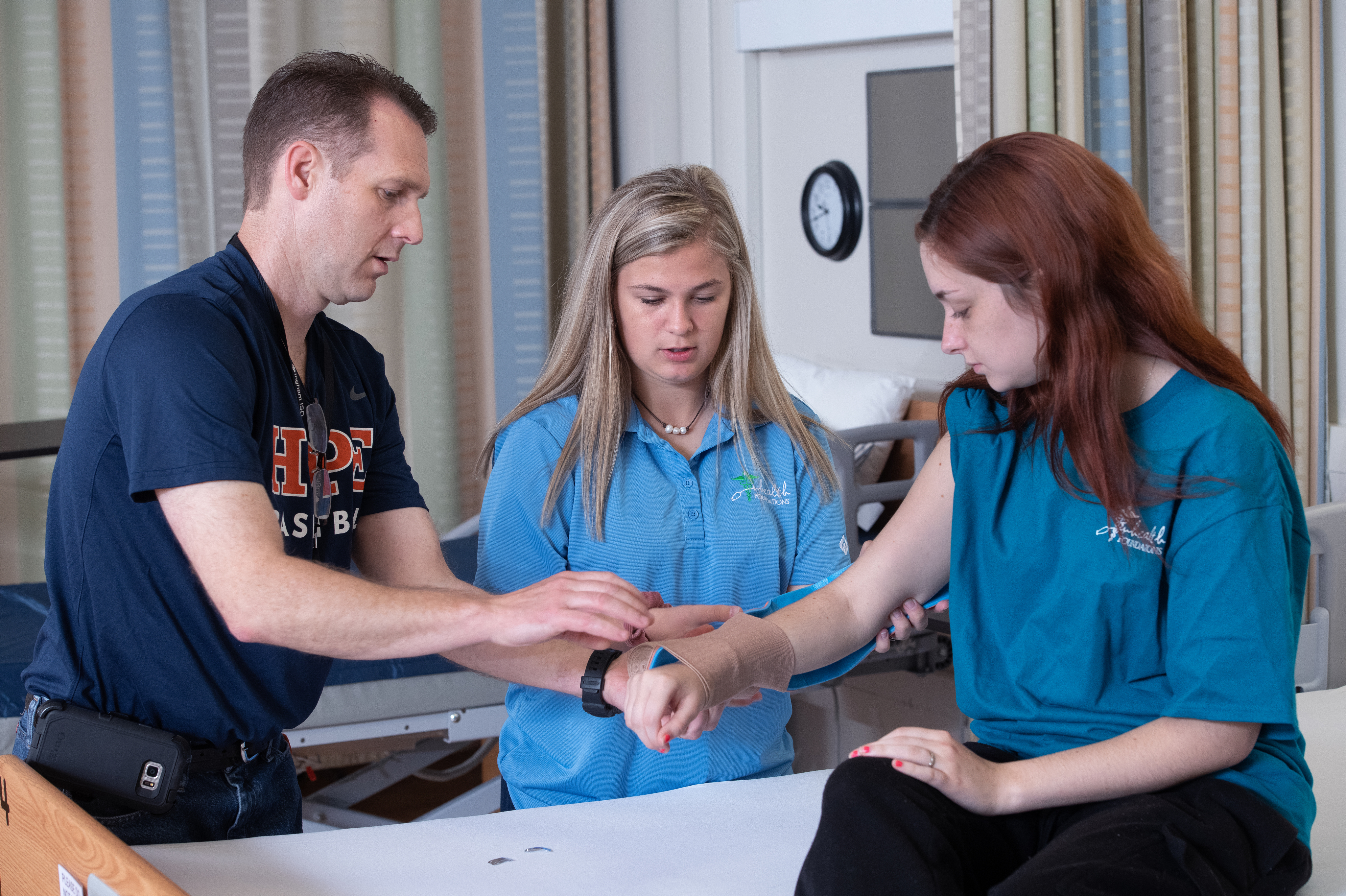
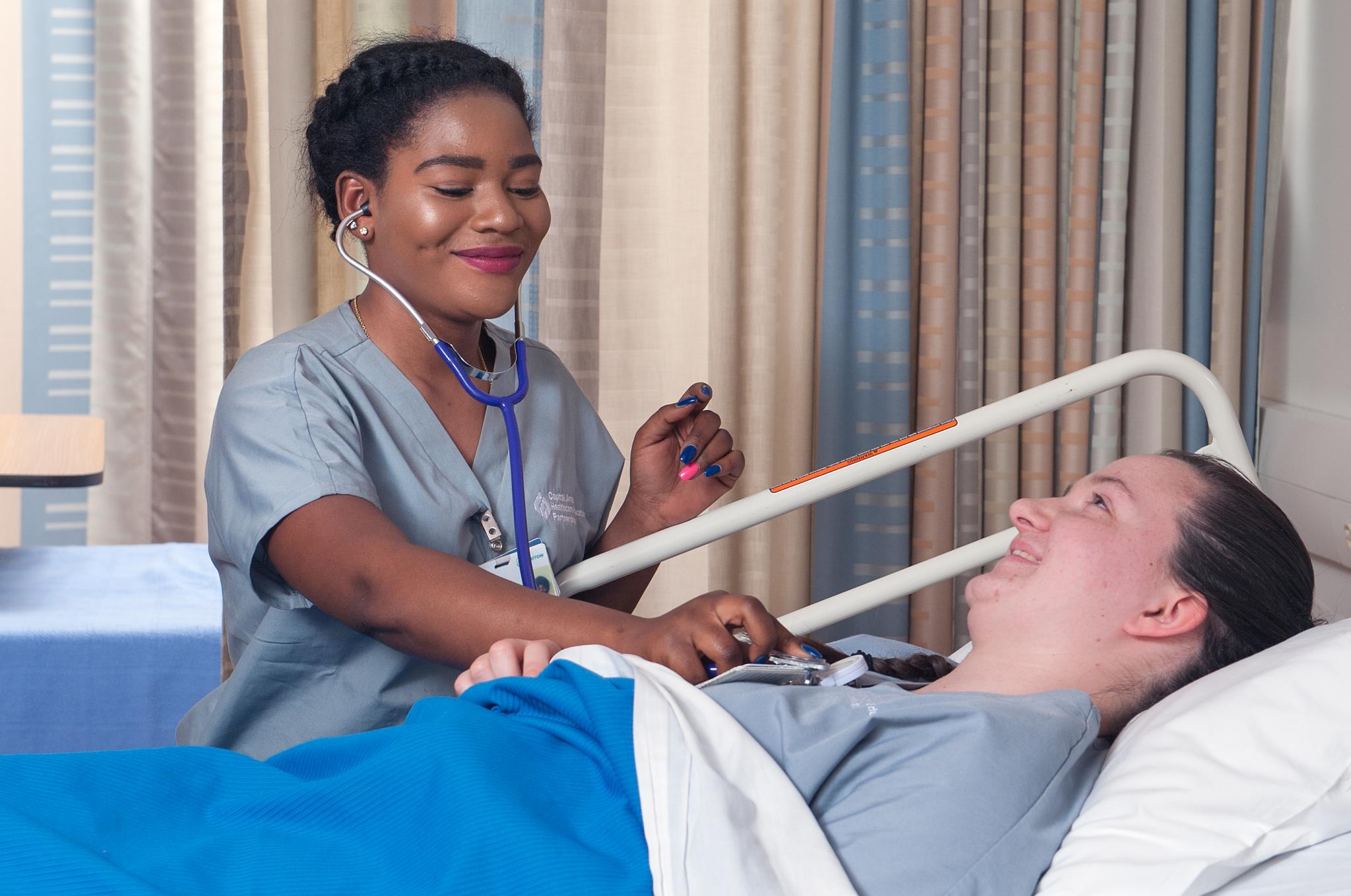
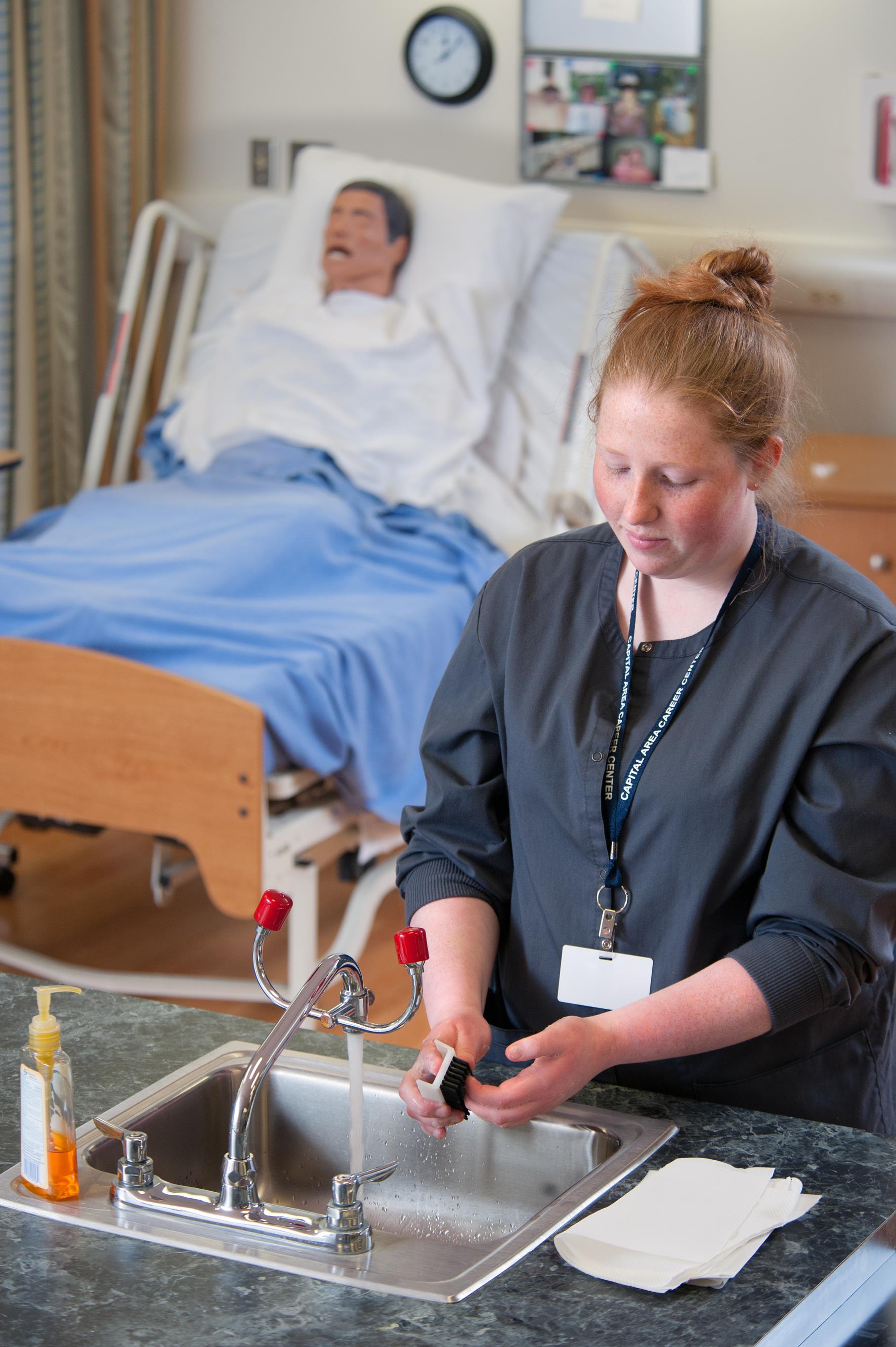
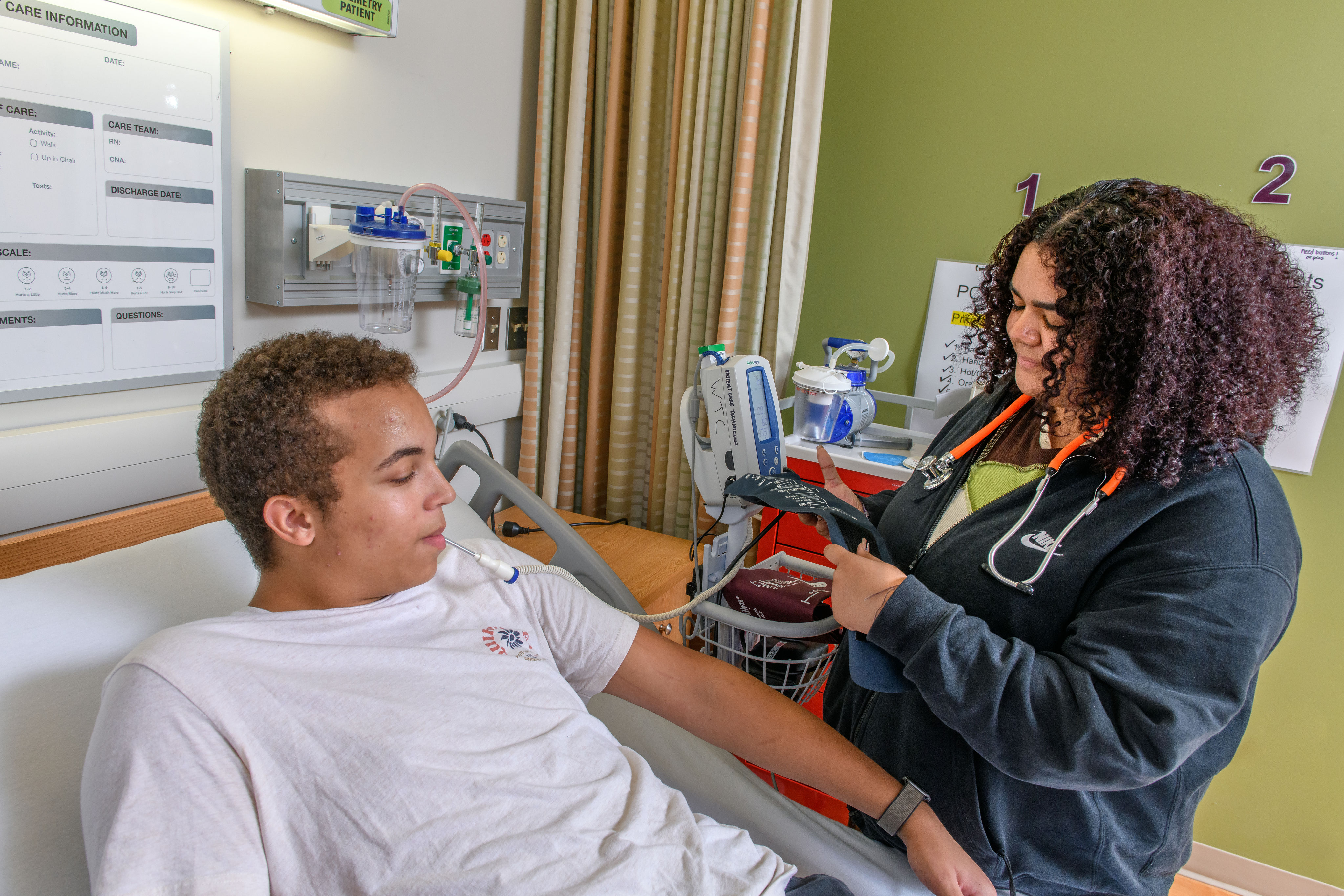
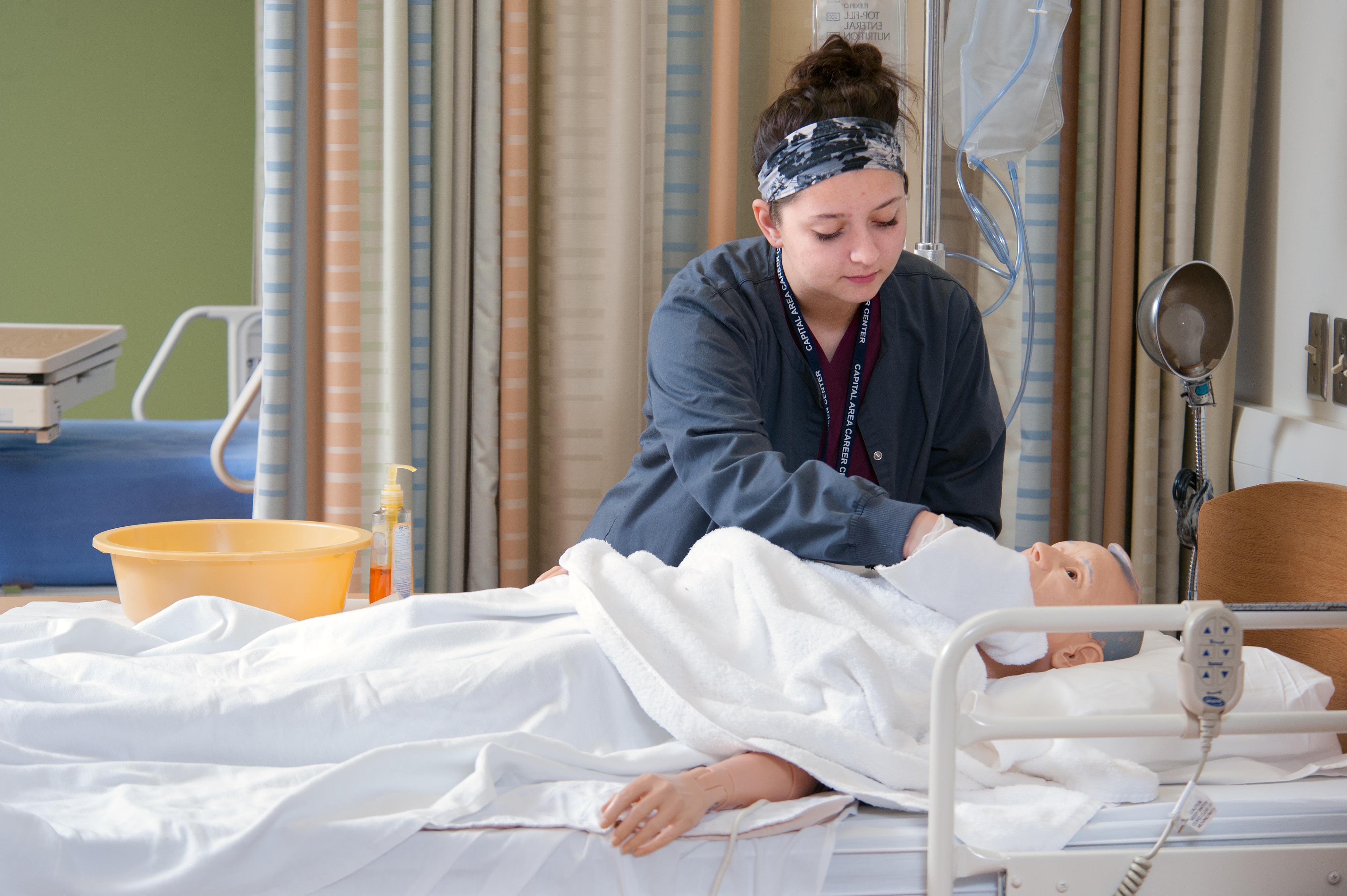
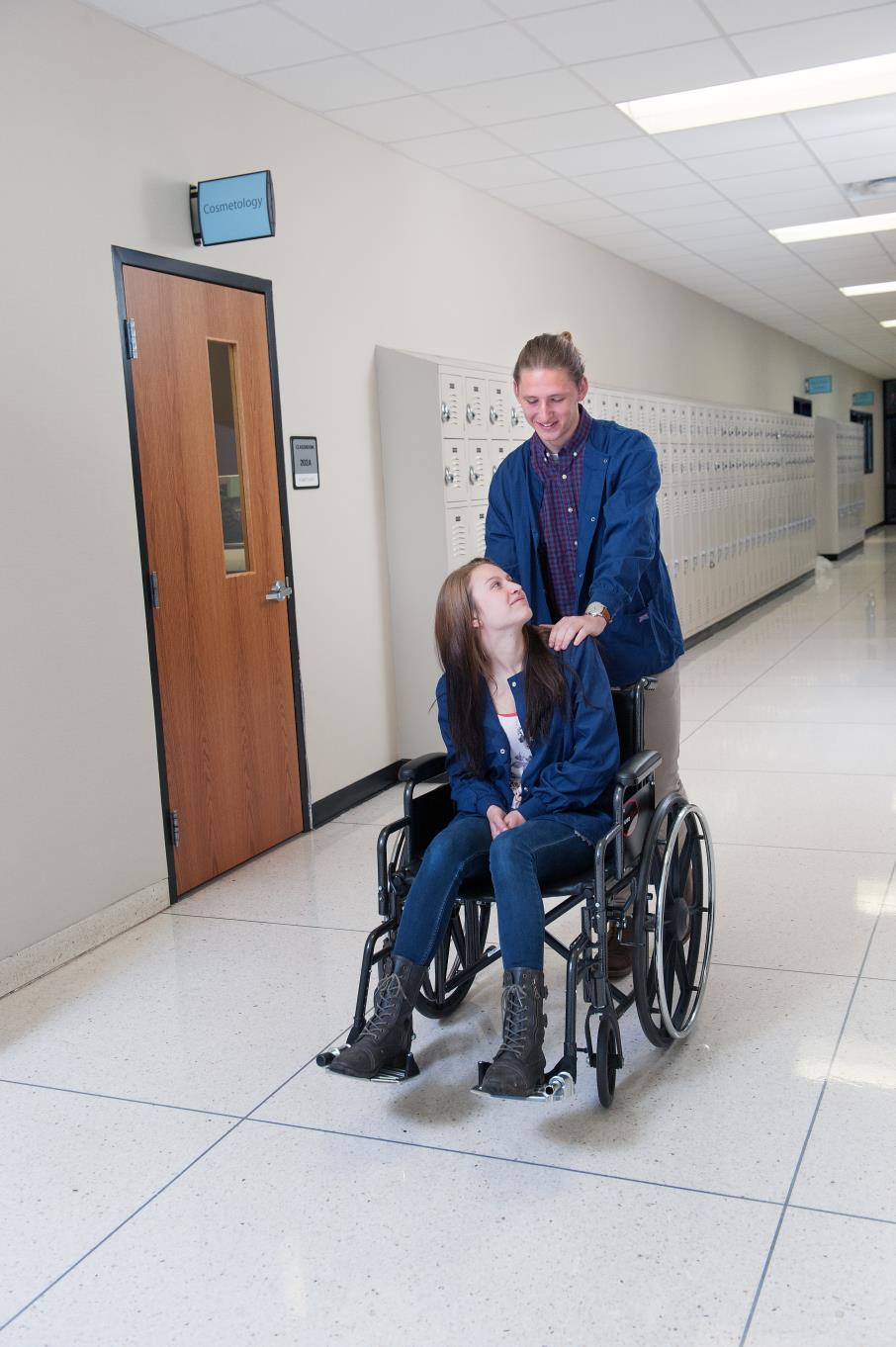
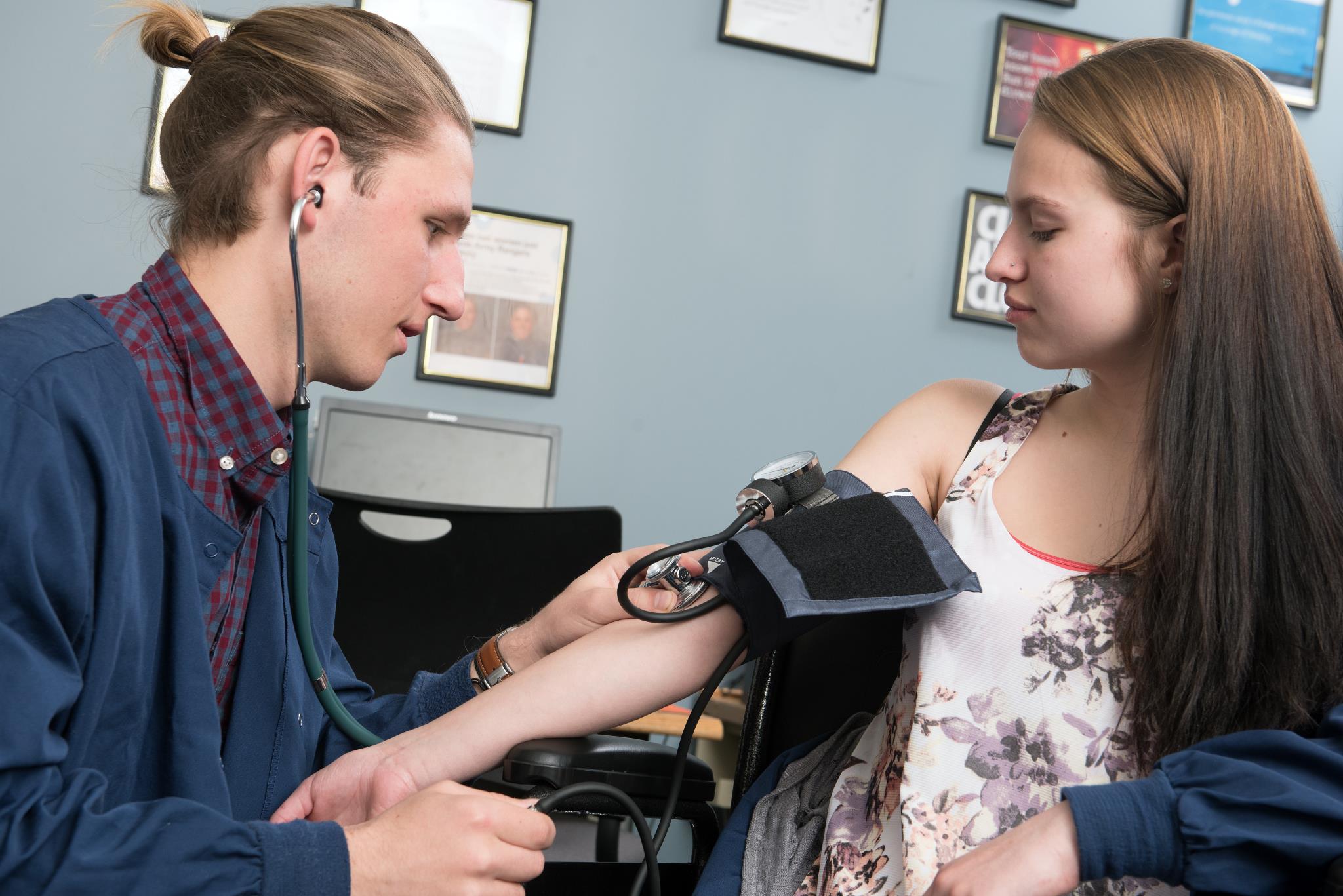
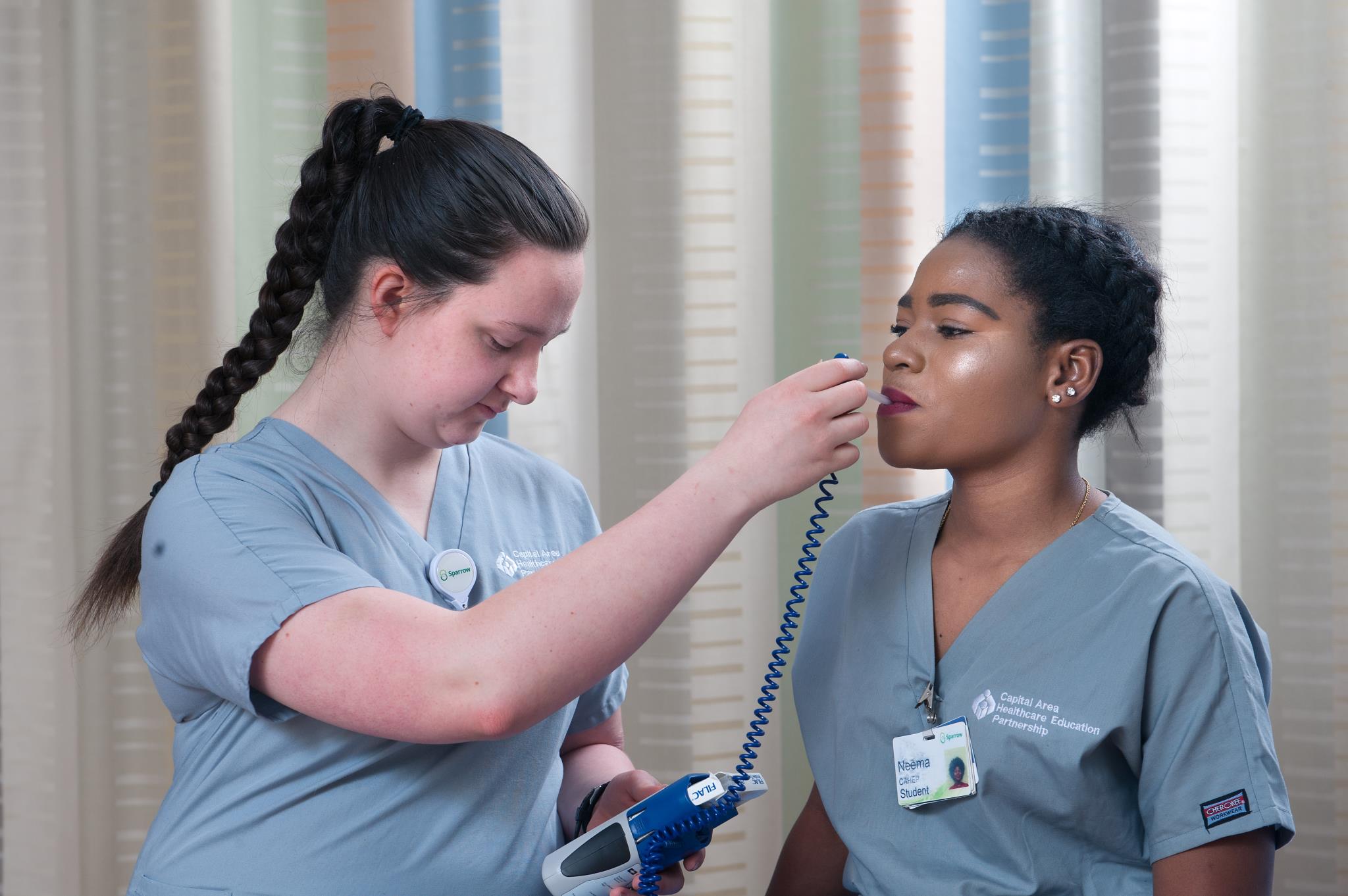
Photos from our various Healthcare programs . . .
-
 Click to see a larger version
Skip to end of gallery
Skip to start of gallery
Click to see a larger version
Skip to end of gallery
Skip to start of gallery
-
 Click to see a larger version
Skip to end of gallery
Skip to start of gallery
Click to see a larger version
Skip to end of gallery
Skip to start of gallery
-
 Click to see a larger version
Skip to end of gallery
Skip to start of gallery
Click to see a larger version
Skip to end of gallery
Skip to start of gallery
-
 Click to see a larger version
Skip to end of gallery
Skip to start of gallery
Click to see a larger version
Skip to end of gallery
Skip to start of gallery
-
 Click to see a larger version
Skip to end of gallery
Skip to start of gallery
Click to see a larger version
Skip to end of gallery
Skip to start of gallery
-
 Click to see a larger version
Skip to end of gallery
Skip to start of gallery
Click to see a larger version
Skip to end of gallery
Skip to start of gallery
-
 Click to see a larger version
Skip to end of gallery
Skip to start of gallery
Click to see a larger version
Skip to end of gallery
Skip to start of gallery
-
 Click to see a larger version
Skip to end of gallery
Skip to start of gallery
Click to see a larger version
Skip to end of gallery
Skip to start of gallery
-
 Click to see a larger version
Skip to end of gallery
Skip to start of gallery
Click to see a larger version
Skip to end of gallery
Skip to start of gallery
-
 Click to see a larger version
Skip to end of gallery
Skip to start of gallery
Click to see a larger version
Skip to end of gallery
Skip to start of gallery
-
 Click to see a larger version
Skip to end of gallery
Skip to start of gallery
Click to see a larger version
Skip to end of gallery
Skip to start of gallery
-
 Click to see a larger version
Skip to end of gallery
Skip to start of gallery
Click to see a larger version
Skip to end of gallery
Skip to start of gallery
About Healthcare Programs
Health Foundations (1 year program for juniors and/or seniors)
Advanced Healthcare options are all 1 year programs available once a student has successfully completed Health Foundations as a junior
Skills Students Leave with:
- CPR/First Aid
- Patient Vital Signs
- Medical Ethics/HIPPA
- Medical Terminology
- Healthcare Concepts
- Teamwork