
Construction Trades
Choosing a career is a daunting task for any student. That's why the Construction Trades program helps students explore a wide range of construction opportunities in residential, commercial and industrial fields in both hands-on skilled trades, as well as project management. This allows students the best situation to choose a career with confidence.
Many of the graduates of this program have stepped directly into apprenticeship programs in masonry, electrical, plumbing and carpentry. Others have gone on to earn college degrees in construction management and are working for large commercial contractors around the state and country. Some have started their own business while others can work on their own homes.
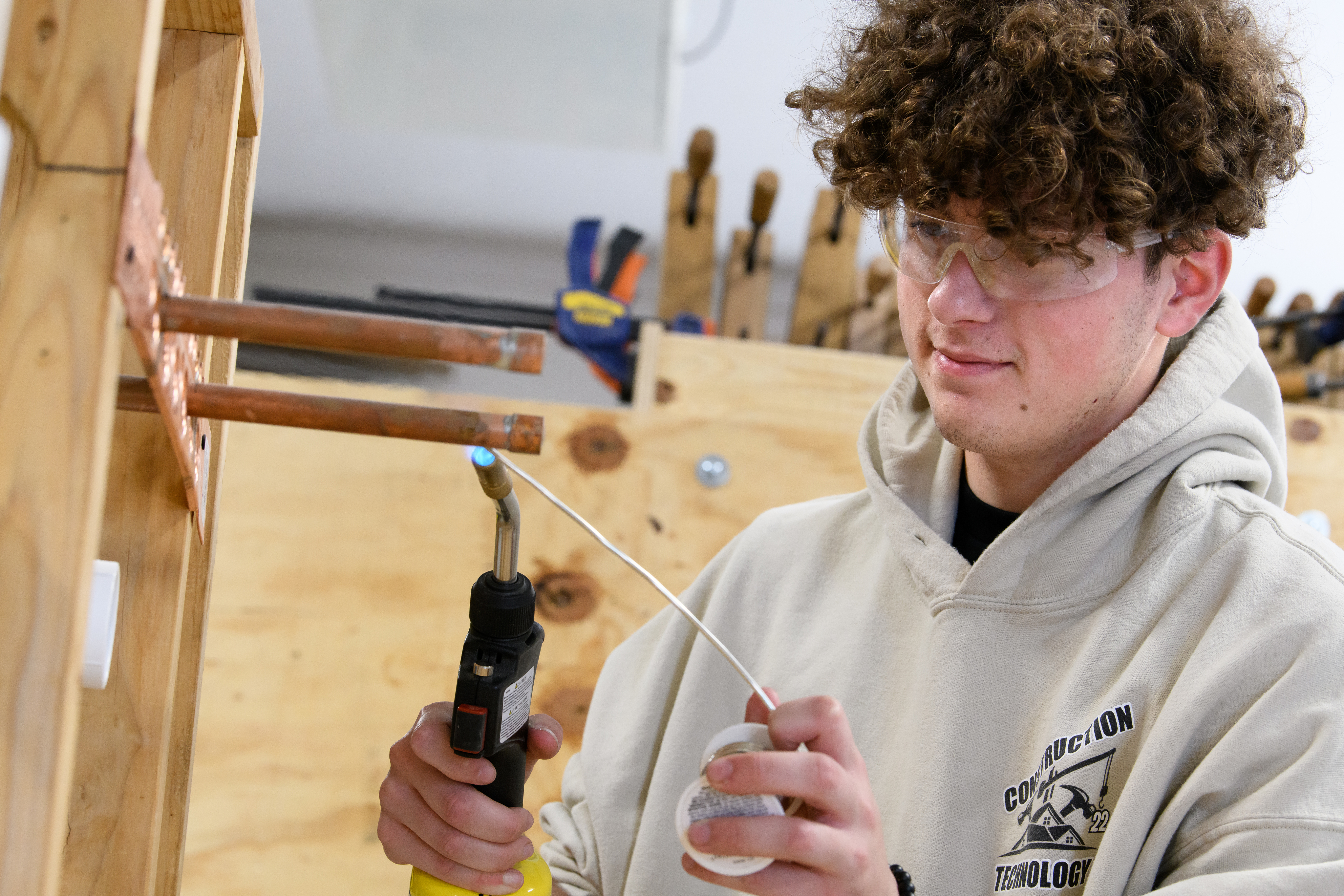
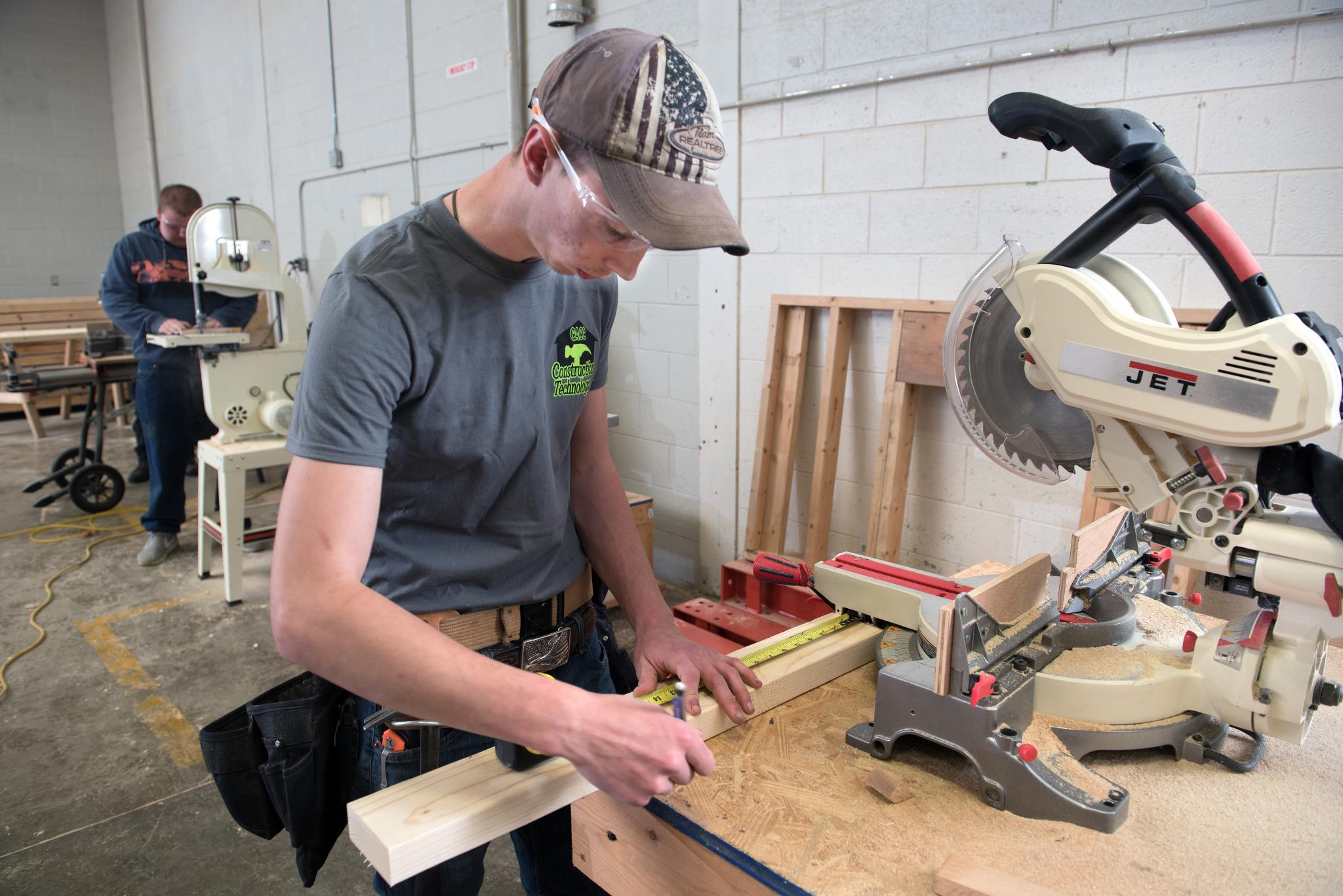
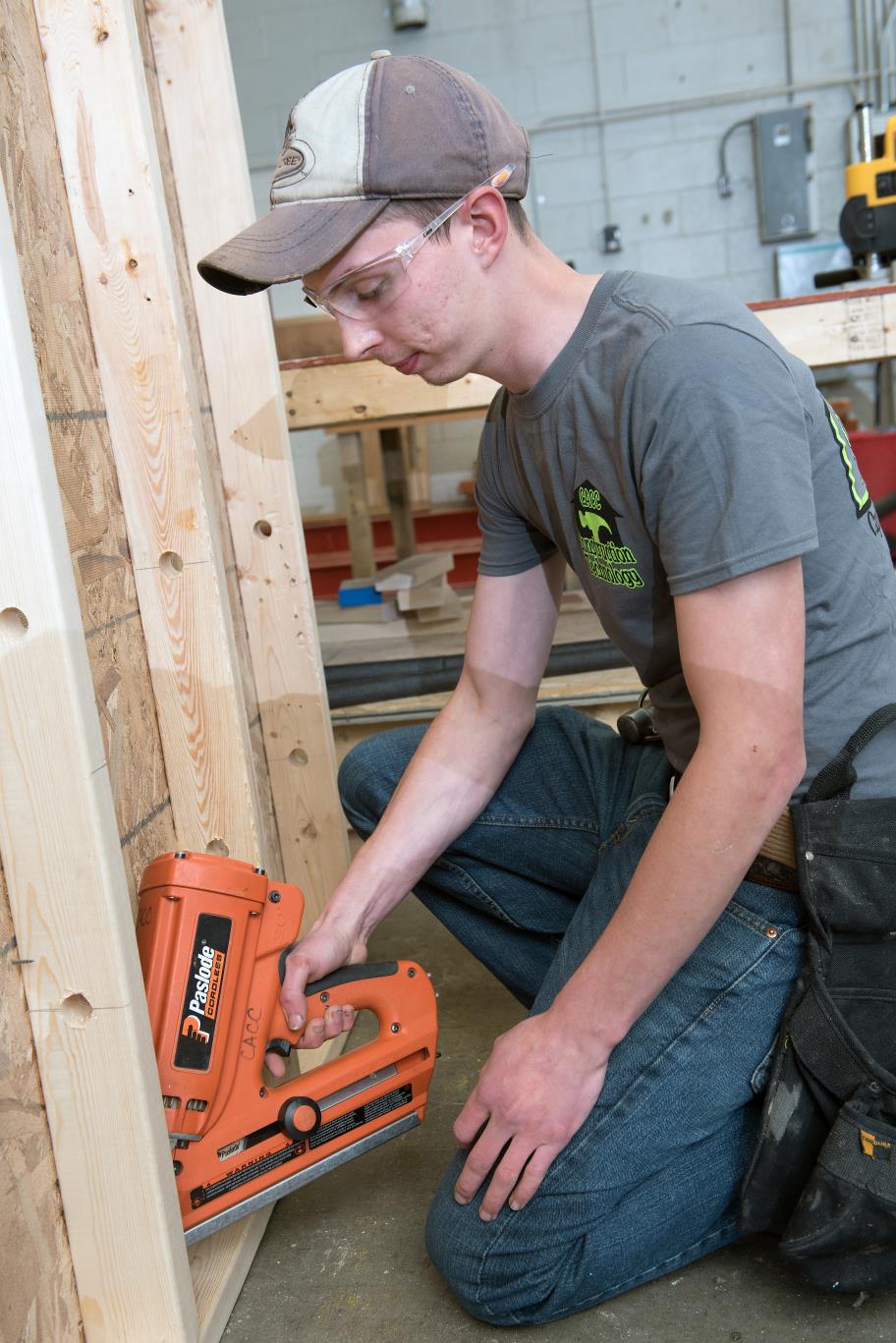
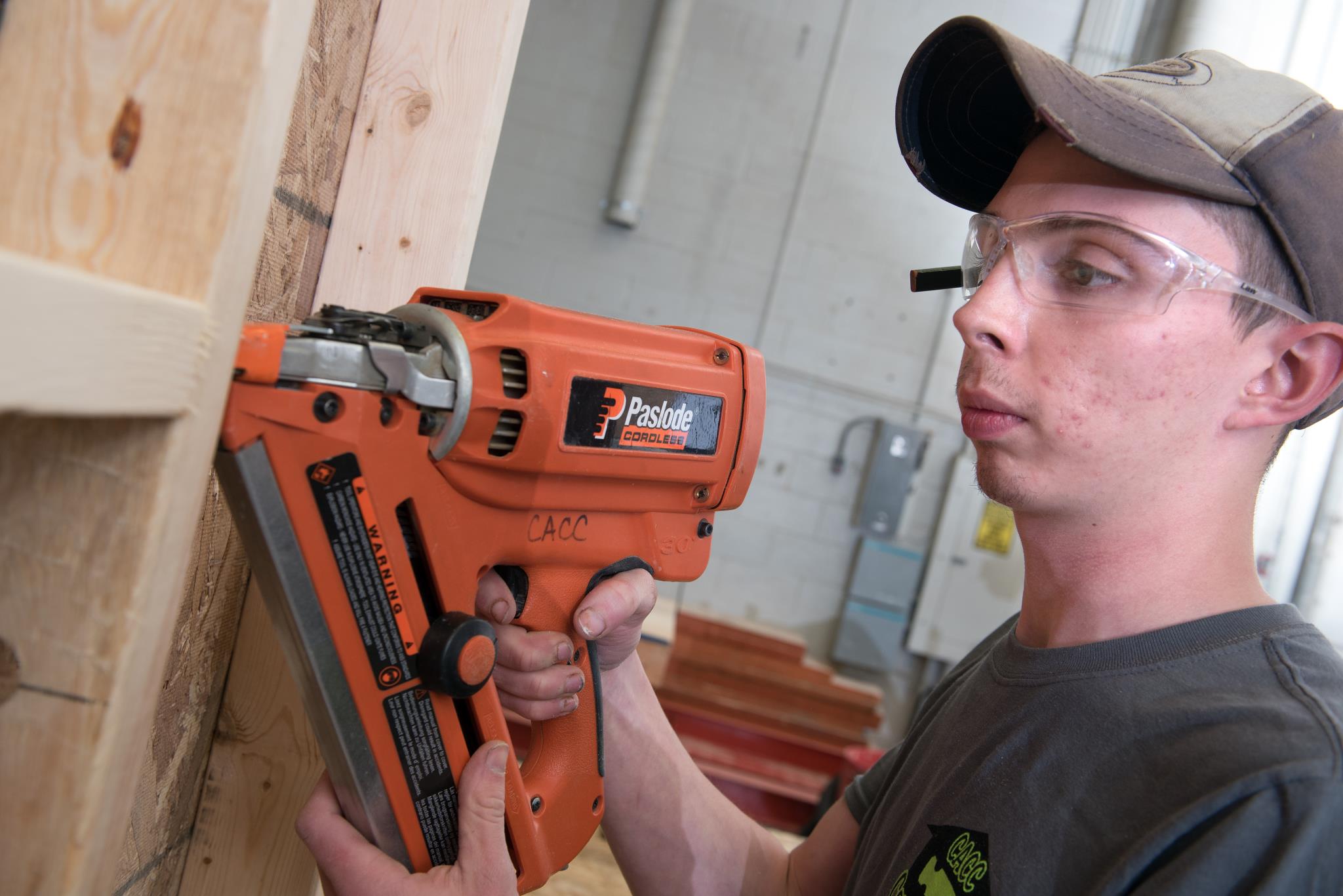
Through both classroom and shop work, students will learn the basics of carpentry, framing, electrical, plumbing, HVAC and civil construction. Students will be exposed to other interesting areas of the construction business; surveying, drywall, painting, roofing, siding, tiling, furniture making, designing and estimating.
In the second year of the program, students will be eligible to participate in Work-based Learning. With this, they will be able to work with one of our many industry partners. This opportunity allows students to understand the issues and environments they will encounter in the construction field. After that, your future in construction is wide open as we have employers looking for students with the right skills and attitude.
Program Syllabus
Our mission is to provide students with the essential knowledge, skills, and work habits to excel in their careers and future learning.
Course
Construction Technology
National Career Cluster
Architecture & Construction Pathway
Michigan Career Pathway
Engineering, Manufacturing & Industrial Technology Pathway
Instructor
Jerry Johnson
517.244.1397
Alma College B.A.
Wayne State University – Masters of Arts in Teaching
State of Michigan Professional Cert. - Construction Trades
Instructional Assistant
Keith Cox, 517.244.1339
Types of Credit
See High School Credit Options
Note: Local districts award high school credit, not the WTC.
Articulation Agreements
- Davenport University – up to 13 credits
State Approved Credential:
Skilled to Build Michigan Foundation Residential Construction Skills Certification SBMCERT
Program Description
Construction Technology is designed and implemented as a two-year program. The program is divided into two halves and the curriculum alternates between the two years. So as a two-year student you will receive all of the materials offered/covered.
Students will study safety, carpentry, electrical, plumbing, HVAC, civil construction and success skills while in this class. This will be done to prepare the student to be able to enter, compete, and advance in the workplace.
Students are given the opportunity for success through various methods of instruction coupled with hands on experience. They will be given support as needed to help prepare them to be successful in the field of their choice and be a productive member of society.
Course Topics
- Basic understanding of building process
- Basic understanding of rough carpentry
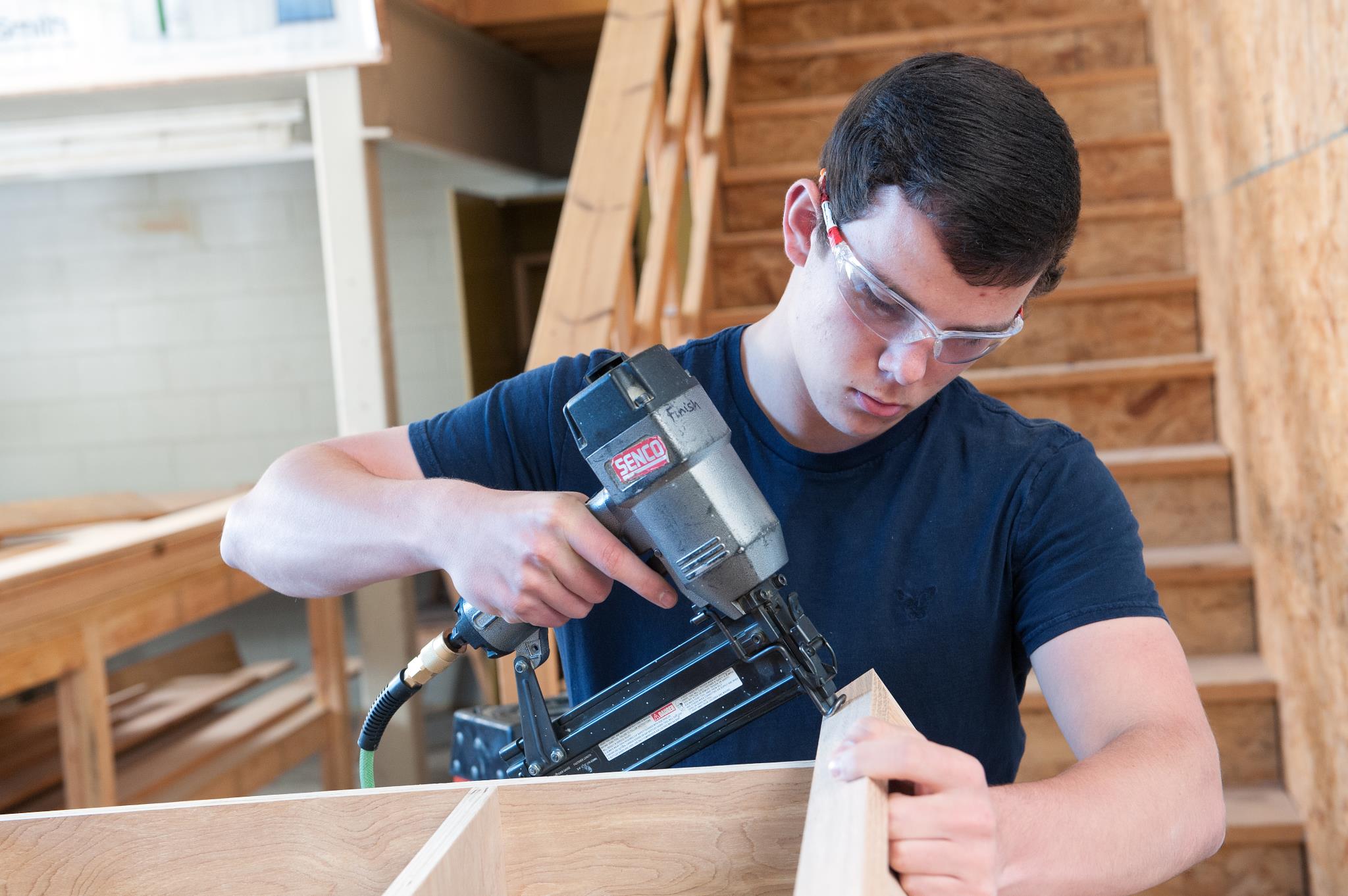
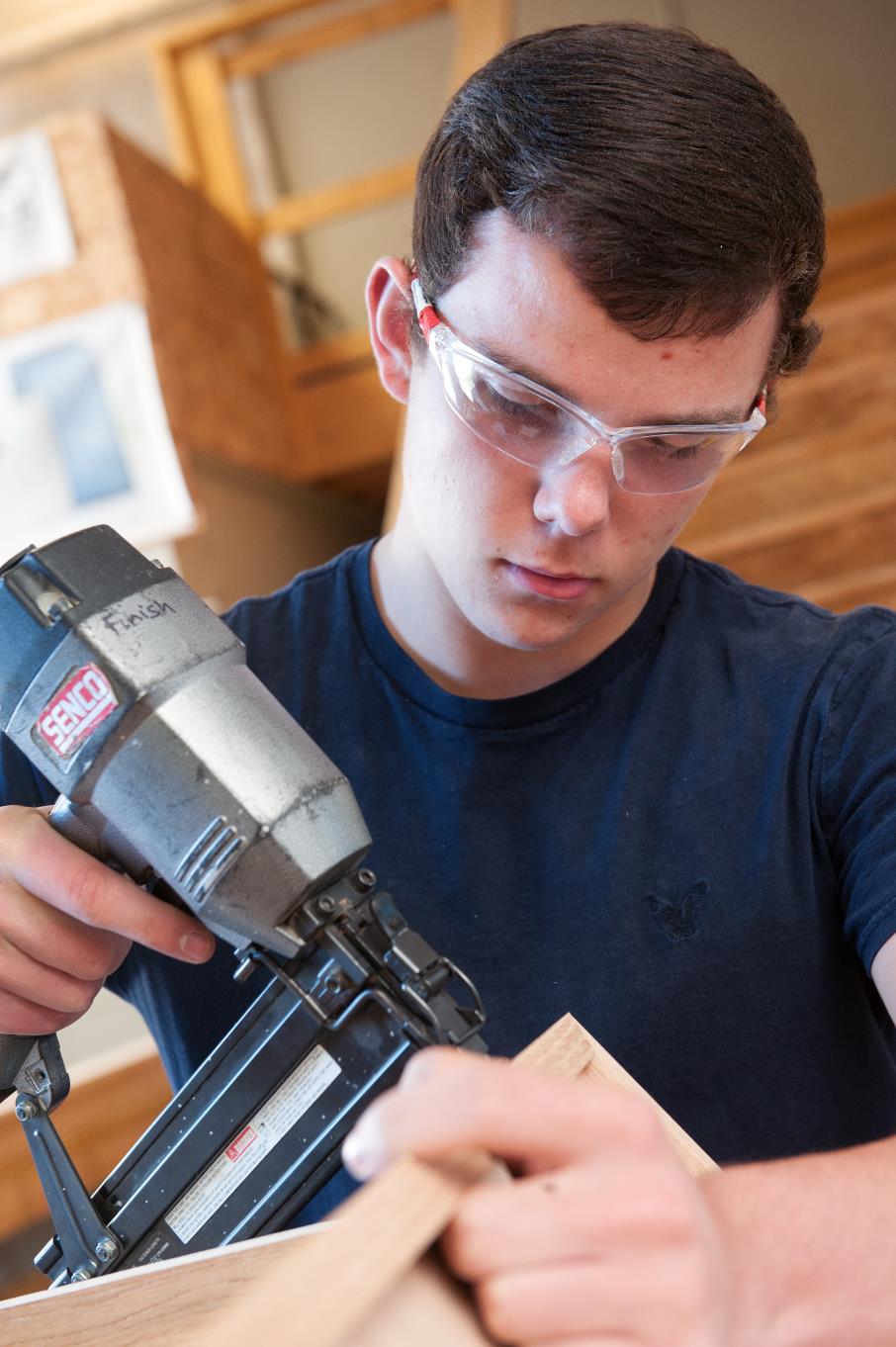
- Basic understanding of finish carpentry
- Basic understanding of electrical
- Basic understanding of plumbing
- Basic understanding of HVAC
- Basic understanding of green construction
- Basic understanding of civil construction / heavy equipment
- Basic understanding of construction management
- Employable calculator and math skills
- Teamwork and leadership skills
- Skills to seek out, obtain, and keep a job
- All aspects of construction safety
Exit Outcomes
The student will have acquired enough knowledge and experience to be able to continue with their chosen field. This can be done through further education in a university, trade school, apprentice program, or entry level construction position.
Work Based Learning Opportunities
- Carpentry
- Plumbing
- Electrical
- Civil Construction / heavy equipment
- HVAC
- Field trips
- Guest Speakers
Grading Policy
35% Work Habits
25% Shop Performance and projects
25% Assignments
10% Planner pages/Notes
5% Electronic Use
A 93-100%
A- 90-92%
B+ 87-89%
B 83-86%
B- 80-82%
C+ 77-79%
C 73-76%
C- 70-72%
D+ 67-69%
D 66-63%
D- 60-62%
E 59% and below
W Withdrawal
Standard Test Taking Rules
- No talking, If you have questions, speak to the instructor, not another student. Talking may be interpreted as cheating, and those rules will then apply.
- You may use a 3 x 5 notecard prepared outside of class and a blank sheet of paper.
- You may sit in a different location.
- If you have any other requests for taking the test, please ask the teacher so I can help accommodate your needs.
- If you have an IEP or 504 plan, I will provide all of the accommodations you request that are not already listed above.
Cheating Policy
Students are expected to complete their own work. Any student found cheating will receive a zero on the assignment or project. Students who assist or enable cheating will also receive a zero.
Student Expectations
Students are expected to give their best effort daily and to contribute positively to the class environment. This includes supporting peers and helping maintain a productive learning space. Students must follow all school and classroom rules as outlined in the WTC handbooks, construction program guidelines, lesson plans and instructor directions.
Growth is expected. Work quality and behavior that may be acceptable early in the learning process may not be acceptable as skills develop and expectations increase.
Attendance Expectations
Students are required to follow all policies outlined in the student handbook as a minimum standard. Construction students are expected to be present and participate in class each day WTC is open, according to the sending school's schedule. In addition to the student handbook grading scale for work habits, any unexcused absences in a marking period will result in a zero for work habits attendance. The definition of unexcused is found in the handbook.
Dress Code
Proper attire is expected every day, regardless if we are in class or the shop. Students are provided with lockers at school to contain proper construction attire. The standards were developed with input from the Construction Trades advisory board, and meet industry standards and safety requirements. Students are required to have:
Shirts: Must have sleeves and a crew neck collar.
Pants: Must be full-length, free of holes, and made of a durable material appropriate for worksite protection.
Footwear: Must fully enclose the foot, provide exterior protection, and have a hard sole to prevent punctures.
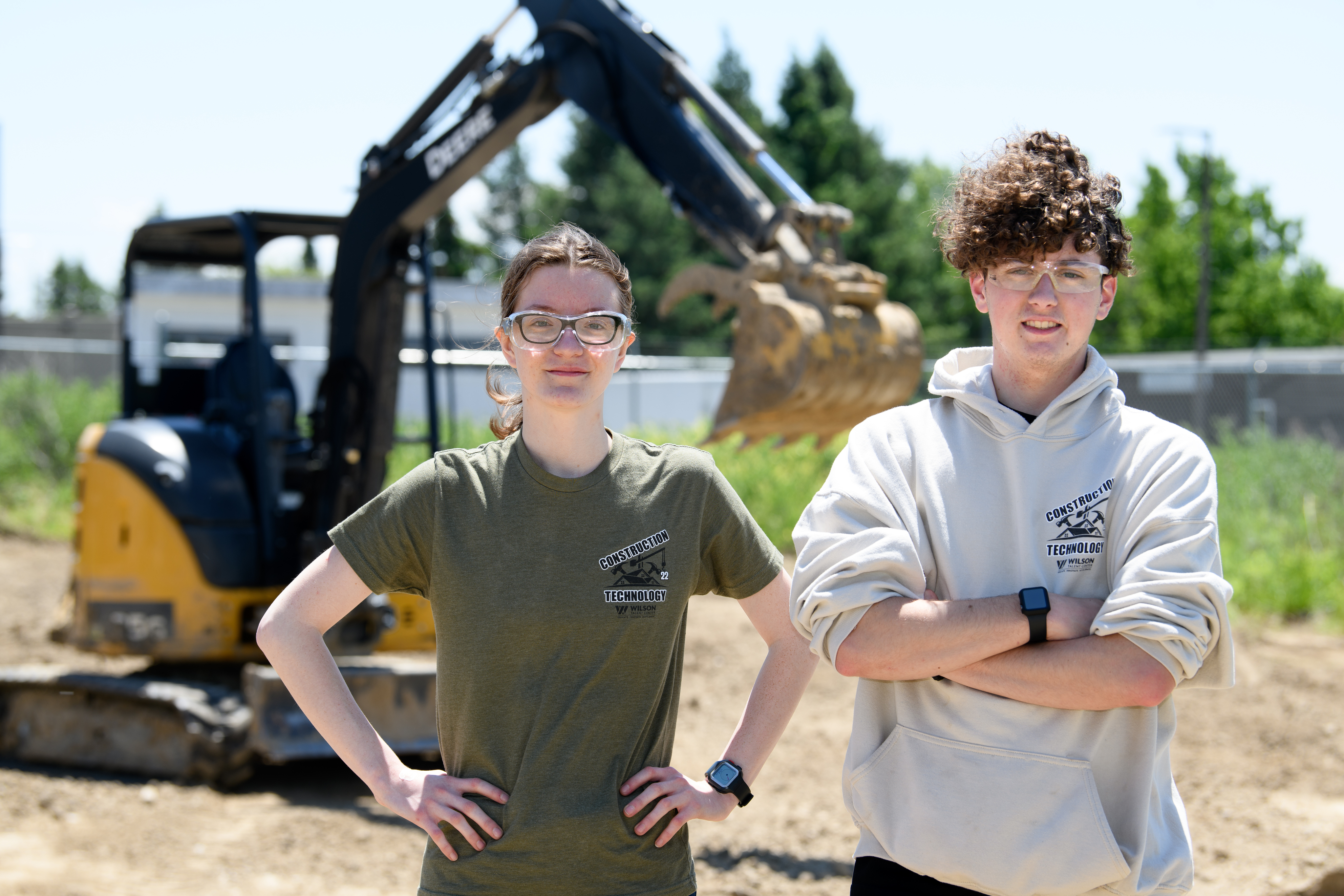
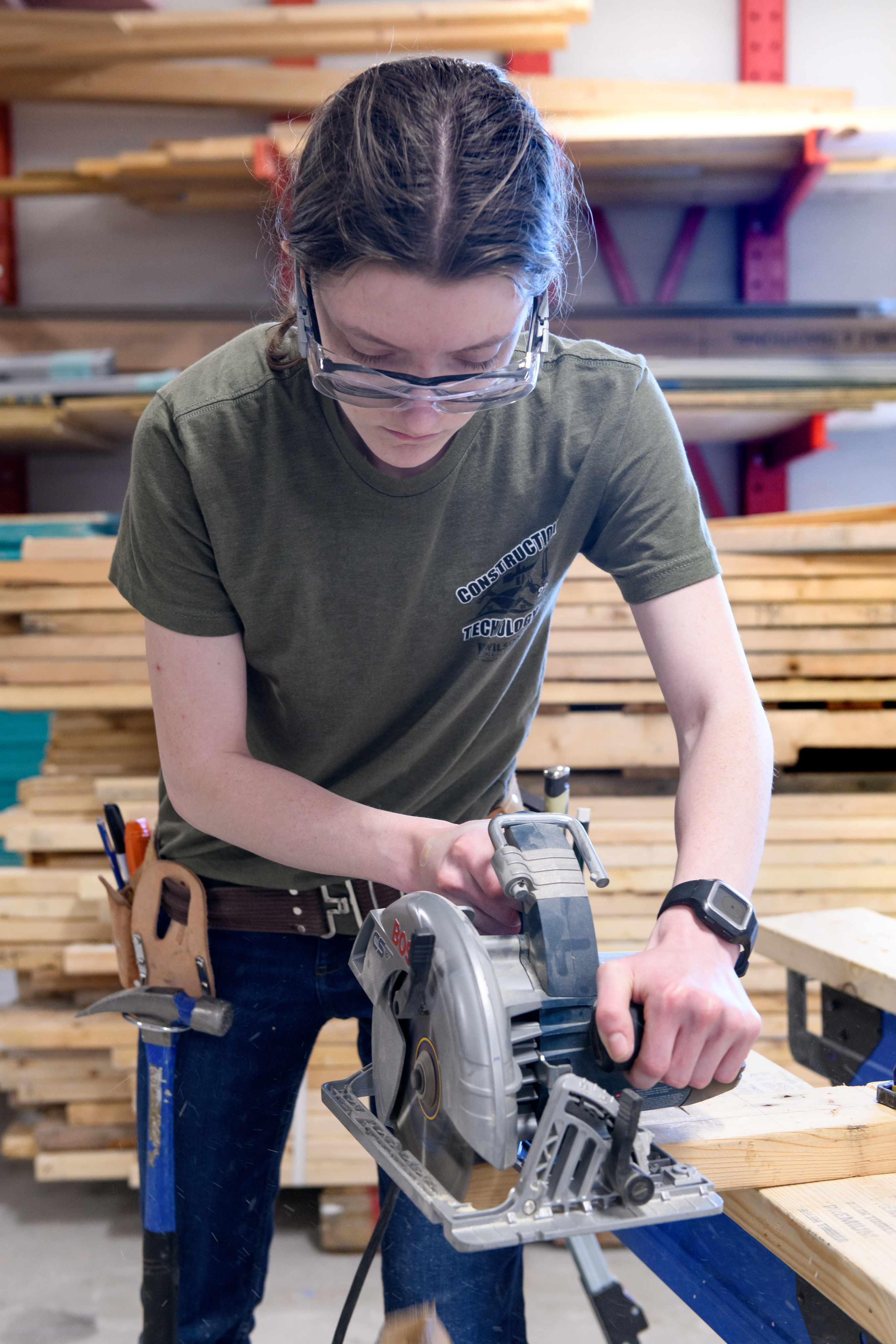
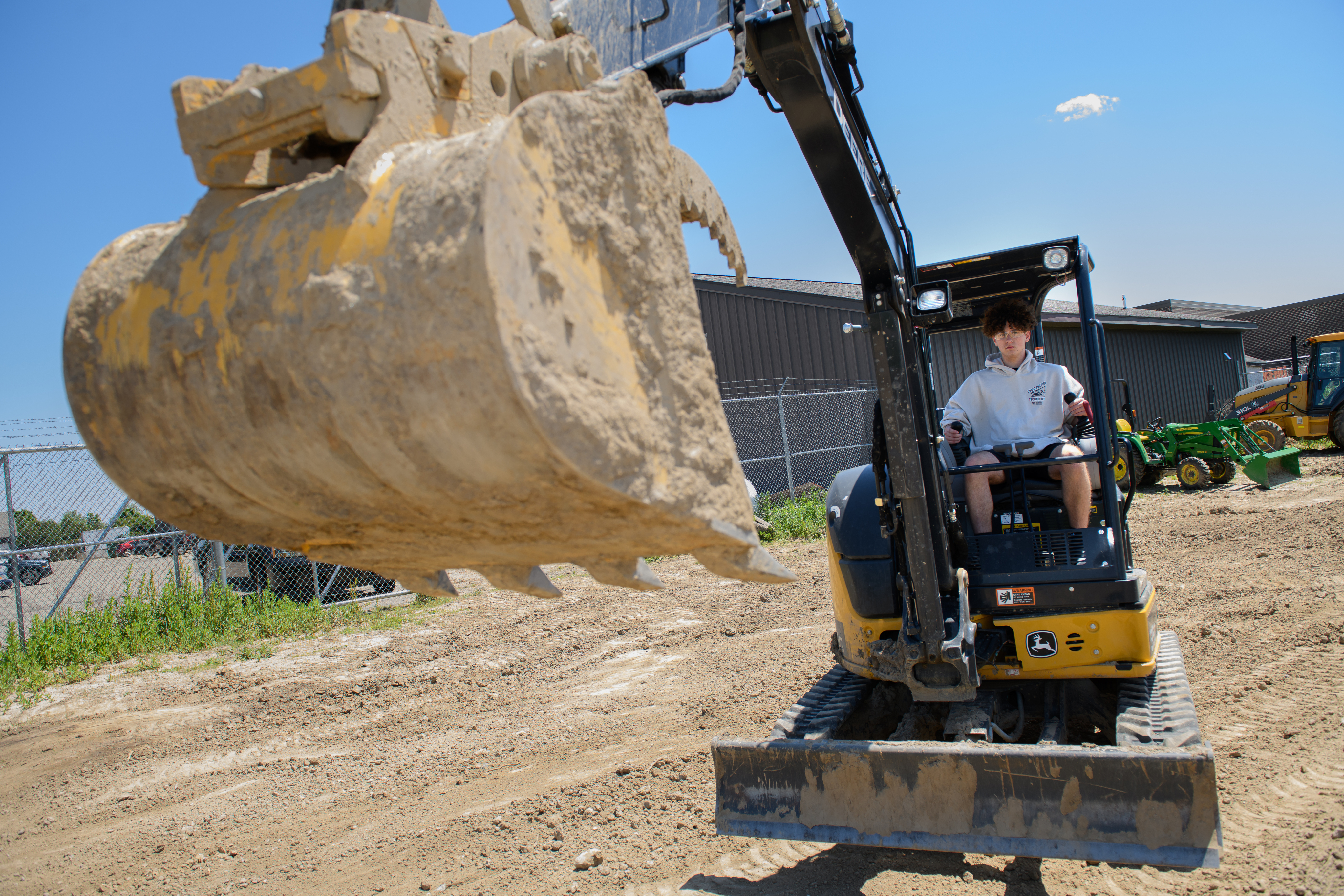
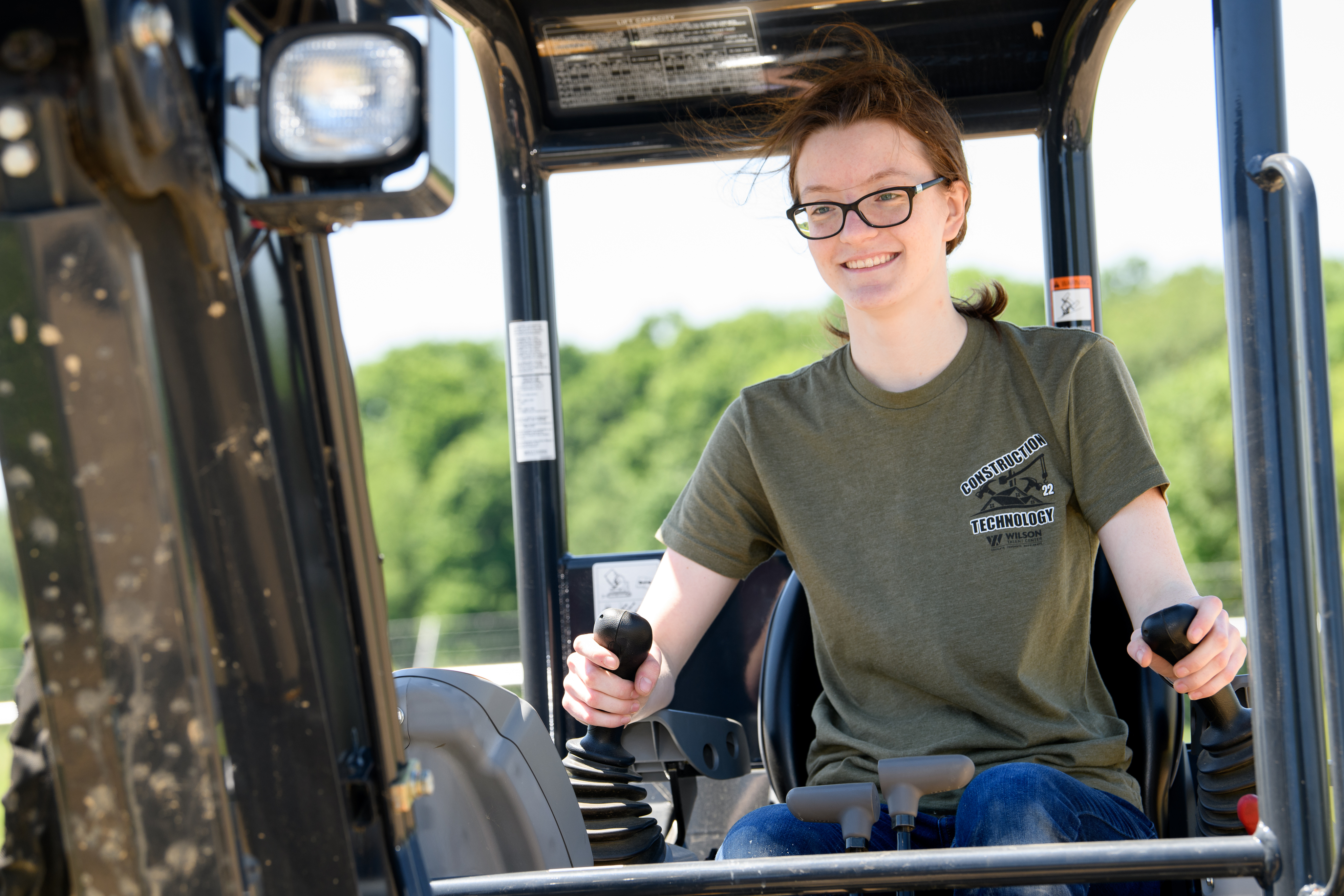
Photos from the Construction Technology program . . .
-
 Click to see a larger version
Skip to end of gallery
Skip to start of gallery
Click to see a larger version
Skip to end of gallery
Skip to start of gallery
-
 Click to see a larger version
Skip to end of gallery
Skip to start of gallery
Click to see a larger version
Skip to end of gallery
Skip to start of gallery
-
 Click to see a larger version
Skip to end of gallery
Skip to start of gallery
Click to see a larger version
Skip to end of gallery
Skip to start of gallery
-
 Click to see a larger version
Skip to end of gallery
Skip to start of gallery
Click to see a larger version
Skip to end of gallery
Skip to start of gallery
-
 Click to see a larger version
Skip to end of gallery
Skip to start of gallery
Click to see a larger version
Skip to end of gallery
Skip to start of gallery
-
 Click to see a larger version
Skip to end of gallery
Skip to start of gallery
Click to see a larger version
Skip to end of gallery
Skip to start of gallery
-
 Click to see a larger version
Skip to end of gallery
Skip to start of gallery
Click to see a larger version
Skip to end of gallery
Skip to start of gallery
-
 Click to see a larger version
Skip to end of gallery
Skip to start of gallery
Click to see a larger version
Skip to end of gallery
Skip to start of gallery
-
 Click to see a larger version
Skip to end of gallery
Skip to start of gallery
Click to see a larger version
Skip to end of gallery
Skip to start of gallery
-
 Click to see a larger version
Skip to end of gallery
Skip to start of gallery
Click to see a larger version
Skip to end of gallery
Skip to start of gallery
Student Testimonials
About Construction Technology

1*-2 year program
*First year seniors will be enrolled after all qualifying juniors
Offered AM and PM
Skills Students Leave with:
- Carpentry
- Basic Electrical
- Basic Plumbing
- Design and Layout
- Blueprint Reading
- Exterior Finishing
- Remodel
- Green Building